
Did you know some desert plants can go months without water? These plants have special traits to survive in dry places. Bringing them home can be a rewarding experience for plant lovers.
Learning indoor succulent care changes how you garden. These plants keep water in their leaves. So, they need the right light and soil to stay alive. Remember, they come from the desert.
This guide will teach you how to care for indoor succulents well. By following these steps, your plants will stay healthy. You’ll turn your home into a beautiful, easy-to-care-for oasis that makes you happy every day.
Understanding Succulents and Their Needs
Learning about indoor succulent care begins with knowing what these plants are. They have special ways to survive when water is scarce.
What Are Succulents?
Succulents store water in their leaves, stems, or roots. This helps them survive long without water.
Being from dry places, they don’t need much water to stay healthy. Knowing this is key to caring for them indoors.
Why Choose Indoor Succulents?
People love these plants because they’re easy to care for. They add beauty to any room.
They fit well in bright spots or small spaces. Their unique shapes and textures are great for modern homes.
Choosing the Right Succulents for Your Space
Choosing the right succulent is key to successful plant care. Not all plants do well in the same place. So, it’s important to pick one that fits your home. With some basic succulent care tips, your plants will stay healthy and bright for a long time.
Top Indoor Succulent Varieties
Some plants are better for indoor spaces than others. If you’re new to this, start with hardy varieties. They make caring for plants a lot easier.
- Echeveria: These plants are beautiful and love bright, indirect light. They’re great for sunny windows.
- Haworthia: They have unique textures and do well in low light. Perfect for rooms with less sun.
- Jade Plant: A classic choice that’s very hardy. It can live for decades with little care.
- Aloe Vera: This plant is not only beautiful but also useful for your home.
Factors to Consider When Selecting
Before buying a succulent, think about your home. Look at the light and space you have. This is crucial for succulent care tips.
Think about these important factors:
- Light Availability: Check if your windows get direct sunlight. This helps you know how much light they get.
- Space Constraints: Some succulents spread out, while others grow up. Make sure you have enough room.
- Maintenance Commitment: Be honest about how much time you can spend on your plants. This includes watering and grooming.
Remember, where you place your plant is just as important as the plant itself. By matching your plant’s needs to your home, you’ll have a thriving indoor garden. This will add joy to your daily life.
Ideal Indoor Conditions for Succulents
Learning how to care for indoor succulents is key to their health. Consistency is crucial for their success. By mimicking their natural desert homes, you give them the stability they need.
Temperature Requirements
Most succulents do best in temperatures between 60°F and 80°F. They like the same room temperatures as humans. Avoid placing your plants near drafty windows, air conditioning vents, or heating ducts to prevent stress.
In winter, many succulents prefer cooler temperatures to rest. Keeping them away from extreme heat helps prevent soil drying out too fast. Stable temperatures are essential for your plants’ health.
Light Preferences
Knowing your succulents’ light needs is crucial. They need bright, indirect sunlight for several hours daily. Without enough light, they stretch out, becoming weak.
To avoid this, place them on a south-facing windowsill or use a grow light. Rotating your pots regularly ensures even light for all sides.
Humidity Levels
Succulents thrive in dry environments and dislike high humidity. Too much moisture can cause fungal growth or root rot. Keep your indoor space dry for their health.
In humid areas, use a small fan for better air circulation. Proper ventilation helps moisture evaporate, protecting your succulents. By controlling these factors, you create a perfect environment for your plants to thrive.
Best Soil for Indoor Succulents
The secret to keeping indoor succulents healthy is in the soil. The best indoor succulent care practices start with knowing these plants hate wet roots. If their roots stay wet, they will rot quickly.
What Constitutes Good Succulent Soil?
A good indoor succulent soil type needs to breathe and drain fast. It’s different from regular potting soil, which holds water for tropical plants. Succulent soil should be loose and gritty, not dense or clumpy.
Experts say the best soil is like the rocky, dry places where succulents live. A porous soil lets oxygen reach the roots, helping them grow. Proper drainage is key to avoiding root rot.
DIY Succulent Soil Mix
You can make your own succulent soil mix at home. Start with a small amount of good potting soil to avoid too much moisture. Then add inorganic materials to improve the mix’s structure.
Here are some ingredients for a top-notch substrate:
- Perlite: Great for air and keeping the soil light.
- Pumice: A volcanic rock that holds a bit of moisture but drains well.
- Coarse Sand: Adds weight and gives the gritty texture succulents like.
Use two parts potting soil, one part perlite, and one part pumice. Mix well to give your plants the best indoor succulent care practices. Remember, a well-draining indoor succulent soil type is essential for a healthy collection.
Watering Your Indoor Succulents
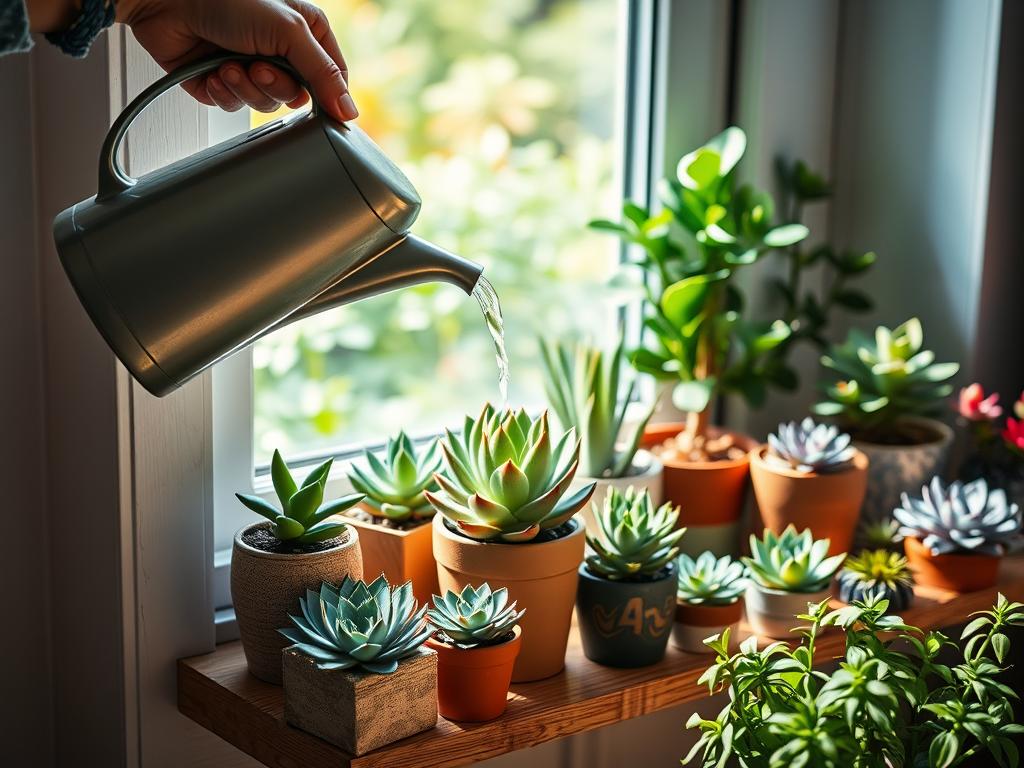
Learning how to water your indoor plants is key to a thriving garden. This indoor succulent watering guide will show you how to find the right balance. Follow these simple steps to keep your plants healthy and bright all year.
How Often to Water
The best way to water these plants is the “soak and dry” method. Wait until the soil is dry before watering. Then, water until water comes out of the pot’s holes.
“Succulents are desert plants by nature; they prefer a deep drink followed by a long period of drought to mimic their native environment.”
Don’t water on a set day like every Monday. Instead, check the soil moisture with a skewer or finger. If it’s damp, wait a few more days before watering.
Signs of Over- and Under-Watering
It’s important to understand what your plants need. They will tell you through their leaves and how they look. Here’s how to spot problems early:
- Over-watering: Leaves may look mushy, yellow, or feel soft. The plant might drop leaves easily, showing signs of rot.
- Under-watering: Leaves will be shriveled, thin, or feel soft. The plant may lose its plumpness and feel soft.
If you see these signs, change how you water your plants. Good drainage helps prevent root rot. With time and attention, you’ll find the right watering schedule for your plants.
Fertilizing Your Indoor Succulents
A regular indoor succulent fertilizer schedule is key for vibrant growth. These desert plants don’t need much, but a bit of extra help in active months is welcome. The right nutrients at the right time keep their color and structure strong.
When to Fertilize
Spring and summer are the best times to feed your plants. This is when they grow new leaves and roots. A good indoor succulent fertilizer schedule gives them the energy to thrive.
As autumn comes, start to slow down your feeding. Stop fertilizing completely in winter. Succulents need a break when it’s darker and colder.
Types of Fertilizers to Use
Choose a balanced, water-soluble fertilizer. Experts say a mix of nitrogen, phosphorus, and potassium is best. It gives plants the minerals they need without overdoing it.
Remember to dilute your fertilizer to half-strength before use. Full-strength can harm your succulents’ roots. A weaker solution helps them grow without damage.
Pest Management for Indoor Succulents
Keeping your indoor succulents pest-free is crucial. Even with perfect care, pests can sneak in. Catching them early stops them from spreading.
Common Pests and How to Identify Them
Mealybugs, spider mites, and fungus gnats are common pests. Mealybugs appear as white, cottony tufts on leaves. They hide where leaves meet stems.
Spider mites are tiny and hard to see. Look for silky webs and yellow spots on leaves. Fungus gnats are small black flies near wet soil.
Natural Pest Control Methods
You don’t need harsh chemicals. Isopropyl alcohol is great for mealybugs. Dip a cotton swab in alcohol and dab it on the pests.
Neem oil is good for bigger problems. Mix it with water and soap for a spray. Test it first to avoid plant damage.
| Pest Type | Visual Sign | Recommended Treatment |
|---|---|---|
| Mealybugs | White cottony masses | Isopropyl alcohol swab |
| Spider Mites | Fine webbing | Neem oil spray |
| Fungus Gnats | Small flying insects | Allow soil to dry |
Propagating Succulents Indoors
Propagation is a fun way to grow new plants from your favorites. It’s easy and rewarding. You can turn one plant into many, saving money and enjoying the process.
“To plant a garden is to believe in tomorrow.”
Basic Propagation Techniques
You can grow new succulents from leaves or stems. For leaves, twist one off carefully, making sure the base stays attached. This is key for growth.
Stem cuttings are another method. Cut a stem piece with a clean knife. This works well for rosette or tall plants. Let the cut dry for a few days before planting.
Best Practices for Success
Letting the cut end dry is crucial. This step prevents rot when you plant it. Without it, your cuttings might rot from too much water.
After drying, plant the cutting in well-draining soil. Give it bright, indirect light to help roots grow. Direct sunlight can harm new growth.
Be patient, as it takes time for roots and new plants to develop. Keep the soil moist but not too wet. Young succulents don’t like too much water.
Seasonal Care for Indoor Succulents
As the seasons change, so should your care for indoor plants. It’s important to adjust your routine to match their natural cycles. By following these succulent care tips, your plants will thrive all year round.
Preparing Succulents for Winter
In winter, succulents go dormant. This means you should water them much less. Over-watering can cause root rot, which is deadly.
Move your plants to a sunny window. If it’s too dark, use a grow light. These steps keep your plants healthy until spring.
Summer Care Tips
Summer brings longer days and warmer weather. This means your plants will need more water. Make sure the soil is dry before watering to avoid root rot.
Succulents love light, but too much sun can cause sunburn. If you see white or brown spots, move them to get filtered light. These tips will keep your plants looking great all summer.
| Season | Watering Needs | Light Exposure | Growth Phase |
|---|---|---|---|
| Winter | Minimal | Maximum available | Dormant |
| Spring | Moderate | Bright, indirect | Active |
| Summer | Frequent | Bright, filtered | Peak growth |
| Autumn | Decreasing | Bright | Transition |
By watching for these changes, you can keep your succulents happy all year. Paying attention is key to their health.
Troubleshooting Common Indoor Succulent Issues
Even with the best care, indoor succulents can face problems like leaf drop, discoloration, or slow growth. These signs tell you what your plants need. By understanding these signals, you can quickly fix issues and keep your plants healthy.
Leaf Drop and Wrinkling
Wrinkled leaves mean your plant is thirsty and needs water. If leaves fall off easily, it might be due to too much water or poor drainage. Check the soil moisture before changing your watering routine.
Discoloration and Stunted Growth
Pale or yellow leaves mean your plant needs more sunlight. Brown spots or scorched edges suggest too much direct heat. Slow growth in the growing season might mean your plant needs better soil or a bigger pot.
As you learn to spot and solve these problems, your indoor gardening will flourish. Share your successes with others or get advice from places like The Sill or Succulent Studios. Regularly checking your plants is key to a lively, healthy indoor garden.