
Did you know that produce loses nearly half of its vital nutrients within just 24 hours of being harvested? By growing your own food, you ensure that every bite is packed with maximum flavor and health benefits. Learning how to start an organic vegetable garden is the first step toward reclaiming control over what you put on your dinner table.
Planning your space effectively is the secret to a successful harvest. You must consider sunlight, soil quality, and water access to create a thriving environment. When you design your layout with care, you maximize your yield throughout the entire growing season.
Establishing an organic vegetable garden does more than just provide fresh food for your family. It fosters a chemical-free sanctuary that supports local pollinators and improves your soil health. You are not just planting seeds; you are building a sustainable ecosystem right in your backyard. Start your journey today and enjoy the rewarding experience of watching your hard work grow into a bountiful, healthy harvest.
Understanding Organic Gardening Principles
Organic gardening is more than a hobby; it’s a way to work with nature. It focuses on natural cycles, not synthetic inputs. This makes your organic vegetable garden thrive and stay in balance with the environment.
What is Organic Gardening?
This method uses natural ways to manage soil and pests. Instead of chemicals, it uses compost and cover crops. This holistic strategy creates a living space where plants and beneficial microbes grow together.
“The earth laughs in flowers.”
Benefits of Organic Gardening
The benefits of organic vegetable gardening go beyond food. It keeps water clean and supports biodiversity. Plus, organic plants often taste better because they’re full of vitamins and minerals.
By focusing on soil health, you build a strong foundation. This makes organic vegetable gardening for beginners very rewarding. Your plants will fight off diseases better as the soil gets healthier.
| Feature | Conventional Gardening | Organic Gardening |
|---|---|---|
| Soil Nutrition | Synthetic Fertilizers | Compost & Manure |
| Pest Control | Chemical Pesticides | Natural Predators |
| Long-term Impact | Soil Depletion | Soil Regeneration |
Common Myths About Organic Gardening
Many think organic gardening is hard or expensive. But organic vegetable gardening for beginners is easy and can save money. You don’t need fancy tools to start; just simple ones and kitchen scraps.
Another myth is that organic gardens get overrun by pests. But a healthy garden attracts good bugs that keep pests away. By choosing benefits of organic vegetable gardening, you let nature help you.
Choosing the Right Location for Your Garden
A thriving organic vegetable garden starts with the right spot. Before digging, watch your yard all day. The spot you pick will affect how much work you do later.
Importance of Sunlight
Most veggies need at least six to eight hours of sun daily. Watch the sun to find sunny spots. If it’s mostly shady, choose leafy greens that like less sun.
Soil Drainage and Quality
Good soil is key for sustainable vegetable gardening. Your site must drain well to avoid root rot. Stay away from areas where water collects after rain.
Try a simple test: dig a hole and fill it with water. If it takes hours to drain, consider raised beds. Adding compost will also help your soil.
Accessibility for Maintenance
Your garden should be easy to get to for daily care. If it’s too far, you might miss problems. Make sure you have water nearby for easy watering.
The table below shows what to check when picking your garden spot for sustainable vegetable gardening success.
| Site Factor | Ideal Condition | Why It Matters |
|---|---|---|
| Sunlight | 6-8 Hours Daily | Promotes photosynthesis and growth |
| Drainage | Well-draining soil | Prevents root rot and disease |
| Water Access | Within 50 feet | Simplifies daily watering tasks |
| Visibility | High traffic area | Encourages regular monitoring |
Choosing the right spot for your organic vegetable garden is crucial. Doing this now will save you time and trouble later.
Selecting the Best Vegetables for Your Climate
Learning how to start an organic vegetable garden starts with picking the right plants for your area. Your local weather decides which plants will do well and which might not. By choosing plants that match your zone, you’ll get a better harvest.
Cool-Season vs. Warm-Season Crops
Vegetables fall into two groups based on the weather they like. Cool-season crops like lettuce and spinach do best in cool weather. They can get bitter if it gets too hot.
On the other hand, warm-season crops like tomatoes need it hot to grow well. Wait until it’s safe from frost before planting these. Timing is everything for these two groups.
Popular Vegetables for Beginners
For beginners, it’s wise to start with easy-to-grow plants. Organic vegetable gardening for beginners often means choosing plants that grow fast and need little care. Radishes, bush beans, and zucchini are great because they grow quickly.
Leafy greens like kale are also good for beginners. They’re tough and can handle small weather changes. Starting with these plants will help you build your gardening skills.
Companion Planting Tips
Using natural plant relationships is a key organic vegetable garden tip. Companion planting means putting certain plants together to keep pests away or improve soil. For example, marigolds near tomatoes can keep nematodes and other pests away.
Pairing tall plants with short ones can also save space. Basil near peppers is a popular trick for better flavor. By watching how plants work together, you create a balanced ecosystem that doesn’t need chemicals.
Preparing Your Soil for Organic Gardening
To start an organic vegetable garden, you need to focus on the soil. Healthy soil is key for plant growth, providing minerals and structure. By improving the earth, you lay a strong foundation for your garden.
Testing Soil pH and Nutrients
Before planting, test your soil’s pH and nutrients. Most veggies do best in slightly acidic to neutral soil, between 6.0 and 7.0. You can buy a home test kit or send a sample to a local university for detailed analysis.
These tests show you the levels of nitrogen, phosphorus, and potassium. Knowing this helps avoid over-fertilizing. Accurate testing is the first step toward a successful season.
Organic Soil Amendments
After testing, add organic matter to improve your soil. Compost is top-notch for adding nutrients and improving water retention. Other amendments like aged manure, bone meal, or kelp meal can fix specific deficiencies.
Using these natural materials is key to sustainable vegetable gardening. It feeds the soil, not just the plants, creating a healthy ecosystem. This leads to stronger, more disease-resistant crops.
| Amendment | Primary Benefit | Best Use |
|---|---|---|
| Compost | Improves soil structure | General soil building |
| Bone Meal | Adds Phosphorus | Root development |
| Blood Meal | Adds Nitrogen | Leafy green growth |
| Garden Lime | Raises pH levels | Acidic soil correction |
Tilling and Mixing Organic Matter
After adding amendments, mix them into the top six to eight inches of soil. Tilling breaks up compacted earth, helping roots grow deeper and air circulate. Be careful not to over-till, as it can harm the soil’s natural networks.
Using a broadfork or garden fork is better than a mechanical tiller. These tools aerate the soil without damaging it. Gentle preparation ensures your garden remains productive for years to come.
Planting Your Organic Vegetable Garden
Now that your soil is ready, it’s time to plant your seeds and seedlings. Knowing when and where to plant is key for a bountiful harvest. A well-planned garden helps your plants grow strong and healthy.
When to Plant Seeds vs. Seedlings
Choosing between seeds and seedlings is important for beginners. Some veggies like carrots and radishes do best when sown directly. They don’t like their roots messed with.
On the other hand, tomatoes and peppers do better indoors. This gives them a start before the weather gets cold. Always check your local frost dates to know when to move them outside.
Proper Spacing for Vegetables
Vegetables need room to grow well. Enough space helps prevent diseases and ensures they get enough sunlight. When plants are too close, they fight for resources and grow poorly.
Look at the seed packet for how far apart to plant. It might seem like too much space at first, but it’s needed. Adequate space leads to a healthy and easy-to-manage garden.
Techniques for Sowing Seeds
When planting seeds, the hole’s depth is crucial. Plant them about two to three times their size deep. Press the soil gently over them for good contact, but don’t pack it too hard.
Water the soil gently after planting to keep it moist. This helps the seeds sprout. Once they grow, thin them out to give the strongest plants room to grow.
Watering Your Organic Garden Effectively
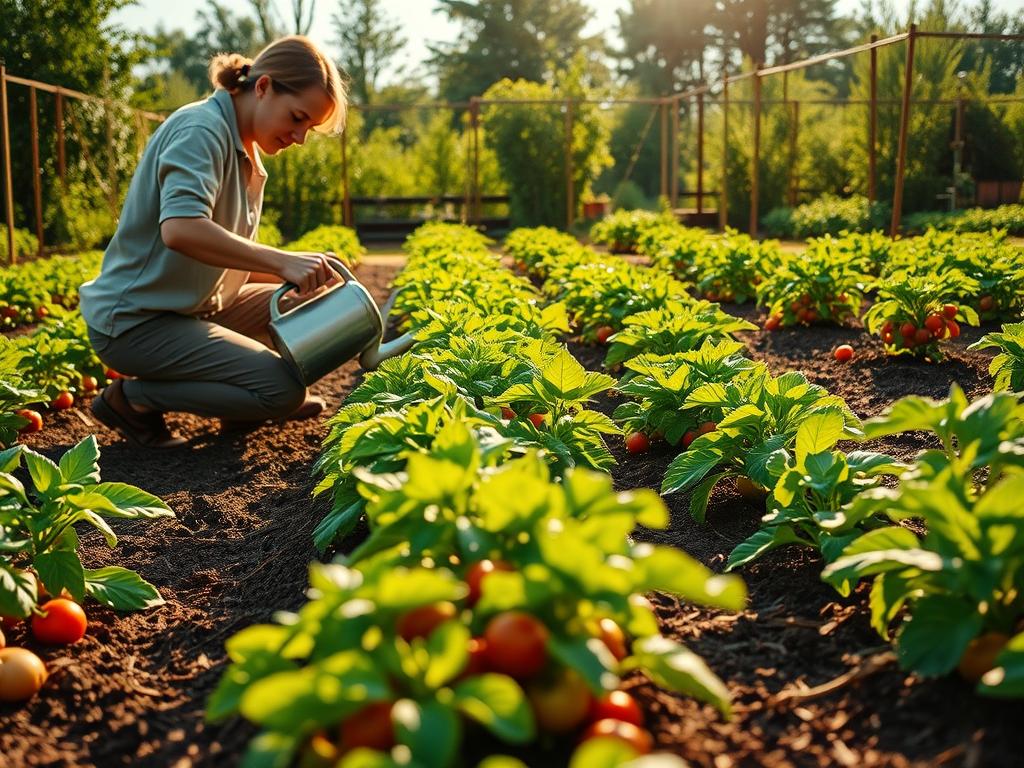
Keeping your garden moist is key to its success. Consistent watering helps plants handle summer heat. By following best practices for organic vegetable gardening, your garden stays healthy and productive.
Best Practices for Watering
Watering deeply but less often is best. This encourages strong roots and makes plants more resistant to drought. Always water at the base of the plant to avoid fungal diseases.
“Water is the driving force of all nature.”
Using Drip Irrigation Systems
Drip irrigation systems are a big help. They deliver water slowly, reducing evaporation. With a timer, you can set up a watering schedule for your garden.
Mulching to Retain Moisture
Organic mulch is crucial for your garden. Straw, shredded leaves, or wood chips protect the soil. They keep it moist, suppress weeds, and add nutrients as they break down.
Managing Weeds in Your Organic Garden
Weeds compete with your veggies for nutrients, water, and sunlight. Early action is key. By using best practices for organic vegetable gardening, you can avoid harsh chemicals. Regular checks help your crops grow well all season.
Natural Weed Prevention Techniques
Stopping weeds before they start is the best approach. Use organic mulch like straw or wood chips to block sunlight. This simple method is a top organic gardening technique for gardeners.
Planting veggies close together also helps. When they grow, they shade the soil, stopping weeds. This dense planting protects your soil.
“The best way to control weeds is to outcompete them with healthy, vigorous plants that cover the soil surface completely.”
Hand Weeding vs. Organic Herbicides
Choosing between hand weeding and organic sprays depends on your garden size and weed problem. Hand weeding is safer for small, delicate beds. For bigger areas, organic herbicides made from natural oils or soaps might be better.
| Method | Best Use Case | Effort Level | Effectiveness |
|---|---|---|---|
| Hand Weeding | Small garden beds | High | Very High |
| Organic Herbicides | Large pathways | Low | Moderate |
| Mulching | Preventative care | Low | High |
Cover Crops as a Weed Control Strategy
Don’t leave your soil bare after the growing season. Plant cover crops like clover or winter rye. They act as a natural weed suppressant and add nutrients.
Adding these plants to your routine is key to sustainable gardening. As they break down, they improve soil aeration and moisture. This approach reduces future work and keeps your garden healthy.
Fertilizing Your Organic Vegetable Garden
Learning how to fertilize is key to a successful organic vegetable garden tips. Giving your plants the right nutrients at the right time boosts their energy. This leads to a bigger harvest. Organic fertilizers improve soil health over time, unlike synthetic ones that give a quick fix.
Understanding Organic Fertilizers
Organic fertilizers come from natural sources like plants, animal waste, or minerals. Compost adds organic matter, while aged manure gives slow nitrogen. Fish emulsion is a liquid option that quickly feeds leafy greens.
These natural options feed soil microbes first. This creates a healthy environment for your veggies. Following these organic vegetable garden tips builds a strong garden that can handle stress.
Homemade Fertilizer Recipes
You can make your own plant food with household items. A compost tea is made by steeping compost in water and straining it. This liquid is a gentle spray for your plants.
Crushed eggshells provide calcium to prevent blossom end rot in tomatoes. Banana peel tea adds potassium to the soil. These DIY methods save money and are good for the planet.
Signs of Nutrient Deficiency
Plants show their needs through changes in leaves and stems. Yellow leaves with green veins might mean iron or magnesium lack. Stunted growth or purple leaves often point to phosphorus deficiency.
Watching your garden closely helps catch these issues early. Use the table below to identify nutrient needs based on symptoms.
| Nutrient | Visual Symptom | Organic Source |
|---|---|---|
| Nitrogen | Yellowing older leaves | Blood meal or compost |
| Phosphorus | Purple leaf tinting | Bone meal |
| Potassium | Brown leaf edges | Wood ash or kelp meal |
| Calcium | Blossom end rot | Crushed eggshells |
By watching for these signs and using the right organic amendments, you keep your garden healthy. Regular care is the secret to mastering these organic vegetable garden tips for years.
Pest Management in Organic Gardening
Keeping your garden safe from pests is key to a successful harvest. By watching closely, you can use organic vegetable garden tips to keep your plants healthy all season.
Identifying and Monitoring Pests
Checking your garden regularly is the best way to control pests. Walk through your garden at least twice a week. Look at the undersides of leaves and the stems of your plants.
Watch for small holes, discolored spots, or sticky residue. These signs mean pests are present. Catching them early helps prevent damage to your crops.
Natural Pest Control Methods
When pests show up, use proven organic gardening techniques to fight them. Physical barriers like floating row covers keep moths and beetles away from your veggies.
Try a mild soap and water spray to keep soft-bodied insects like aphids away. Test this spray on a small leaf first to make sure it won’t harm your plants.
Beneficial Insects for Your Garden
Nature has its own defense system with predatory insects that eat common pests. Encouraging these insects helps keep your garden balanced.
- Ladybugs: These beetles love to eat aphids and mites.
- Lacewings: Their larvae, called “aphid lions,” are great at controlling aphids.
- Parasitic Wasps: These tiny wasps target pests like tomato hornworms without harming humans.
Attract these beneficial insects by planting flowers like marigolds, dill, and yarrow near your veggies. A diverse garden is a healthy and productive space for your favorite crops.
Harvesting Your Organic Vegetables
There’s nothing like eating a vegetable straight from your garden. The benefits of organic vegetable gardening include getting the best taste and nutrients. By picking at the right time, your kitchen stays full of fresh food.
Signs of Ripeness for Common Vegetables
Knowing when to pick your veggies takes some practice. Tomatoes are ready when they’re deep in color and a bit soft. Peppers should be fully grown and bright. Lettuce is best when its leaves are young and soft.
Carrots and beets show they’re ready when they stick out of the soil. Always check the seed packet for harvest times. But trust your eyes and hands too. If pests damage your veggies, using organic pest control keeps them healthy.
Best Practices for Harvesting
Using sharp, clean tools is key. Cut your veggies with scissors or shears, not by pulling. This prevents damage and lets the plant keep growing.
Harvest in the morning when plants are full of water. This keeps your veggies fresh longer. Be gentle with your organic veggies, as they’re often more delicate.
Handling and Storing Your Bounty
How you handle your harvest matters a lot. Gently remove dirt but don’t wash until you’re ready to eat. Store leafy greens in a breathable container in the fridge.
Root veggies need a cool, dark, and dry place to last weeks. By storing them right, you can enjoy your hard work for a long time. Taking care of your bounty means none of your effort is wasted.
Season Extension Techniques
Learning to extend the season in your garden lets you enjoy fresh food all year. With organic gardening techniques, you can have fresh veggies long after summer. These methods protect your plants from bad weather and early frosts.
Using Row Covers and Cold Frames
Row covers are like a blanket for your plants, keeping them safe from cold winds and light frost. They let sunlight and water in while keeping plants warm. Cold frames are like mini-greenhouses, trapping heat close to the soil.
These tools help you start seeds early in spring. They also keep your harvest going into autumn. Using them regularly is key to keeping pests away from your veggies.
Greenhouses for Organic Gardening
A greenhouse gives you total control over your garden’s environment. It keeps your veggies safe from extreme temperatures. You can grow more types of plants, no matter your local weather.
Greenhouse care means watching ventilation and humidity. Keeping these balanced helps avoid diseases. It’s a great place to start seedlings for your outdoor garden.
Crop Rotation for Annual Success
Rotating crops every year keeps your soil healthy. It stops pests and diseases from building up. This is a key part of organic pest control for vegetable gardens.
Healthy soil means strong plants and more food. Rotating crops ensures your garden stays productive and strong year after year.
| Method | Primary Benefit | Best For |
|---|---|---|
| Row Covers | Frost Protection | Leafy Greens |
| Cold Frames | Heat Retention | Early Spring Starts |
| Greenhouses | Climate Control | Year-round Growing |
| Crop Rotation | Soil Health | Disease Prevention |
Resources for Continuing Your Organic Gardening Journey
Your journey in organic gardening is a lifelong adventure. It grows with your plants. Connecting with other gardeners gives you the support you need to get better every season.
Using these resources helps you make the most of organic gardening. It keeps your soil and plants healthy. By staying curious and informed, you can create a thriving garden in your backyard.
Recommended Books and Websites
Books like “The Vegetable Gardener’s Bible” by Edward C. Smith are full of useful tips. Websites like Rodale Institute offer science-backed advice on gardening. These resources are great for solving common problems.
Local Gardening Clubs and Workshops
Joining groups like the American Community Gardening Association connects you with local experts. Workshops at your local botanical garden or university extension office give you hands-on learning. These experiences let you see organic gardening in action in your neighborhood.
Online Forums and Communities for Support
Places like GardenWeb or the r/OrganicGardening community on Reddit are great for sharing and asking. Being part of these groups keeps you motivated all year. You get advice from gardeners across the country who love growing food without chemicals.