
Did you know a single tomato plant can lose over a gallon of moisture on a hot summer day? When it’s really hot, your backyard crops are in a silent battle to survive. Learning how to water vegetables in heat is key to making sure they grow well.
Keeping the soil moist is essential for a good harvest. Without a plan, your plants might get stressed, grow poorly, or not produce much. Proper hydration techniques protect your plants from the sun, keeping the soil cool and the roots healthy.
Knowing how to water garden in hot temperatures right can change your gardening. By soaking the soil deeply, you help your plants get through the summer. Use these tips to keep your garden green and lively all season.
- Prioritize deep root saturation over frequent surface sprinkling.
- Apply mulch to lock moisture into the soil.
- Time your sessions for the early morning to minimize evaporation.
Understand the Importance of Watering in Heat
When summer hits, water is key for your garden. Watering vegetables in heat is more than just keeping soil wet. It’s about keeping your crops alive and healthy. Without enough moisture, your garden faces a tough battle against the heat.
The Role of Water in Plant Health
Water is the heart of your vegetable garden. It keeps plants standing tall and strong. When plants are well-hydrated, they can reach for sunlight better.
Water also carries nutrients to your plants. On hot days, plants cool down by evaporating water from their leaves. This keeps them safe from heat damage. Regular watering vegetables in heat helps this cooling process all day.
Consequences of Inadequate Watering
Ignoring your watering schedule can harm your garden badly. Plants may stop growing and producing new leaves or flowers. They focus on survival instead of growth.
Not enough water can cause problems like blossom end rot in tomatoes and peppers. This happens when plants can’t get enough calcium because of uneven water. If you don’t water your plants enough, you’ll get less and lower quality produce. Keeping your plants healthy means managing their water needs well.
When to Water Your Vegetables
Knowing when to water is key for gardeners fighting the summer sun’s dryness. By following best practices for watering vegetables, you keep your plants hydrated without wasting water. A regular watering schedule helps your garden get ready for the day’s heat.
Best Times of Day for Watering
Watering in the early morning is the best time. It lets moisture soak into the soil, where roots can easily get it. This method stops water from evaporating quickly in the afternoon, keeping plants hydrated during the hottest times.
“Early morning irrigation is essential because it allows the foliage to dry off before nightfall, which significantly reduces the risk of fungal diseases.”
If morning watering isn’t possible, late evening is a good alternative. But, water the soil, not the leaves, to avoid moisture buildup overnight. Mastering how to water garden in hot temperatures means being precise to keep your veggies healthy and productive.
Signs Your Plants Need Water
Your veggies will show you when they need water through small changes. Spotting these signs early helps prevent heat damage. Watch for these signs in your garden:
- Wilting leaves: If leaves droop during the day but perk up by morning, they’re okay. But if they stay wilted, they need water right away.
- Soil texture: Check the top two inches of soil with your finger. If it’s dry and crumbly, it’s time to water.
- Color changes: Dull, grayish-green colors mean your veggies are dehydrating.
- Slow growth: If new leaves or fruit growth slows, your plants might not have enough water.
By watching for these signs, you can adjust your watering schedule. Being proactive helps your plants stay strong, even when it’s hot.
Types of Irrigation Systems
Choosing the right irrigation system is key to watering your vegetables well. Your garden’s layout and the local climate are important. They help decide which method will keep your crops moist.
Drip Irrigation: An Efficient Choice
Drip irrigation is top for saving water in gardens. It waters the soil directly, cutting down on evaporation. This ensures moisture gets to the roots where it’s most needed.
“Efficiency in the garden is not just about saving water; it is about delivering the right amount of life-sustaining moisture exactly where the plant can use it most effectively.”
This method keeps leaves dry, lowering disease risk. It’s a smart choice for healthy veggies and less water waste.
Sprinkler Systems: Pros and Cons
Sprinklers are great for covering big areas fast. They’re good for dense plants or seedbeds where even moisture is key for germination.
But, sprinklers can wet leaves, creating a humid spot for fungi. Always run sprinklers in the morning. This lets leaves dry during the day.
| Feature | Drip Irrigation | Sprinkler System |
|---|---|---|
| Water Efficiency | High | Moderate |
| Foliage Wetting | None | High |
| Installation Cost | Moderate | Low to Moderate |
Watering Techniques for High Temperatures
When it gets hot, how you water your plants is key to their survival. A regular watering schedule for vegetables helps your garden stay strong, even in extreme heat. By making sure water gets to the soil right, you help your plants grow steadily.
Deep Watering for Root Health
Deep watering is the best way to keep plants healthy in the heat. It helps roots grow deep into cooler soil, where water stays longer. Deep soaking builds a strong root system that can handle the sun’s drying effects better.
For the best results, water slowly and steadily. This lets moisture go deep into the soil, not just the surface. Here are some benefits of deep watering:
- Increased drought tolerance for your vegetable crops.
- Less water lost to evaporation compared to light, frequent watering.
- Stronger, more stable plants that are less likely to wilt.
Surface Watering: What You Should Know
Many gardeners use light, frequent surface watering. But this can cause moisture to evaporate before it reaches the roots. It can also make roots stay near the surface, making them more vulnerable to heat stress.
It’s important to watch your watering frequency for vegetables in heat to avoid these problems. If you only wet the top inch of soil, your plants won’t get enough water. Always aim to soak the entire root ball, ensuring your watering schedule for vegetables supports long-term plant health.
Recommended Amount of Water for Vegetables
Every vegetable in your garden has its own water needs, which change with the weather. Giving the right amount of water is essential for a thriving harvest and keeping plants healthy. Knowing these specific needs helps your crops stay productive, even when it’s very hot.
General Guidelines for Different Vegetables
Plants need different amounts of water to grow well. Having a regular watering schedule for vegetables helps manage these needs. Grouping plants by their water needs makes your routine easier.
- Leafy Greens: Crops like lettuce and spinach need frequent, light watering to stay crisp.
- Root Vegetables: Carrots and beets need consistent moisture to prevent cracking and grow well.
- Fruiting Vegetables: Tomatoes, peppers, and cucumbers need deep, regular watering to support heavy fruit production.
Adjusting Water Requirements Based on Weather
Weather greatly affects how fast your soil dries out. You must adjust your watering frequency for vegetables in heat for high temperatures, low humidity, and strong winds. These conditions make water evaporate faster from the soil and leaves.
When it’s windy or humid is low, your plants will need more water. Always check the soil moisture before watering, as weather can change quickly. By watching your plants closely, you can give them exactly what they need, without wasting water.
Mulching: A Tool to Retain Soil Moisture
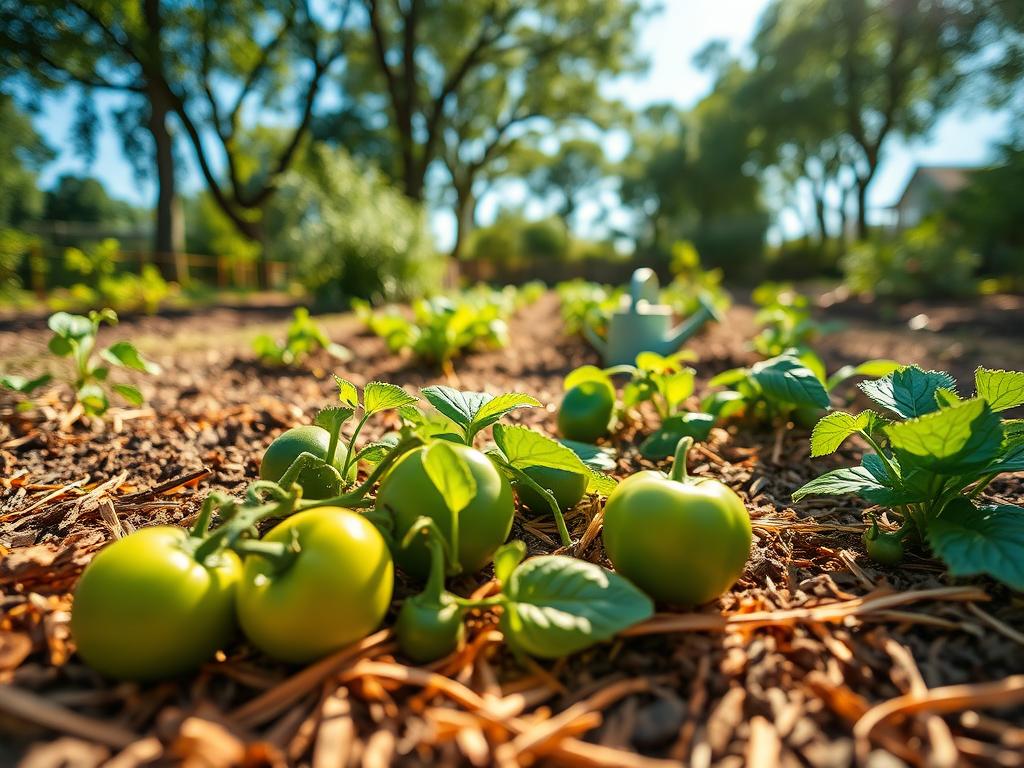
Mulching is a great way to keep your garden cool during hot weather. It acts like a blanket for your soil, stopping the sun from drying it out. This simple trick is a top watering tip for hot weather.
Benefits of Organic and Inorganic Mulch
Choosing the right mulch depends on your garden’s needs. Organic mulches like straw or wood chips are great because they break down. This naturally enriches your soil and keeps it cool.
Inorganic mulches, like landscape fabric, are durable and control weeds well. Think about these differences when planning your garden:
- Organic Mulch: Makes soil better and adds nutrients as it breaks down.
- Inorganic Mulch: Offers a long-lasting barrier that needs less replacement.
- Moisture Retention: Both types help keep moisture in, which is key for hot weather.
How to Apply Mulch Effectively
Getting the most from your mulch starts with how you apply it. First, remove weeds to avoid competition. Use two to three inches of mulch to insulate without choking plants.
Make sure to leave a gap between the mulch and plant stems. Too much moisture can cause rot. When done right, your mulch keeps the soil moist and cool.
Use of Rainwater for Watering
Harvesting rainwater is a fantastic, eco-friendly way to water your plants. It cuts down on your need for tap water. This method is great for hot weather because it’s a reliable source when it’s dry.
Collecting and Storing Rainwater
Setting up a rainwater collection system is easy. Most gardeners start with rain barrels under their roof downspouts. Make sure your barrels have a tight lid and a mesh screen to keep out debris and mosquitoes.
For bigger gardens, you might need more than one barrel. Place your containers on a level, sturdy surface to hold the water. Proper installation is crucial for a safe and efficient system all season.
Benefits of Rainwater for Vegetables
Rainwater is better than tap water because it’s soft and chemical-free. Tap water often has chlorine, fluoride, and other additives that can harm your soil. Rainwater gives your veggies a cleaner drink.
Also, rainwater is usually the same temperature as the air, which is gentle on your plants. Cold tap water can shock your veggies on hot days. Using rainwater is one of the best watering tips for hot weather to keep your garden healthy.
Monitoring Soil Moisture Levels
Keeping an eye on soil moisture is key to a healthy vegetable garden. By checking the water levels, you can use efficient watering techniques. This saves water and helps plants grow better. It also prevents too much or too little water for your crops.
Methods for Checking Soil Moisture
The finger test is a simple way to check moisture. Just stick your finger into the soil up to the second knuckle. If it feels dry, it’s time to water your veggies.
Look for signs from your plants and the soil. Cracked or dusty soil means it’s dry. Wilting leaves in the heat also show they need water. Using these signs with smart watering keeps your garden balanced all season.
Tools to Simplify Soil Moisture Monitoring
For a more precise method, there are tools like a soil moisture meter. It quickly shows the water level at the roots. These meters are easy to use and work well for everyone.
For bigger gardens, digital sensors are a better choice. They track moisture levels constantly and can connect to your phone. This alerts you when the soil gets too dry. Using these tools helps you water your veggies just right every day.
Dealing with Heat Stress in Vegetables
When it gets really hot, your plants face big challenges. Even with a regular watering schedule, the sun can still be too much. Spotting problems early is key to saving your garden.
Identifying Signs of Heat Stress
Keep an eye out for signs that your plants are stressed. Leaf curling is a common first sign, as plants try to lose less water. You might also see blossom drop, where plants drop flowers to save energy.
Sunscald is another issue, showing up as white or papery spots on fruits like tomatoes. These spots can get infected and rot. Catching these signs early helps prevent lasting damage.
Mitigation Strategies Beyond Watering
While efficient watering techniques are crucial, they’re not enough in extreme heat. Installing shade cloth over your beds helps. It filters out too much sun while still letting plants photosynthesize.
Building temporary shelters or using umbrellas can also help. These create cooler spots in your garden. Using these methods with efficient watering techniques keeps your plants cool and hydrated.
| Heat Stress Symptom | Primary Cause | Recommended Action |
|---|---|---|
| Leaf Curling | Excessive Transpiration | Apply Shade Cloth |
| Blossom Drop | Thermal Stress | Increase Airflow |
| Sunscald | Direct UV Exposure | Use Protective Covers |
| Wilting | Root Zone Heat | Deep Mulching |
Adjusting Your Watering Strategy During Drought
When a drought hits, your garden needs a new plan. You must focus on saving water, not just for looks. Your summer vegetable watering guide should help your most important plants survive.
Tips for Water Conservation
Grouping plants by their water needs can save a lot of water. This way, you water only where it’s needed, not in empty spaces.
Use your water for plants that are currently growing and need it most. Prioritizing your harvest means you use water wisely, not on plants that are almost done.
“The secret to a resilient garden lies not in how much water you provide, but in how wisely you manage every single drop during the heat of the season.”
Choosing Drought-Resistant Vegetable Varieties
Picking the right plants is key in your summer vegetable watering guide. Some plants are made to handle dry weather, perfect for hot areas.
Adding these hardy plants to your garden can help you grow food even when it’s dry. Below is a table showing how different veggies need water.
| Vegetable Type | Water Requirement | Drought Tolerance |
|---|---|---|
| Swiss Chard | Moderate | High |
| Roma Tomatoes | Low to Moderate | High |
| Leaf Lettuce | High | Low |
| Pole Beans | Moderate | Medium |
By picking plants that need less water, you make your garden better for the planet. Always look for labels on seed packets that say they’re good for hot or dry weather. This will help you succeed with your summer vegetable watering guide.
Common Mistakes in Watering Vegetables
If your plants aren’t doing well, you might be watering them wrong. It’s easy to get it wrong, even when you want to help. A good summer vegetable watering guide can help you avoid mistakes and keep your garden healthy.
Overwatering: Risks and Signs
Many think more water is always better. But too much water can harm your plants just as much as too little. When the soil is always wet, it stops oxygen from getting to the roots.
This lack of air can cause root rot, which is often deadly for vegetables.
Watch for these signs that you’re watering too much:
- Yellowing leaves, mainly at the base.
- Fungal diseases or mold on the soil.
- Stunted growth, even with regular fertilizing.
- Wilting, even when the soil feels damp.
Underwatering: How to Recognize Issues
Not watering enough is another big mistake. Without enough water, plants can’t move nutrients to their leaves and fruits. This makes them weak to pests and diseases.
Spotting dehydration early is crucial. Look for these signs every day:
- Leaves that are crispy, brown, or curled at the edges.
- Soil pulling away from containers or beds.
- Plants drooping during hot days.
- Less fruit or blossoms falling off early.
If you see these signs, check the soil moisture two to three inches down. If it’s dry and crumbly, your plants need more water. Changing your watering to deep, consistent hydration can help them recover.
Seasonal Considerations for Watering Vegetables
Your garden needs a flexible approach as spring turns into summer. You must change how you water to keep up with warmer temperatures and longer days.
Adjusting to Seasonal Changes
Spring crops might need less water than those grown in mid-summer. Watch the soil daily as the sun gets stronger. This ensures your plants stay hydrated. Tools like a Rain Bird moisture sensor help track these changes accurately.
Managing Extreme Weather Events
When temperatures soar, you must plan ahead to save your crops. A good plan for watering during a heatwave is crucial. Water deeply in the early morning to help your plants face the sun.
Stay alert to your garden when high temperatures are forecasted. The right preparation can turn a struggling garden into a lush oasis. Share your best tips for cooling plants with the local gardening community to help others thrive this season.