
Studies show that spending just 20 minutes in a garden lowers your cortisol levels. Cortisol is the stress hormone that affects your entire body. This simple fact reveals the incredible power your outdoor space holds for mental health.
You don’t need a professional landscaper or a huge budget to build your peaceful retreat. Creating relaxing garden ideas that work for your lifestyle is about understanding what brings you calm. Planning with intention makes all the difference.
Whether you have a sprawling backyard or a small patio, your space can become a sanctuary. The journey to stress-free garden inspiration starts with knowing yourself. Think about what makes you feel peaceful.
Do you love the sound of water? Are you drawn to certain colors? Do you want a space to sit and read or a place for walking?
Your answers guide every choice you’ll make. This guide walks you through everything you need. You’ll learn how to pick the right location for your garden.
You’ll discover which plants create a soothing feeling. You’ll find out how to arrange your space for maximum calm. From selecting stones and water features to adding perfect lighting, each section builds your knowledge.
Your garden isn’t just about pretty plants. It’s about creating a place where you can escape the noise of daily life. A space that feels like home and welcomes you every single day.
Understanding the Importance of a Relaxing Garden
Your garden is more than a place to grow plants. It becomes a personal sanctuary where you escape daily stress. This space helps you reconnect with nature.
Creating a calm, peaceful area offers tremendous value for your health. It supports your physical wellness and emotional balance. Garden relaxation tips help build an environment that naturally supports you.
Science shows real benefits for your body and mind from garden spaces. Green areas reduce cortisol levels—your body’s primary stress hormone. Your blood pressure drops naturally when surrounded by plants.
University of Michigan research found powerful results. Just 20 minutes in nature boosts mood significantly. It also improves mental clarity.
Benefits of a Relaxing Garden
A well-designed garden transforms into a living therapy space. Your relaxing garden offers practical benefits through multiple purposes.
- Reduces anxiety and tension naturally
- Improves focus and concentration abilities
- Provides a healthy escape from digital screens
- Creates opportunities for gentle physical activity
- Builds a sense of accomplishment through gardening
- Offers space for meditation and reflection
Enhancing Mental Well-being through Nature
Connecting with nature triggers serotonin and endorphins. These are your body’s natural feel-good chemicals. They improve your mood instantly and support long-term emotional health.
Japanese practitioners embrace forest bathing. This practice means immersing yourself in natural surroundings. Your garden provides similar benefits regardless of size.
Simple activities activate healing responses in your brain. Planting seeds, pulling weeds, or sitting quietly among greenery all help. These garden relaxation tips work for everyone.
Your relaxing garden becomes a meditation area and creative outlet. It serves as a social gathering spot too. The space offers perfect conditions for meaningful conversations or quiet moments.
Choosing the Right Location for Your Garden
Finding the perfect spot for your peaceful backyard design starts with careful observation. Your garden’s location shapes everything from plant growth to relaxation time. Take time to walk around your yard at different times of day.
Notice where the sun travels and where shadows fall. Pay attention to which areas feel most inviting. The right location turns your backyard into a true retreat.
Your choice affects both plant success and personal relaxation. A poorly positioned garden might get too much harsh afternoon heat. It could also stay too dark and damp.
The best locations balance practical needs with your vision. They create a peaceful backyard design that draws you outside regularly.
Evaluating Sunlight and Shade
Different plants need different light levels. Morning sunlight brings gentle warmth and energy to your space. Afternoon sun beats down intensely, which works well for some plants.
Dappled shade from trees creates cool, calming zones. These spots are perfect for relaxation.
Track sunlight patterns across your yard throughout the day:
- Morning sun areas receive light before noon
- Afternoon sun zones get intense heat after 2 PM
- Partial shade spots receive 3-6 hours of sunlight
- Full shade areas stay cool and moist all day
Examine existing trees and structures that create natural shade. These features can work for or against your peaceful backyard design goals. Dense tree cover creates intimate spaces, while open areas allow fuller plant growth.
Accessibility and Viewpoints
Choose a location you can reach easily from your home. A garden that’s inconvenient to access sits unused. Your peaceful backyard design should feel like a separate retreat yet remain close enough.
Consider what you’ll see from your garden:
- Avoid views of trash bins or busy streets
- Position away from neighbor’s windows if privacy matters to you
- Create sightlines that showcase your best natural features
Look at views from inside your home. You want to enjoy your garden from windows and doors. Check wind exposure, drainage patterns, and proximity to water sources.
Your peaceful backyard design works best when natural topography supports it. Create secluded, relaxing spaces that feel intentionally designed.
Selecting Plants for a Soothing Atmosphere
Creating a calming garden starts with choosing the right outdoor tranquility plants. Your plant selections shape how your garden feels and impacts your relaxation experience. The best choices combine beauty with simplicity.
You won’t spend all your time maintaining them. Instead, you’ll enjoy peaceful moments surrounded by nature’s quiet charm.
Low-Maintenance Plants for Relaxation
Outdoor tranquility plants thrive with minimal effort when you pick the right varieties. These hardy options let you focus on relaxing rather than constant gardening tasks. Consider plants that suit your climate and require less water.
- Lavender – Grows easily in sunny spots and smells wonderful
- Hostas – Perfect for shady areas with beautiful foliage
- Ornamental grasses – Add movement and texture without fussy care
- Sedums – Drought-tolerant succulents that need little water
- Coneflowers – Sturdy flowers that bloom for months
These plants work hard for you. Native plants suited to your region demand even less attention. They also support local wildlife and ecosystems.
Group plants with similar water and sunlight needs together. This simple step makes your routine easier.
The Role of Color in Plant Selection
Colors affect how you feel in your outdoor space. Cool colors like blues, purples, and soft pinks create calm and peace. Whites and silvers add brightness without overwhelming your senses.
Your outdoor tranquility plants should reflect these soothing palettes throughout the seasons.
| Plant Type | Color | Season | Care Level |
|---|---|---|---|
| Blue Fescue Grass | Blue-gray foliage | Year-round | Low |
| Purple Salvia | Deep purple flowers | Summer to fall | Low |
| White Hydrangea | Creamy white blooms | Summer to fall | Moderate |
| Soft Pink Phlox | Light pink flowers | Summer | Low |
| Silver Artemisia | Silver-gray leaves | Year-round | Low |
Layer plants by height and texture to create interest without chaos. This approach keeps your garden feeling organized and peaceful.
Incorporating Fragrant Plants
Scent adds a powerful dimension to your relaxation garden. Fragrant outdoor tranquility plants engage your sense of smell for deeper calm. Different plants offer unique aromas at different times.
- Jasmine – Releases sweet evening fragrance
- Rosemary – Offers fresh herbal scent when brushed
- Gardenias – Provide intense, sweet perfume
- Chamomile – Gives an apple-like, comforting aroma
Plant fragrant varieties near seating areas where you’ll notice their scents. Position them so breezes carry their aromas toward your relaxation spots. Choose plants that bloom at different times to enjoy fragrances year-round.
This approach creates a garden that soothes all your senses at once.
Designing a Layout That Promotes Calm
Creating calm outdoor spaces starts with thoughtful design. Your garden layout sets the foundation for relaxation and peace. A well-organized garden guides your eyes and feet naturally through the space.
This approach transforms your yard into a sanctuary where stress melts away. Good design doesn’t happen by accident—it requires planning and intention.
The key to calm outdoor spaces lies in balancing visual interest with simplicity. You want enough elements to capture attention without overwhelming your mind. Think of your garden as connected rooms, each with its own purpose and character.
Creating Focal Points
Focal points are anchors for your eyes. They give your garden direction and purpose. A focal point might be a specimen tree, water fountain, sculpture, or comfortable seating area.
Your focal point should draw attention naturally without demanding it loudly. Use the rule of thirds to position your focal points. Divide your space into nine equal sections using two horizontal and two vertical lines.
Place your main focal point where these lines intersect. This positioning feels more balanced and calming than centering everything.
- Choose one primary focal point for each garden area
- Position it at eye level or slightly above
- Ensure it’s visible from your main viewing spot
- Keep the background simple and uncluttered
Pathways and Flow
Pathways do much more than connect point A to point B. They create a journey through your garden. The materials you choose affect how your garden feels.
Smooth stepping stones, decomposed granite, or wood chips feel pleasant underfoot. These materials guide movement naturally through your space.
Curved pathways create a more relaxed, exploratory atmosphere. Gentle curves make your garden feel larger and invite discovery. Straight paths feel formal and structured, which works well for specific garden styles.
| Path Material | Best For | Feel Underfoot | Maintenance Level |
|---|---|---|---|
| Stepping Stones | Natural, relaxed gardens | Cool and smooth | Low |
| Decomposed Granite | Contemporary spaces | Soft and compacted | Medium |
| Wood Chips | Woodland gardens | Soft and springy | Medium-High |
| Mulch Pathways | Rustic gardens | Cushioned and natural | High |
Balancing Open and Closed Spaces
Calm outdoor spaces need breathing room. Open areas reduce visual clutter and allow your mind to rest. Closed or enclosed spaces offer intimacy and shelter.
You can create enclosed areas with hedges, trellises, or tall grasses. Think about creating garden rooms. Each room serves a different purpose: meditation, dining, or reading.
Use plants and structures to define these areas without making everything feel cramped. Your design elements should feel appropriate for your space size.
Layering elements creates depth while maintaining calm. Place taller plants in the background and medium plants in the middle. Put shorter elements in front.
This progression helps your eye move naturally through the space. The goal is creating distinct areas while keeping everything flowing together smoothly.
- Reserve 40 percent of your space as open areas
- Use 30 percent for planted beds and tall features
- Dedicate 30 percent to pathways and transitions
- Create at least two garden rooms for variety
- Leave sightlines between different areas
Your layout transforms a simple yard into a personal retreat. Take time to observe how light and shadows move through your space. Notice where you naturally want to sit and walk.
Let these observations guide your design choices. Well-designed calm outdoor spaces evolve naturally, creating the perfect setting for relaxation and renewal.
Utilizing Natural Elements in Your Garden
Using nature’s own materials helps you build a peaceful garden retreat. Natural elements bring authenticity and calm to your outdoor space. Water, stone, and wood work together to connect you with the earth.
These materials age beautifully over time. They develop character and depth that enhance your garden’s appeal.
The Power of Water Features
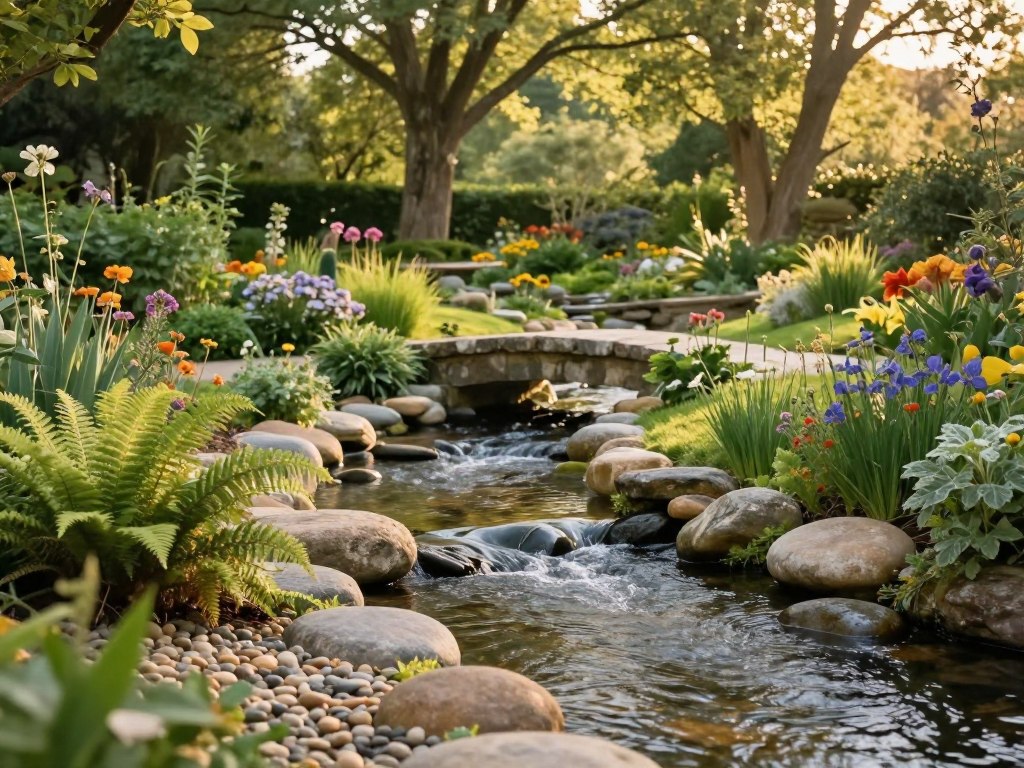
Water features transform your garden into a sanctuary of peace. The gentle sound of flowing water masks street noise. This creates a meditative atmosphere that calms your mind.
You can choose from many options that fit your space and budget.
- Bubbling fountains for small spaces
- Solar-powered water features for sustainability
- Birdbaths to attract wildlife
- Small ponds for larger areas
- Container water gardens on patios
Moving water engages your senses and draws your attention inward. The rhythmic sound encourages deep breathing and relaxation.
Incorporating Stones and Wood
Stones and wood provide structure and natural beauty to soothing landscape features. River rocks create borders, while stacked stone walls add vertical interest. Boulders work as sculptural elements that anchor your design.
| Natural Material | Uses in Garden | Maintenance Level |
|---|---|---|
| River Rocks | Borders, pathways, water features | Low |
| Gravel | Meditation areas, ground cover | Low |
| Driftwood | Decorative accents, seating | Minimal |
| Wooden Pergolas | Vertical interest, shade | Moderate |
| Reclaimed Wood Planters | Plant containers, warmth | Moderate |
Using Earthy Textures for Comfort
Different textures engage your senses and ground you in the present moment. Smooth river stones feel calming under your feet. Rough bark and weathered wood add warmth and organic character.
Soft moss creates a gentle aesthetic. These materials develop patinas as they age, gaining beauty rather than losing it. Your garden becomes more inviting with time.
Natural textures create variety that keeps your space interesting. They maintain the peaceful quality your garden needs.
Adding Seating to Your Relaxing Space
Your serene garden decor needs the perfect place to sit. Seating transforms your garden from a visual retreat into a true relaxation space. The right furniture invites you to linger and connect with nature.
Strategic placement of comfortable seating makes your outdoor sanctuary complete. You can breathe deeply and soak in the peaceful atmosphere.
Types of Garden Seating Options
Garden seating comes in many styles to match your relaxation preferences. Consider these popular choices for your serene garden decor:
- Wooden benches offer timeless elegance and blend naturally with garden surroundings
- Adirondack chairs provide casual comfort and a laid-back aesthetic
- Hanging swing chairs create gentle movement and whimsical charm
- Built-in stone seating feels permanent and integrated into your landscape
- Outdoor sofas deliver luxurious lounging for extended relaxation
- Wicker furniture offers lightweight flexibility with weather-resistant durability
Materials matter when selecting seating. Teak wood resists weather damage naturally. Powder-coated metal frames prevent rust.
All-weather wicker combines style with low maintenance. Choose materials that match your climate and lifestyle.
Positioning for Comfort and View
Location determines how much you enjoy your seating area. Position chairs to capture morning sunlight or afternoon shade. Face seating toward your garden’s best features—flowing water, colorful plantings, or scenic views.
Consider prevailing breezes for natural cooling. Keep sight lines clear from your home’s windows. You can see your serene garden decor from inside.
Think about privacy from neighbors. Arrange seating where natural plants or garden structures provide gentle screening. Multiple seating pieces encourage conversation, while solo spots invite personal reflection.
Customizing Your Seating Area
Personal touches elevate your outdoor furniture into a true retreat. Add outdoor cushions in calming colors like soft blues, greens, and neutrals. Throw pillows increase comfort.
Side tables hold drinks and books within easy reach. Create shade with umbrellas or pergolas overhead. Ensure proper drainage around seating areas.
Plant flowers and shrubs around your furniture to integrate seating. This surrounding greenery provides natural enclosure and privacy. You’ll enjoy sensory engagement through fragrance and texture.
Exploring Lighting for Ambiance
Good lighting transforms your garden into a welcoming retreat after sunset. The right choices extend your outdoor time and create perfect relaxation vibes. Thoughtful lighting balances beauty with function in your peaceful space.
Think about your lighting goals before you start planning. Do you need safe pathway illumination? Are you creating a cozy gathering spot? Your answers determine which lighting options suit your needs best.
Solar Lights vs. Electric Lights
Solar and electric lighting both work well for different situations. Solar lights offer eco-friendly solutions without wiring or electricity bills. They charge during daytime and glow at night along pathways.
Electric lights provide steady brightness and more design options. They work reliably even on cloudy or dim days. Smart features let you control brightness and timing easily.
| Feature | Solar Lights | Electric Lights |
|---|---|---|
| Installation | Easy, no wiring needed | Requires electrical setup |
| Cost | Lower upfront, no energy bills | Higher initial investment |
| Brightness | Moderate, weather dependent | Bright and consistent |
| Maintenance | Minimal upkeep needed | Regular checks recommended |
Using String Lights for Charm
String lights create magical moments by adding soft overhead illumination. These lights transform ordinary spaces into enchanting retreats. They feel both festive and calming at once.
- Edison bulbs give vintage charm with their warm glow
- Globe lights offer modern appeal and soft coverage
- Fairy lights create delicate, whimsical effects
- Café lights deliver café-style European atmosphere
Hang string lights in patterns that suit your space. Try crisscross designs over seating areas between trees and posts. Space bulbs 12 inches apart for the best effect.
Creating Mood with Colored Lights
Lighting temperature affects how your garden feels. Warm white lights create cozy relaxation perfect for evening unwinding. Cool white lights work better where you need clarity.
Colored LED lights add special touches for particular moods. Soft blues and greens promote calm and healing. Amber tones enhance warmth and comfort.
Dimmable systems let you adjust lighting based on your activities. Layered lighting combines different types for complete coverage:
- Ambient lighting provides overall illumination
- Task lighting helps with reading or dining
- Accent lighting highlights plants or special features
Uplighting dramatizes tall trees and structures beautifully. Downlighting on stairs and paths keeps you safe. Lanterns and candles add flickering organic light that deepens relaxation.
Incorporating Art and Personal Touches
Your garden becomes truly special when you add personal touches that reflect who you are. Art and decorative elements transform your outdoor space into a unique sanctuary. These additions tell your story while creating visual interest throughout your garden.
Think about what speaks to your heart and what will make you smile. Choose items that bring you joy when you spend time outside.
Adding Garden Sculptures
Garden sculptures serve as focal points that draw the eye and spark conversation. You can choose from many styles—abstract metal pieces, classical stone statues, or whimsical animal figures. Each sculpture brings its own personality to your space.
Consider these factors when selecting sculptures:
- Scale and proportion to your garden size
- Material durability for outdoor weather conditions
- Placement in high-visibility areas
- How the piece reflects your personal taste
Bronze, stone, and ceramic sculptures weather beautifully over time. Recycled materials like reclaimed wood and metal offer eco-friendly options. These sustainable choices look stunning in any garden setting.
DIY Projects for Personalization
You don’t need advanced skills to create meaningful garden art. Simple projects add genuine personality without breaking your budget.
Try these accessible ideas:
- Paint rocks with inspiring words or designs
- Create mosaic stepping stones using broken tiles
- Build birdhouses from scrap wood
- Repurpose containers into unique planters
- Craft wind chimes from natural materials
Displaying Natural Artwork
Nature itself provides beautiful materials for display. Collect driftwood, interesting branches, and beautiful stones from meaningful places. Arrange these treasures throughout your garden or frame pressed botanical specimens.
You can also create zen garden elements with a small raked sand or gravel area. Place carefully chosen rocks to represent islands or mountains. This meditative focal point offers hands-on relaxation whenever you need it.
Add engraved stones with inspirational quotes or markers commemorating special occasions. These personal touches transform your garden into a meaningful sanctuary. Your outdoor space will nurture your spirit and celebrate life’s important moments.
Creating a Multi-sensory Experience
Your garden becomes a true sanctuary when you engage all your senses. Beyond visual beauty, you can craft a space where sounds, scents, and textures work together. This approach deepens your connection with nature and amplifies the calming effects of your garden.
The Role of Sound in Relaxation
Sound shapes your garden experience more than you might realize. Gentle water features create soothing background noise that masks unwanted sounds from traffic or neighbors. Wind chimes add subtle melodic tones when breezes pass through.
Ornamental grasses like fountain grass rustle softly, creating natural acoustic textures. Position dense plantings strategically to absorb harsh noises. Sound-absorbing materials near your seating area help create peaceful spaces by reducing environmental noise pollution.
Attracting Birds and Butterflies
Birds and butterflies bring movement and delightful sounds to your garden. Choose plants that support these visitors throughout the seasons:
- Coneflowers and bee balm attract butterflies with abundant nectar
- Sunflowers and black-eyed Susans provide seeds for birds
- Serviceberry and elderberry offer berries year-round
Install birdbaths for drinking and bathing. Butterfly puddling stations with shallow water and minerals attract colorful wings. These living elements transform your garden into a dynamic, engaging retreat.
Introducing Scented Plants
Layer fragrant plants throughout your space for continuous seasonal scents. Early spring brings hyacinth and lilac blooms. Summer showcases roses, honeysuckle, and lavender.
Fall features clematis and jasmine. Position fragrant plants near seating areas and along pathways. As you brush past them, released scents enhance your experience naturally.
Incorporate soft textures like lamb’s ear leaves and interesting bark textures. Add edible gardens with fresh herbs, berries, and vegetables that bring taste into your sensory experience.
| Season | Fragrant Plants | Primary Scent | Placement Tips |
|---|---|---|---|
| Spring | Hyacinth, Lilac | Sweet, floral | Near entry points and seating |
| Summer | Roses, Honeysuckle, Lavender | Rich, sweet, herbaceous | Along pathways for brushing |
| Fall | Clematis, Jasmine | Delicate, warm | Near relaxation zones |
Activate all your senses to make your outdoor space transformative. Your garden shifts from merely beautiful to truly healing.
Maintaining Your Relaxing Garden
Your garden is a living space that changes with the seasons. Keeping it healthy and beautiful doesn’t need to feel like hard work. The secret is building simple routines that you enjoy.
Spend just 15 minutes each day doing light tasks. Notice the sights, sounds, and smells around you. This mindful approach turns maintenance into a peaceful activity.
Regular Upkeep for a Thriving Space
Start with a basic maintenance plan that fits your schedule. Daily and weekly tasks keep your garden healthy without overwhelming you. Monthly projects handle deeper work like fertilizing or pruning.
- Daily: Walk through your garden and enjoy 10-15 minutes of light deadheading or weeding
- Weekly: Check soil moisture and water plants as needed
- Monthly: Fertilize plants, prune branches, and refresh mulch
Seasonal Changes and Adjustments
Your garden evolves throughout the year. Embrace these natural changes by adjusting your care routine with each season. Understanding what your plants need at different times creates a thriving outdoor space.
| Season | Main Tasks | Focus Areas |
|---|---|---|
| Spring | Clean up dead leaves, divide perennials, add mulch | New growth preparation |
| Summer | Water consistently, monitor for pests, enjoy blooms | Plant health and enjoyment |
| Fall | Plant bulbs, collect seeds, prepare beds for winter | Next year’s preparation |
| Winter | Review successes, order seeds, plan changes | Future dreaming and planning |
Staying Inspired with New Ideas
Keep your garden feeling fresh and exciting. Small changes prevent boredom and help you discover new ways to enjoy your outdoor space. Try these approaches to maintain your enthusiasm.
- Keep a garden journal to track what works and what doesn’t
- Take photos monthly to see your progress over time
- Visit local public gardens for new design ideas
- Join community gardening groups to share tips and inspiration
- Experiment with one new plant or technique each season
Notice when your garden feels tired. Perhaps you want a different color scheme, new seating arrangement, or additional water features. Refresh your space gradually.
Make changes slowly so your budget and energy stay manageable. This thoughtful approach keeps your relaxing garden feeling inspiring all year long.
Enjoying Your Garden All Year Round
Your relaxing garden ideas don’t need to stop when the weather turns cold. A well-maintained garden brings peace and calm during every season. Learning how to care for your outdoor space year-round keeps it beautiful and functional.
Your garden can remain a source of comfort and inspiration even through winter months.
Winter Care for Your Garden
Winter demands special attention to protect your plants and garden structures. Leave ornamental grass seed heads and perennial stalks standing because they provide food for birds. They also add visual interest to your winter landscape.
Apply protective mulch around plant roots to insulate them from harsh cold. Wrap vulnerable shrubs with burlap or frost cloth to shield them from damage. This protects against ice and heavy snow.
Check your garden’s drainage system to prevent frost heaving, which can push plants out. Winter gardens offer their own stark beauty that many people overlook. Red-twig dogwood and birch trees display colorful bark that stands out against snow.
Holly and winterberry bushes keep their bright berries throughout the season. Plants like hellebores and witch hazel bloom when few other flowers exist. They bring unexpected color to cold months.
Preparing for Seasonal Plants
Plan succession blooms by selecting plants that flower at different times throughout the year. Know your hardiness zone so you pick plants that survive in your region. Start seeds indoors during late winter to give spring plants a head start.
Choose four-season interest plants that offer value beyond a single bloom period. Look for ornamental structures, colorful foliage, and winter appeal.
Year-Round Relaxation Techniques
Your relaxing garden ideas extend beyond planting and watering. Winter bird watching from warm indoor windows lets you enjoy your garden while staying cozy. Spend quiet months planning next year’s garden design and thinking about changes you want.
Practice mindful observation by watching snow fall on your plants and garden structures. Create winter container gardens near entryways with evergreens and winter-blooming flowers. This brightens your space during darker months.
Garden structures like pergolas and arbors create visual interest even when plants are dormant. Your relaxing garden remains a source of peace when you adjust your expectations for each season. Discover the unique gifts that winter, spring, summer, and fall each bring to your outdoor sanctuary.