
Did you know gardening for just 30 minutes a week can lower stress by 30%? This is what horticultural studies show. Starting a garden is a simple way to boost your health and home.
This guide offers practical tips for beginners. You can use these ideas whether you have a backyard, balcony, or just a sunny windowsill. You’ll learn about basic planting, soil care, and choosing easy plants. Plus, you’ll get simple design ideas that are easy to maintain.
Beginners should aim to learn the basics and pick easy plants. Set up a simple care schedule and try DIY projects for decor and pest control. These tips will help you grow confident in your gardening skills.
Gardening is more than just growing flowers. It can reduce stress, improve mental health, and provide fresh produce. It also increases biodiversity and can save you money at the grocery store.
This guide has nine sections: gardening basics, plant selection, small-space solutions, maintenance routines, raised beds, decor, natural pest control, community resources, and harvesting and preserving. Each section offers practical, step-by-step ideas you can start right away.
The advice is for beginners across the United States. It’s region-neutral, but check local resources for climate-specific tips.
Start small: read the guide and pick one DIY project to begin today. Taking that first step will make gardening feel achievable and rewarding.
1. Getting Started with Gardening Basics
Start with a simple plan that fits your schedule and space. A basic plan helps you focus on what’s important. It supports a simple garden design that’s easy to manage. Use beginner-friendly gardening tips to pick tools and supplies that match your goals and budget.

When gathering tools, choose a durable hand trowel, bypass pruners, a garden fork, and a watering can or hose with an adjustable nozzle. Fiskars and Corona make reliable, budget-friendly pruners and trowels. Don’t forget gloves, a soil probe or small shovel, and consider a multi-tool to save cost.
Stock up on basic supplies like seed packets or starter plants, potting mix for containers, compost or well-rotted manure, and mulch such as wood chips or straw. Stakes or cages help support vining plants. Visit local nurseries for seasonal deals and check community tool libraries to borrow larger items.
Observe your garden space over a full day to map sun exposure. Mark spots with six or more hours of sun as full sun, three to six hours as partial sun, and less than three hours as shade. Note microclimates near south-facing walls that stay warmer and low spots where frost collects.
Measure available area or pot sizes and sketch a simple layout. Put taller plants to the north so they do not shade shorter ones. Check water access and drainage. Dig a hole, fill it with water, and time how quickly it drains to assess soil drainage.
Know your soil type: sandy soils drain fast and warm quickly, clay soils hold water and can compact, and loam is a balanced mix that most plants prefer. For containers, use a high-quality potting mix rather than garden soil.
Test your soil with a USDA Cooperative Extension service kit or consumer kits like Rapitest to learn pH and nutrient levels. Aim for a pH suited to your intended plants. Add lime to raise pH or sulfur to lower it when needed.
Improve native soil by adding organic matter such as compost, leaf mold, or well-rotted manure. This builds structure and fertility. Mulch beds with 2–3 inches of organic mulch to reduce weeds, retain moisture, and moderate soil temperature.
| Topic | What to Look For | Practical Tip |
|---|---|---|
| Essential Tools | Durable trowel, bypass pruners, garden fork, hose/nozzle, gloves | Buy Fiskars or Corona pruners; consider a multi-tool to save money |
| Sun & Space | Full sun (6+ hrs), partial (3–6 hrs), shade (<3 hrs); measure area | Sketch a layout; place tall plants north of short ones |
| Soil Type | Sandy drains fast, clay holds water, loam is ideal | Add compost to improve texture; use potting mix for containers |
| Soil Testing | pH and nutrient levels via Extension or Rapitest kits | Apply lime to raise pH, sulfur to lower pH as recommended |
| Water & Drainage | Proximity to water, drainage rate, and low spots | Test drainage by filling a hole with water and timing it |
| Mulch & Amendments | Compost, leaf mold, well-rotted manure, 2–3 in. mulch layer | Mulch conserves moisture and supports low-maintenance gardening |
2. Selecting Easy-to-Grow Plants
Start with plants that grow quickly and reward your effort. These easy gardening ideas help you build confidence and learn basic care without frustration. Choose a mix of vegetables, flowers, and herbs that match your light and space. Small successes keep you motivated and teach you what your garden needs.
Top Vegetables for Beginners
Choose fast-growing, forgiving vegetables that tolerate imperfect care. Lettuce and salad greens mature quickly and let you harvest in weeks. Radishes sprout and finish fast, great for staggered sowing. Bush green beans are compact and productive. Cherry tomatoes give big returns for little work. Zucchini grows rapidly and produces many fruits. Peas climb and reward you with sweet pods.
Plant seeds at the recommended depth and spacing. Stagger sowings of lettuce and radishes to keep harvests steady. Use small trellises or stakes for peas and climbing beans. Watch for common issues like blossom end rot on tomatoes; prevent it with consistent watering and a calcium-rich amendment. Reduce squash vine borer risk with crop rotation and row covers.
Best Flowers for Beginner Gardeners
Pick low-maintenance blooms that thrive in a range of soils. Marigolds tolerate poor soil and can deter some pests. Zinnias provide instant color and grow from seed easily. Cosmos and calendula attract pollinators and need minimal fuss. Black-eyed Susans (Rudbeckia) offer long-lasting blooms and drought tolerance.
Decide between annuals and perennials based on patience and goals. Annuals like zinnia and marigold give quick, season-long color. Perennials such as coneflower and daylily return each year and cut down on replanting. Use companion planting: marigolds near vegetables can deter pests and bring beneficial insects that boost yields.
Herbs That Thrive with Minimal Care
Start with reliable, low-water herbs that suit small gardens and containers. Rosemary, thyme, and oregano love well-draining soil and full sun. Mint grows rapidly; keep it in pots to control spreading. Chives and sage are hardy and forgiving for new growers.
Harvest herbs regularly to encourage bushier growth. Dry rosemary and oregano by hanging sprigs in a warm, dry spot. Freeze chopped basil and other soft herbs in ice cube trays with a little water or olive oil for easy use later. These herb-preserving methods let you enjoy your surplus year-round.
| Plant Type | Examples | Why It’s Beginner-Friendly | Quick Care Notes |
|---|---|---|---|
| Vegetables | Lettuce, Radish, Bush Beans, Cherry Tomatoes, Zucchini, Peas | Fast germination, forgiving, short harvest windows | Sow at recommended depth, stagger plantings, use supports for vines |
| Flowers | Marigold, Zinnia, Cosmos, Calendula, Black-eyed Susan | Tolerant of varied soil, attract pollinators, bright color | Choose annuals for instant color, perennials for low replanting |
| Herbs | Rosemary, Thyme, Oregano, Mint (container), Chives, Sage | Low-water needs, durable, useful in cooking | Prefer well-draining soil, full sun, harvest to encourage growth |
3. Gardening Without a Yard
You can grow food and flowers even without a backyard. With smart planning and the right containers, you can enjoy fresh herbs and flowers on balconies, patios, or doorsteps. This section offers practical tips for container gardening, vertical systems, and indoor gardening for small spaces.
Container Gardening for Small Spaces
Choose containers with drainage holes and enough room for roots. For tomatoes, use 5-gallon pots. Brands like Miracle-Gro and Bloem offer durable, UV-resistant options for sunny decks.
Use high-quality potting mix instead of garden soil. Containers dry out faster, so match pot size and placement to water needs. Self-watering pots keep moisture steady when you’re away. Good crops for containers include cherry tomatoes, peppers, lettuce, radishes, patio beans, and patio citrus in larger pots.
Vertical Gardens: Saving Space and Growing Up
Vertical systems stretch your growing area up. Use wall planters, felt pocket organizers, trellises, or stacked pots to free floor space. DIY ideas include repurposed pallets and hanging shoe organizers for herbs and succulents.
Lightweight potting media reduces load on walls and railings. Secure mounting hardware and consider a drip or micro-irrigation line for taller installations. Vining peas, beans, cucumbers, and trailing herbs work well and improve air flow while cutting pest pressure.
Indoor Gardening Options
Windowsill herbs, microgreen trays, and resilient houseplants let you garden indoors year-round. Basil and parsley thrive on a sunny windowsill. Snake plant and pothos add green without bright light demands.
Supplement light with LED grow lights from brands such as Spider Farmer or Mars Hydro for seedlings and herbs. Maintain humidity with pebble trays or occasional misting. Watch for aphids and spider mites; treat gently with insecticidal soap when needed.
Pair these approaches with thoughtful styling to boost curb appeal and creative outdoor decor. Small-scale planting, layered containers, and decorative pots turn compact gardens into inviting spaces that reflect your taste.
4. Creating a Maintenance Schedule
Having a simple maintenance schedule makes your garden productive. It also cuts down on daily guesswork. Start with clear routines for watering, feeding, and seasonal tasks. This way, you spend less time figuring things out and more time enjoying your garden’s growth.
Watering Tips for Healthy Plants
Water deeply but infrequently for most garden beds. This encourages strong roots. Use a moisture meter or the finger test to see if plants need water.
Containers need lighter, more frequent watering. Watering in the early morning reduces evaporation and lowers fungal risk. Consider drip irrigation or soaker hoses to save water and deliver it directly to the roots.
Look for signs of stress in your plants. If leaves wilt by midday but recover by evening, they need more water. Persistent wilting, yellowing, or soggy soil can mean too much or too little water.
Fertilizing: When and How Much
Choose the right fertilizer for your plants. Use balanced granular mixes like 10-10-10 for general feeding. Slow-release products are good at the start of the season, and liquid feeds like fish emulsion can give a quick boost.
Follow the fertilizer label for application rates. For vegetables, feed at planting and again during peak growth. Too much fertilizer can harm roots and reduce flavor, which is bad for leafy greens.
Try organic options like compost tea, bone meal, blood meal, and kelp. They feed plants and support soil life. For specific nutrient advice, check with your local cooperative extension.
Seasonal Care for Your Garden
In spring, prepare beds, test soil, plant cool-season crops, and apply mulch. These steps set your garden up for success.
In summer, water more often, watch for heat stress, stake tall plants, and harvest frequently. Keep an eye out for pests during the hottest months.
Fall is for adding compost, planting cover crops, transplanting perennials, and removing diseased material. This helps prevent pests from overwintering. In winter, plan next year’s garden, protect tender plants, or move containers indoors if needed.
Design your maintenance schedule for low-maintenance gardening if you prefer fewer chores. Organize tasks by week and season, then adjust as needed based on your plants and the weather.
5. Utilizing Raised Garden Beds
Raised beds change how you plan and tend your garden. They offer easier access, better soil control, and clearer organization. This makes for a simple garden design that fits yards, patios, and community plots.
Benefits of Raised Garden Beds
Using raised garden beds improves drainage and warms the soil in spring. This extends the growing season for many crops and lowers soil compaction.
Raised frames make weed management easier and reduce bending. This is helpful if you need shoulder- or waist-height beds. Edging and height can deter some pests, and you can add netting or covers for extra protection. These benefits support higher yields and less daily strain.
How to Build a Simple Raised Bed
Choose rot-resistant lumber like cedar or redwood, or pick composite boards for low maintenance. You can use concrete blocks, galvanized steel beds, or kit systems from brands such as Gardener’s Supply Company when you prefer ready-made options.
Keep beds about 4 feet wide so you can reach the center from either side. Depth depends on crops: 6–12 inches works for shallow roots, 12–18 inches suits most vegetables. Secure corners with brackets or sturdy stakes and line the bottom with hardware cloth if burrowing pests worry you.
Fill the bed with a 50/50 mix of quality topsoil and compost, or blend topsoil, compost, and coconut coir to retain moisture. This mix gives plants the nutrients and structure they need while keeping DIY garden projects manageable and budget-friendly gardening solutions practical.
Best Plants for Raised Beds
Raised beds perform well with tomatoes, peppers, lettuces, beets, bush beans, and carrots when roots have enough depth. Use companion plants like marigolds, nasturtiums, and herbs to repel pests and draw pollinators.
Practice succession planting to keep beds productive all season. Sow quick greens between slower crops or replace harvested lettuce with beans and squash. These tactics fit a simple garden design and let you make the most of small spaces while keeping DIY garden projects on schedule.
| Feature | Recommended Choice | Why It Works |
|---|---|---|
| Materials | Cedar, redwood, composite, galvanized steel | Rot resistance, low maintenance, durability for long-term use |
| Bed Width | 4 feet | Allows easy reach from both sides without stepping on soil |
| Depth | 6–18 inches | Shallow for greens, deeper for root crops like carrots and beets |
| Fill Mix | Topsoil + compost (50/50) or topsoil/compost/coir | Good drainage, nutrient-holding capacity, moisture retention |
| Pest Prevention | Hardware cloth, netting, raised edges | Blocks burrowers, keeps birds away, simplifies protective covers |
| Planting Strategy | Companion planting, succession sowing | Improves yields, deters pests, keeps harvests steady |
6. Incorporating Garden Decor
You can make a small yard look bigger with a few key pieces. Garden decor adds personality without making the garden too complicated. Choose items that fit your space and routine to make care easier.
Choosing the Right Garden Accessories
Start with items that serve a purpose. A teak bench, metal trellis, or resin planters offer seating, support, and structure. Make sure they match the yard’s size for a balanced look. Solar path lights and LED fixtures add light without much work.
DIY Garden Decor Ideas
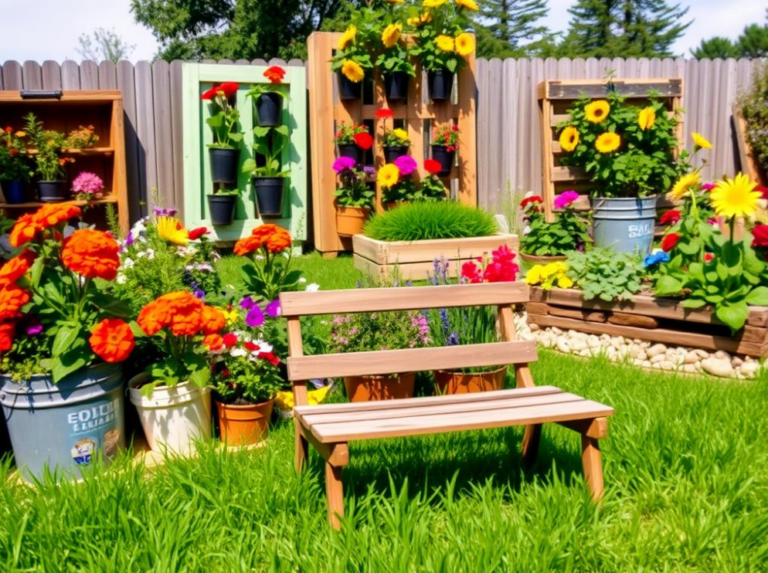
Try making pallet planters, painting terra-cotta pots, or upcycling a wheelbarrow for a quick update. Vertical herb walls and pebble mosaics are easy and cheap. Use outdoor sealers and galvanized screws to keep your projects lasting.
Benefits of Garden Art for Aesthetics
Use focal pieces like sculptures, obelisks, or bright plants to draw the eye. Personal touches make your garden welcoming and encourage you to keep it up. Birdbaths and bee hotels are not only pretty but also help the environment, fitting well within your budget.
7. Natural Pest Control Methods
Protecting your garden is simple. Choose natural pest control methods to keep your garden healthy. These methods help manage pests safely, protecting pollinators, pets, and children. You can use prevention, mechanical fixes, and biological options for a low-maintenance garden.
Why You Should Avoid Chemicals
Many synthetic pesticides harm bees, birds, and beneficial insects. They can also pollute nearby waterways. Avoiding chemicals reduces risks for your family and neighborhood wildlife.
Extension services recommend integrated pest management (IPM). This approach focuses on least-toxic options. It follows label directions and local regulations.
Pests can become resistant to chemicals over time. This makes treatments less effective. Chemicals also disrupt soil microbiology, weakening plant health. Choosing natural controls maintains a balanced garden ecosystem.
Natural Remedies for Common Pests
Start with mechanical controls. Handpick beetles and caterpillars, remove diseased leaves, and use copper tape or beer traps for slugs. These steps immediately reduce pest pressure and require little equipment.
Use homemade and commercial products carefully. Insecticidal soap works well on aphids and mealybugs when applied every 5–7 days. Neem oil controls many pests and fungal issues when mixed per label rates and applied in the cool part of the day. Garlic or chili sprays repel chewing insects; test a small area before broad use.
Biological controls offer precise solutions. Bacillus thuringiensis (Bt) targets caterpillars without harming pollinators. Beneficial nematodes reduce soil grubs, and Bacillus subtilis products manage certain fungal diseases. Follow manufacturer and extension guidance for best results.
Attracting Beneficial Insects
Plant a sequence of blooms to support predators and pollinators. Coneflower, dill, fennel, and goldenrod supply nectar and pollen. This attracts bees, hoverflies, ladybugs, and lacewings. A mix of native perennials and annuals provides continuous forage.
Create habitat to keep beneficials around. Add shallow water sources, leave small patches of bare soil for ground-nesting bees, and avoid broad-spectrum sprays. For targeted boosts, purchase ladybugs or lacewing larvae; release them at dusk and provide flowering cover.
Adopting natural pest control methods supports a balanced ecosystem. It cuts reliance on harsh products. With these steps, your outdoor space stays healthy, productive, and aligned with low-maintenance gardening practices.
8. Learning from Gardening Communities
Joining a group can speed your progress and keep gardening fun. Use online and local resources to ask questions, swap seeds, and try beginner-friendly gardening tips shared by others. Start small, test advice on one plant, and verify things with trustworthy sources like your state extension.
Finding Online Gardening Forums
Look for active spaces on Reddit, GardenWeb, and Facebook where members post photos and step-by-step fixes. Search terms like “container gardening USA” or “city gardening” help narrow results. You can get plant ID help, seasonal calendars, and troubleshooting fast.
Keep etiquette in mind. Cross-check unusual remedies with USDA guidance or your county extension before trying them. Treat advice as a starting point, not gospel, and give clear details when you ask for help.
Local Garden Clubs and Meetups
Search Meetup.com, visit botanical gardens such as Brooklyn Botanic Garden or Chicago Botanic Garden, and call your cooperative extension for group listings. Local garden clubs offer hands-on workshops, seed exchanges, and tours that let you learn by doing.
Consider Master Gardener programs if you want deeper training. These state extension courses include classroom time and volunteer projects that build skills and community ties.
Sharing Tips and Ideas with Neighbors
Use Nextdoor, community gardens, and block associations to trade plants, tools, and advice. Small swaps build trust and cut costs. Label anything you share and add brief growing notes so recipients can succeed.
Try a cooperative herb bed or shared compost bin to spread work and rewards. Regular meetups for swapping seeds and produce turn casual neighbors into reliable gardening partners and expand your pool of beginner-friendly gardening tips.
9. Celebrating Your Gardening Success
As your garden grows, celebrate the small victories. Keep track of when you harvest your crops for the best taste. Harvest in the morning and use clean tools to keep your plants healthy.
Preserving your garden’s bounty lets you enjoy fresh flavors all year. Try freezing veggies, drying herbs, or making pestos and salsas. Always follow safe canning practices to avoid foodborne illness.
Sharing your gardening journey connects you with others and improves your skills. Write in a garden journal, share photos online, or host a harvest party. You can also donate extra produce or give homemade gift jars to friends and family.
FAQ
What are some easy gardening ideas for absolute beginners?
Start with something simple like container gardening or a raised bed. Choose easy plants like lettuce, radishes, and cherry tomatoes. Use basic tools and a good potting mix.Begin with a small project like a pallet herb wall. This will help you see results quickly.
How do I know what plants will thrive in my space (yard, balcony, or indoors)?
First, map out the sun in your space. Full sun is 6+ hours, partial is 3–6 hours, and shade is less. This helps choose the right plants.
What soil should I use for containers versus garden beds?
Use a high-quality potting mix for containers. It drains better than garden soil. For beds, aim for a loam-like structure.Test your soil pH and nutrients. Use DIY kits or local services. Add organic mulch to retain moisture and control weeds.
Which vegetables and herbs are best for beginner-friendly gardening?
For veggies, start with lettuce, radishes, and cherry tomatoes. For herbs, try rosemary, thyme, and oregano. Choose varieties that fit small spaces.
How often should I water my garden and containers?
Water deeply but less often for beds. Containers need more water because they dry faster. Water in the morning to reduce evaporation.Use a finger test or moisture meter to decide. Drip irrigation is efficient for beds. Consider self-watering pots for containers.
What basic maintenance schedule should I follow through the seasons?
In spring, prepare beds and plant cool-season crops. Mulch in the spring. In summer, water more, stake plants, and harvest often.In fall, add compost and plant cover crops. Clean up diseased material. In winter, plan for next season and protect plants.
Are raised garden beds worth the investment and how do I build one cheaply?
Yes, raised beds improve drainage and soil control. Build one from untreated cedar or composite lumber. Make it 4 feet wide and 12–18 inches deep.Fill it with a mix of topsoil and compost. This will help retain moisture.
How can I garden effectively without a yard?
Use containers, vertical gardens, and indoor setups. Choose containers with good drainage. Use vertical planters to save space.For indoor growing, use south-facing windows or LED grow lights. Pick compact varieties and lightweight media for wall systems.
What natural pest control methods actually work for home gardens?
Start with cultural and mechanical controls. Use crop rotation and handpicking pests. Remove diseased foliage and use row covers.Apply targeted biologicals like Bt for caterpillars and nematodes for grubs. Use insecticidal soap for aphids and neem oil for pests. Attract beneficial insects by planting sequential blooms and providing water and habitat.
What budget-friendly DIY garden decor ideas can I make quickly?
Upcycle pallets into herb walls and paint terra-cotta pots. Repurpose old buckets or wheelbarrows as planters. Make pebble mosaics or painted rock plant labels.Build simple trellises from bamboo stakes and twine. Convert pinecones with peanut butter and seed to make bird feeders. Seal painted wood with outdoor sealer and use non-toxic paints for edible planters.
How do I preserve and store extra produce from my garden?
Freeze herbs in ice cube trays with water or oil. Blanch and freeze vegetables. Dry herbs in a dehydrator or hang bundles.Use tested canning recipes for high-acid foods like tomatoes and fruits. Make pestos, pickles, or salsas for quick uses. Store root crops in cool, dark, humid conditions.
Where can I find reliable gardening help and community support?
Online forums like Reddit’s r/gardening and r/plantclinic are great for troubleshooting. Check Meetup.com, county extension offices, and botanical gardens for workshops and Master Gardener programs.Neighborhood platforms like Nextdoor or community gardens offer tool sharing and seed exchanges. They also provide practical local tips.