
Did you know a balcony of just 25 square feet can grow enough herbs and greens for two people for months? This makes balcony gardening a great choice for city folks who want fresh food and greenery without a yard.
This guide will show you how to turn a small outdoor space into a lush garden. You’ll get easy-to-follow advice for gardening in the city and using pots. It’s perfect for most U.S. apartment balconies and climates.
We’ll talk about how to check light, wind, and weight limits. You’ll learn to pick the right containers and soil. We’ll also cover watering, fertilizing, and managing pests and weather. Plus, you’ll find simple ideas for designing and styling your balcony garden.
This article is for renters and owners in U.S. cities who are on a budget or new to gardening. You’ll find tips, tools, and product suggestions to start gardening with confidence.
Why Balcony Gardening Is Perfect for Small Spaces
Balcony gardening turns a small outdoor area into a productive, calming spot. You can grow fresh herbs, salad greens, and small vegetables right by your kitchen. This reduces grocery trips and adds value to your home.
Benefits of gardening on a balcony for urban dwellers
Container beds let you harvest valuable crops like basil and cherry tomatoes. Urban gardening saves money and reduces waste. You can even compost kitchen scraps using products like Espoma Plant-tone.
Balcony plants create a haven for pollinators and soften the concrete view. They also make your living space feel bigger and can increase your rental appeal.
How balcony gardening improves mental health and air quality
Tending plants offers gentle exercise and a calming routine. It can lower stress and improve your mood. Fragrant herbs like lavender and rosemary add a calming scent to your daily life.
Plants improve air quality in small spaces. While outdoor planting increases ventilation, indoor plants like spider plant and English ivy reduce VOCs and particulates near living areas.
Common misconceptions about small-space gardening
Many think you need a yard to grow food. But, smart container choices and proper soil can produce yields from a balcony.
Another myth is that you need full sun. Many herbs and leafy greens thrive in partial shade. So, your north-facing balcony can still be productive.
Some think it requires constant upkeep. Use self-watering pots, drip systems, and slow-release fertilizers to reduce maintenance. Always check building rules and lease terms to ensure your project is legal and safe.
Assessing Your Balcony: Light, Wind, and Weight Limits
First, track the sun’s path on your balcony. Note the sun’s position at morning, midday, and evening for a few days. Use apps or a log to measure light for your plants. Your balcony’s sun exposure depends on its direction.
Wind can harm your plants by drying out the soil. Look for signs like leaning pots or torn leaves. A ribbon test can show you how windy it is.
To protect your balcony from wind, use screens or fabric. Place heavy pots at the edges to keep things stable. Group containers together to reduce wind effects. Choose plants that can handle wind and use trellises to block it.
Every balcony has a weight limit. Check with your property manager or look at structural plans to find out yours. Most buildings allow 40–60 pounds per square foot.
Be careful when estimating the weight of your plants. Wet potting mix is very heavy. Large planters add a lot of weight. Spread out the weight to avoid overloading.
Choose light containers to keep your balcony safe. Use plastic or fabric pots for a stylish, lightweight option. Long planters on the railing help distribute weight. Plant caddies with wheels make moving heavy pots easy.
When buying pots, pick ones that are light but still hold soil well. Look for railing planters that hook securely. These choices help keep your balcony safe and your plants happy.
Choosing the Best Containers and Planters for Small Balconies
Choosing the right containers is key to a great balcony garden. Look for ones that fit your space, plants, and how often you water. Think about weight, drainage, and watering needs. The right choice makes growing plants in small spaces easy and productive.
Types of containers: pots, railing planters, window boxes, and vertical systems
Traditional pots offer flexibility. You can move them to catch the sun or protect from wind. They’re great for tomatoes, peppers, and big plants.
Railing planters save space and keep walkways clear. Make sure to check the rail width and test the weight before adding soil and plants.
Window boxes are perfect for herbs and flowers. They let you easily harvest and trim your plants.
Vertical gardening systems use space up and down. Trellis planters, pocket walls, and pallet gardens let you grow more plants in less space. Consider Woolly Pocket kits or DIY pallet systems for herbs and vines.
Material pros and cons: terracotta, plastic, fiberglass, and fabric pots
Terracotta pots have a classic look and breathe well. They’re good for Mediterranean herbs and succulents. But they dry fast, are heavy, and can crack in cold weather.
Plastic pots are light and cheap. Brands like Miracle-Gro and Nature’s Way offer many sizes. They hold moisture longer but can fade in strong sun.
Fiberglass and resin pots look high-end but are light and durable. They resist cracking in cold and have a modern look with less upkeep.
Fabric grow bags, like Smart Pot and Root Pouch, promote healthy roots. They drain well and are easy to store. But they dry fast, so you’ll need to water more often.
Container drainage, saucers, and preventing water damage
Good drainage stops root rot. Use containers with holes or add them to closed pots. Place saucers under pots to catch water.
Empty saucers often to avoid water pooling. For renters, use waterproof mats or liners under pots.
Use feet or risers under pots for better airflow and to prevent staining. Self-watering planters, like Lechuza, reduce runoff and keep moisture steady.
For railing planters, use strong brackets and balance weight. If using drip irrigation, direct excess water to a catch container to avoid dripping on neighbors.
| Container | Pros | Cons | Best Uses |
|---|---|---|---|
| Terracotta pots | Breathable, attractive, stable | Heavy, dries fast, fragile in freeze | Mediterranean herbs, succulents |
| Plastic pots | Lightweight, cheap, moisture-retentive | Can fade, less premium look | Vegetables, annual flowers |
| Fiberglass / Resin | Durable, lightweight, high-end look | More costly upfront | Showpiece containers, year-round displays |
| Fabric grow bags | Air-prune roots, easy storage, good drainage | Dry faster, frequent watering needed | Tomatoes, potatoes, fast-growing herbs |
| Railing planters | Saves floor space, visible planting | Weight limits, rail compatibility | Herbs, trailing flowers |
| Vertical gardening systems | Maximizes vertical space, high yield per ft² | Initial setup, irrigation planning | Leafy greens, strawberries, vining herbs |
Match materials to plants and climate when buying. Test a layout with a few pots first. This helps you learn what works for your balcony without wasting time or money.
balcony gardening tips
Begin by sketching your balcony’s layout. Note the sunny and shady spots, the railing, and outlets. A detailed plan helps you test your garden layout before buying anything.
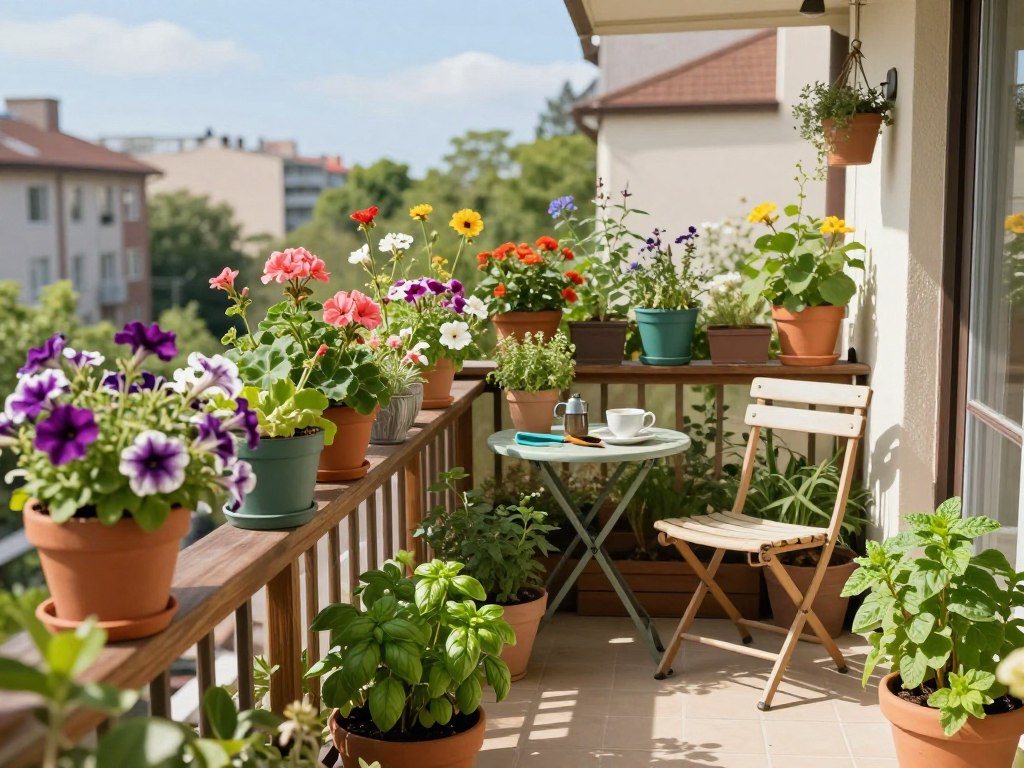
Consider using vertical space. Hang baskets, rail planters, and multi-tier stands create layers. Foldable furniture from IKEA can also serve as plant stands, freeing up floor space when needed.
Group plants by their water and light needs for easier care. Place sun-loving edibles in the sunniest spots. Shade-tolerant herbs and plants go in the shadier areas. Use rail edges for trailing plants and corners for larger pots.
Space-saving layout ideas and plant placement strategies
Plan a vertical layout: start with hanging baskets, then rail planters, mid-height pots, and floor containers. This setup maximizes light for tall plants and leaves room for low-growing greens.
Try compact interplanting. Plant radishes or baby greens between tomato seedlings early. Rotate pots a few inches each month to ensure even light and air.
Companion planting and maximizing yield in limited space
Companion planting in containers is effective. Pair basil with tomatoes for flavor and pest control. Marigolds near peppers and tomatoes repel nematodes and aphids.
Mix lettuce under taller beans to use shade and extend harvest. Use cut-and-come-again varieties for continuous harvests. Succession planting keeps beds productive by sowing new seeds as you harvest.
Train vining crops like peas and cucumbers on trellises. This saves floor space. Use troughs for salad mixes and herb combinations to boost yield.
Seasonal planning and crop rotation for balcony gardens
Plan for spring, summer, and fall crops. Move cold-sensitive plants indoors before frost. Start summer seedlings early and harden them off before moving outside.
Rotate crops to limit disease. Avoid planting the same family in one container in consecutive seasons. Refresh potting mix and sanitize containers each year to reduce pathogens.
With a well-thought-out layout, smart planting, and rotation, you can grow more food and save time.
Selecting Plants That Thrive on Small Balconies
Choosing the right plants turns your balcony into a garden. Start with plants that do well in containers and small spaces. Mix edible plants with flowers for color and to attract pollinators.
For quick growth, pick container vegetables like cherry tomatoes, peppers, lettuce, spinach, radishes, bush beans, and dwarf cucumbers. Herbs like basil, parsley, cilantro, chives, and thyme are great for containers. Mint should be in its own pot to prevent it from spreading too much.
Plant seeds about 1/4 to 1/2 inch deep. In containers, plants are closer together than in gardens. Check the seed packet for specific spacing and growing times. Radishes take 25–40 days, lettuce 30–60 days, cherry tomatoes 60–75 days, and basil 50–70 days to harvest.
Compact and dwarf varieties to save space
Look for plants labeled as “patio,” “bush,” or “compact.” Try ‘Patio’ and ‘Tiny Tim’ tomatoes, ‘Numex Twilight’ peppers, ‘Provider’ beans, and dwarf squash. Seed catalogs from Burpee, Johnny’s Selected Seeds, and Baker Creek have good options. These plants need less space and do well in 5–10 gallon pots.
Ornamental plants and pollinator-friendly options
Add flowers to attract bees and beneficial insects. Borage, calendula, nasturtium, bee balm, lavender, and salvia are good choices. Long-blooming annuals like petunias, geraniums, impatiens, and begonias add color. Native plants like Echinacea and Asclepias (milkweed) support local pollinators if you have enough sun and space. But remember, milkweed is toxic to pets, so keep it safe.
A mix of vegetables, dwarf plants, and flowers makes your balcony productive and beautiful. You’ll have fresh herbs, regular harvests, and a space that attracts pollinators, helping everything grow well.
Soil, Fertilizer, and Watering Techniques for Container Gardens
Container gardening thrives on good soil, steady nutrients, and reliable watering. Start with a high-quality potting mix that’s light, drains well, and holds moisture. Look for mixes with peat moss or coconut coir, perlite or vermiculite, and compost for young roots. Avoid garden soil, as it can harm container roots.
Add perlite or pumice for better aeration. Mix in compost or worm castings to boost microbial life. At planting, use a slow-release fertilizer. Refresh the soil’s top few inches every spring. Replace the soil every one to three years, depending on your growing intensity.
Fertilizing schedules are key to avoid gaps and excesses. Use a balanced slow-release fertilizer at planting, like 10-10-10. Then, supplement monthly with liquid feeds like kelp extract or fish emulsion. Herbs need gentler feeding to keep flavors bright.
For balcony gardens, choose organic fertilizers for steady, low-risk nutrition. Options include compost tea, fish emulsion, kelp/seaweed products, and bone meal for phosphorus. Brands like Espoma, Dr. Earth, and Neptune’s Harvest are reliable for container work.
Watering methods are crucial for root health and your time. Self-watering planters with reservoirs reduce daily checks. Lechuza and Bloem make popular systems for steady moisture.
For larger setups, consider drip irrigation. Compact kits from DripWorks or Rain Bird can run on timers. Group plants by water needs to simplify irrigation and save water.
Use moisture meters or the fingertip test to check the root zone. Water deeply until you see a little runoff. This encourages roots to explore the container. Mulch containers with shredded bark or straw to reduce evaporation and keep soil temperatures steady.
Group pots by water needs, collect rainwater where allowed, and water in the early morning. This lowers evaporation and reduces disease risk. With the right potting mix, steady organic fertilizers, and thoughtful watering, your balcony can stay lush with less stress.
Pest, Disease, and Weather Management on Balconies
To keep your balcony garden healthy, watch for problems early and use simple fixes. Check your plants weekly for changes and act fast if you see damage. This saves time and keeps your garden growing well.
Identifying common pests and organic control methods
Look for aphids on new growth, whiteflies that fly away, and spider mites with webbing. Slugs and snails make holes, and caterpillars leave marks. Honeydew on leaves means sap-sucking bugs.
Start with organic pest control. Add beneficial bugs like ladybugs from places like Arbico Organics. Use insecticidal soap or horticultural oil on soft pests. Neem oil keeps pests away.
Handpick big pests and use beer traps or copper tape for slugs and snails. Check your plants after treatment and do it again if needed.
Preventing and treating common container plant diseases
Fungal diseases like powdery mildew and root rot need good air and dry soil. Viruses and bacteria come from insects or dirty tools. Use a good potting mix and don’t water from above.
Clean tools and remove sick leaves fast. For tough fungal problems, try copper sprays or organic sulfur. Rotate plants and change soil to prevent disease.
Protecting plants from heat waves, frost, and heavy rain
In heat waves, use shade cloth and move plants to cooler spots. Water in the morning more often. Anti-transpirants help but use them carefully.
To protect from frost, cover pots with frost cloths or sheets. Move plants indoors or to a garage if you can. Use cloches and wraps to keep roots warm.
Heavy rain can flood and knock over pots. Lift containers, clear holes, and move light pots under cover. Secure trellises and stakes to avoid falls and manage water.
Monitoring, record-keeping, and safety
Keep a notebook or digital log of pests, treatments, and weather. This helps you spot patterns and improve your methods each season. Always check local rules before spraying and avoid harming neighbors.
| Issue | Signs | Organic Control | Prevention |
|---|---|---|---|
| Aphids / Whiteflies | Clusters on new growth; honeydew | Insecticidal soap; release ladybugs | Regular inspection; strong water sprays |
| Spider mites | Fine webbing; stippled leaves | Horticultural oil; neem oil | Increase humidity; clean foliage |
| Slugs & Snails | Irregular chewing; slime trails | Beer traps; handpick; copper tape | Elevate pots; remove hiding spots |
| Caterpillars | Visible chewing; frass | Handpick; Bacillus thuringiensis (Bt) | Netting; companion plants that deter |
| Powdery mildew / Root rot | White powder; yellowing; wilting | Copper sprays; organic sulfur when needed | Good airflow; proper drainage; avoid overhead watering |
| Frost damage | Blackened leaves; wilt after cold night | Move indoors; cover with frost cloth | Insulate pots; monitor forecasts to protect balcony plants from frost |
Design and Styling Tips for an Inviting Balcony Garden
Imagine how you want to use your balcony. Think about relaxing, entertaining, and growing food. Having a clear purpose helps shape your design and keeps things simple.
Creating vertical interest with trellises and living walls
Use trellises for vining crops like peas, cucumbers, and nasturtiums. Vertical gardening ideas include freestanding trellises, railing-mounted supports, and slim shelving units. These let plants layer up without crowding the floor.
Try pocket planters like Woolly Pocket or stackable planters for living walls. Train clematis or dwarf grape vines where allowed. These choices maximize space and create privacy.
Color, texture, and seasonal focal points
Mix foliage textures like ornamental grasses, succulents, and broadleaf herbs for depth. Choose a color palette that suits your mood. Long-blooming varieties like salvia and petunia add steady color.
Rotate focal containers by season. Plant spring bulbs, add summer edibles in bold pots, and switch to evergreens or ornamental grasses for winter. Swap cushions and decorative planters to reflect the changes.
Furniture, lighting, and accessories that complement plants
Choose small-scale, foldable, or multifunctional furniture like bistro sets or benches with built-in storage. This supports small space garden styling while keeping the area usable.
For evening use, install string lights, solar stake lights, or clip-on LED grow lights. Always use outdoor-rated fixtures and follow your building’s electrical policies for safety.
Personalize with scent and edibles—lavender, jasmine, or container strawberries add aroma and flavor. Shop retailers like Home Depot or Crate & Barrel and local nurseries for durable containers and textiles. Balance looks and function so maintenance stays manageable and enjoyable.
Conclusion
In this balcony gardening summary, you’ve learned the basics. First, measure your light, wind, and weight limits. Then, choose lightweight, well-draining containers. Pick compact plants and use vertical space to get the most out of your area.
Use quality potting mix and consider a self-watering container or drip kit. Set a weekly care routine to keep your garden thriving.
To start your balcony garden, measure your space and pick three starter plants. Choose one herb, one leafy green, and one flowering annual. These plants will give you quick results and teach you about plant care.
Adopt efficient watering and fertilizing habits. Watch out for pests and weather stress to respond quickly.
Start small and grow vertically or add more planters each season. Keep track of what works and what doesn’t in a journal. Join local groups for tips specific to your area.
This small balcony oasis can bring fresh herbs, seasonal veggies, and a greener home. Use these tips to build routines, learn about different plants, and enjoy the progress you make.