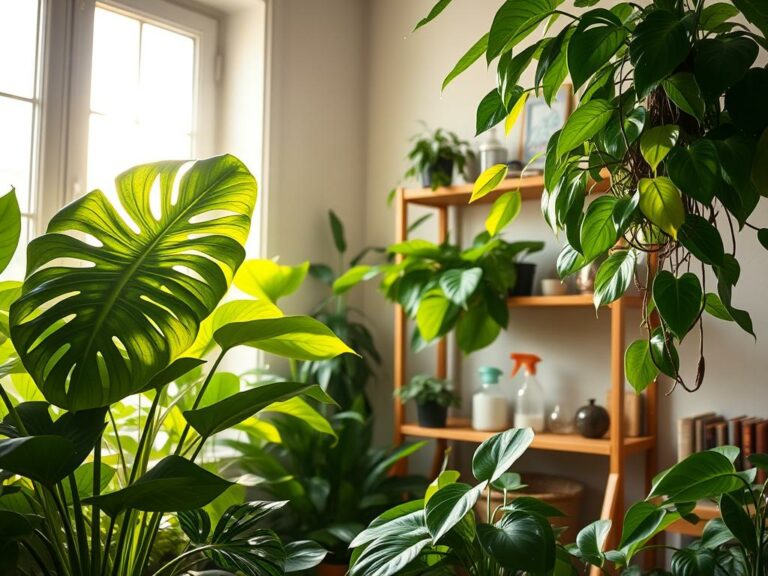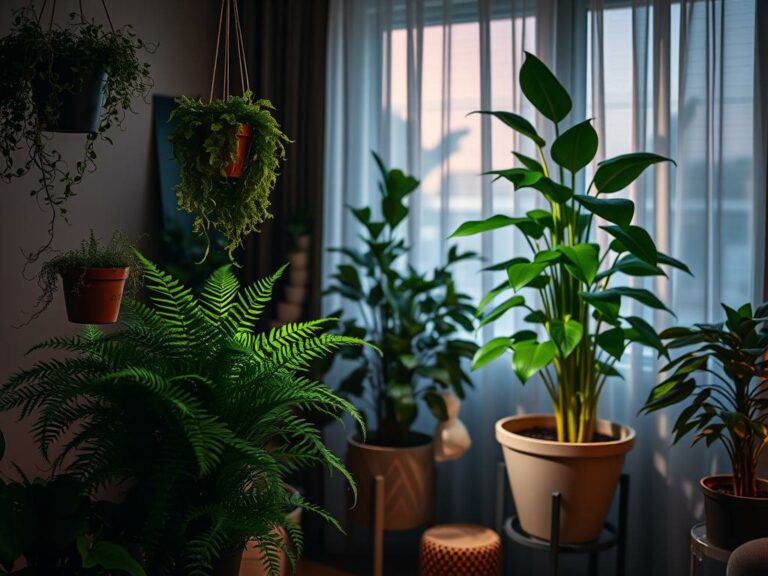

Many U.S. homes have humidity levels below 30% in winter. This is much lower than the 40–60% range that plants like Monstera, Calathea, ferns, and orchids need.
This guide offers affordable, eco-friendly ways to boost humidity for plants. You’ll learn how to improve transpiration, reduce leaf browning, and enhance growth. These methods don’t require buying an electric humidifier.
It’s designed for U.S. indoor gardeners looking for natural humidity tips. You’ll get advice on measuring moisture, grouping plants, using pebble trays, and misting routines. These are all plant-friendly methods.
Keep reading for detailed techniques, quick monitoring tips, and warnings. This way, you can naturally increase humidity without risking mold or pests.
Why humidity matters for indoor plants
Keeping houseplants healthy requires the right air moisture. Humidity affects growth, leaf color, and pest resistance. Dry air stresses many plants and can make care routines fail.
Relative humidity is the air’s water vapor compared to its maximum at a given temperature. Knowing this helps predict how plants react to indoor conditions.
Stomata control gas exchange and water loss. Low RH increases transpiration, forcing stomata to close. This limits CO2 uptake and slows growth.
Low humidity disrupts water potential and turgor. This causes leaf curl and wilting, even with moist soil.
Excessive transpiration can interrupt nutrient uptake. You may see tip burn or brown leaf margins when water moves too quickly through a plant and minerals fail to keep pace.
How relative humidity affects plant physiology
When the air is dry, plants lose water faster than roots can replace it. This raises the risk of stomatal closure and reduced photosynthesis. Relative humidity and plants are in a balance between water loss and uptake.
Low humidity lowers leaf water potential. Cells lose turgor, showing as drooping or curled leaves. Rapid water loss also concentrates salts in leaf edges, leading to brown margins and dead tissue.
Signs your plants need higher humidity
Watch for brown, crispy leaf edges and tips, which are classic signs of low humidity in houseplants.
Leaves that curl, droop, or develop dry patches point to too-dry air. New growth that is deformed, slow, or frizzled is another clue.
Pest outbreaks, like spider mites, increase in dry air and leave dusty webs or stippling. If a plant that usually keeps foliage starts dropping leaves, low humidity may be the cause.
Which common houseplants are most sensitive to low humidity
Many tropical understory species struggle in dry homes. Calathea, Maranta (prayer plant), ferns such as Boston and maidenhair, Alocasia, certain Philodendron aroids, Anthurium, Phalaenopsis orchids, and Monstera prefer steady, humid conditions.
These humidity-sensitive houseplants evolved under canopy with stable, humid microclimates and low light. They depend on moist air for gas exchange and to keep leaf tissue supple.
Succulents and many cacti prefer lower humidity and can suffer if you over-humidify their environment. Match plant choice to your home’s typical moisture levels to reduce stress.
| Plant Group | Typical Preferred RH (%) | Common Signs of Low Humidity | Care Tip |
|---|---|---|---|
| Calathea / Maranta | 60–80 | Brown edges, curled leaves, slow new growth | Place in bathroom or use pebble tray; avoid direct sun |
| Ferns (Boston, Maidenhair) | 50–70 | Frizzy or brittle fronds, pale new foliage | Keep soil evenly moist and mist lightly in morning |
| Alocasia / Anthurium | 55–75 | Leaf curl, brown margins, reduced flowering | Group with other plants and raise ambient humidity |
| Phalaenopsis Orchids | 50–70 | Wrinkled leaves, poor root health, stunted blooms | Use bark mix, provide indirect light, moderate humidity |
| Monstera / Philodendron (aroids) | 50–70 | Slow growth, brown leaf tips, fragile new leaves | Keep away from vents and dry drafts |
| Succulents & Cacti | 20–40 | Rot risk if over-humidified, yellowing from poor aeration | Provide bright light and infrequent deep watering |
Understanding the ideal humidity range for different plants
Knowing the right humidity is key for your indoor garden. Plants from different climates have different needs. Before changing your environment, match plants with room conditions using humidity ranges.
Tropical vs. non-tropical houseplants
Tropical plants love high moisture. Ferns and Calatheas need 60% humidity or more. Monsteras and most aroids prefer 50–70%.
Many houseplants do well in moderate air. Pothos and spider plants like 40–60% humidity. Succulents and cacti, on the other hand, thrive in dry air, tolerating 20–40% RH.
How to find your plant’s preferred humidity range
Begin with the plant tag or care guide from brands like Costa Farms or The Sill. Check the Royal Horticultural Society and American Orchid Society for specific advice.
Look up university extension pages and forums for detailed recommendations. Use a hygrometer to compare room humidity with published ranges. Then, adjust placement or add moisture as needed.
Balancing humidity with temperature and light
Warm air can hold more moisture. If you increase temperature without adding moisture, humidity may decrease. Remember this when moving plants to brighter spots.
Bright, warm areas increase transpiration, possibly requiring higher humidity. Group plants by light and heat to maintain a stable microclimate. Avoid direct heat vents for tropical plants.
Place moisture-loving plants in stable, moist areas like bathrooms or kitchens. This keeps humidity consistent and reduces stress on plants.
Measure humidity: tools and techniques
Before you change a routine, you should be able to measure humidity indoors reliably. Simple tools tell you current conditions. Better tools reveal trends. Pick devices that match your space and how often you want to monitor plant humidity.
Using a hygrometer correctly
There are three common types: analog dial, digital display, and combination thermohygrometers. Digital units from brands like AcuRite or ThermoPro tend to be more accurate than cheap analog models. A trusty hygrometer for plants gives you the basic reading you need to act.
Place the device at canopy height and away from vents, windows, or direct sun. That placement helps you capture the conditions your plants actually experience. If readings seem off, perform a salt test or compare with a known-accurate unit. Recalibrate or replace units that drift.
Smart sensors and apps for continuous monitoring
Smart humidity sensors from Eve, Govee, and Aqara pair with apps to log data and send alerts. These smart humidity sensors show trend charts, notify you when levels fall below a set threshold, and help you monitor plant humidity without daily checks.
Check ecosystem compatibility before you buy. Some devices work best with Apple HomeKit, others with Android or Alexa. Look at battery life and wireless range if you have rooms far from your router. Good smart sensors save time by tracking diurnal swings and HVAC impacts.
Interpreting short-term vs. long-term humidity readings
Short-term spikes can come from cooking or a hot shower. Don’t overreact to a single high or low reading. Those events are temporary and usually harmless.
Track trends over days or weeks to find your baseline RH and nightly lows. If nightly minimums regularly drop below your plant’s preferred range, you should apply humidity-raising strategies. Occasional dips are normally tolerable, but repeated lows cause stress.
Use both immediate hygrometer for plants readings and logged data from smart humidity sensors to form a clear picture. That dual approach helps you decide when to group plants, add a pebble tray, or run a humidifier to better monitor plant humidity and boost long-term health.
Group plants together to increase moisture naturally
Grouping plants is a simple way to increase humidity at home without using gadgets. When you group several pots together, their shared transpiration raises local humidity. This creates a plant humidity microclimate that benefits moisture-loving species.
You also get benefits like better visual cohesion, fewer drafts, and easier watering routines.
How grouping boosts local humidity levels
Each leaf releases water vapor as it transpires. By placing several medium-sized houseplants together, you can increase humidity in that area. The effect depends on plant size, leaf area, and room ventilation.
Clusters work best when plants have similar moisture needs. The combined transpiration creates a small zone with steady humidity. This helps tropicals keep glossy leaves and reduces stress during dry heating months.
Best plant arrangements and spacing
Arrange plants with similar light and humidity needs together. For small pots, keep them a few inches apart to trap moisture without blocking airflow. Larger plants may need up to a foot of spacing to avoid crowding and mold risk.
Use tiered stands, shelves, or a plant cart to stack plants. This way, lower plants still get light. Place trays or shallow saucers beneath clusters to collect overflow and extend the moisture effect without waterlogging soil.
Combining plants with different needs safely
If you mix species, put humidity lovers in the center and drier-tolerant plants on the edges. Keep succulents and cacti in separate groups or on a sun-drenched windowsill to prevent over-humid conditions.
Set up microclimate zones around your home. Bathrooms and kitchens suit tropicals, while south-facing sills work for sunseekers that prefer drier air. Inspect new additions before joining them to a cluster to limit pests and disease spread.
| Arrangement Type | Recommended Spacing | Best Use | Notes |
|---|---|---|---|
| Compact tray cluster | 2–6 inches between small pots | Small tropicals and ferns | Great for raising local RH; monitor for mold weekly |
| Tiered stand grouping | 6–12 inches vertical spacing | Mixed heights, layered light | Preserves light to lower plants while boosting humidity |
| Perimeter buffer layout | 6–12 inches around humidity lovers | Combining humidity-loving and drier plants | Places succulents at edge to avoid excess moisture |
| Room microclimate zone | Depends on room size; keep clusters 1–2 ft from vents | Bathrooms, kitchens, bright humid corners | Natural sources boost the plant humidity microclimate |
Use pebble trays and water trays for passive humidity
Pebble trays are a simple way to add moisture near your plants. They don’t make the soil soggy. A shallow tray with pebbles and a bit of water sits under the pot. This setup makes the air around the leaves more humid, helping your plants.
Setting up a pebble tray is important. Choose a tray that’s a bit bigger than the pot base. Fill it with decorative pebbles or river rock and add water just below the top. Place the pot on the stones so the roots don’t get wet. This works great for plants on windowsills, desks, and shelves.
Make sure to get the water level right and check it often. Water should never touch the pot’s base to avoid root rot. Change the water every few days to a week to keep it fresh. Clean the tray and stones weekly to monthly, depending on how dirty they get. If your tap water has minerals, use filtered or distilled water.
Pebble trays only increase humidity by a few percentage points. They work best when used with other methods like grouping, misting, or a humidifier. Think of them as one part of a bigger plan for your plants’ health.
Styling your pebble tray can match your decor. Use white pebbles for a modern look or river rocks for a natural feel. You can also use slate and moss for a forest look, but keep the moss dry. Hide a plastic tray under a ceramic or wooden dish to protect surfaces. Pair trays with plant stands and saucers to keep everything neat and prevent water damage.
Increase humidity with regular misting and humidifying routines
Using a fine mister can help your houseplants on dry days. Spray the leaves in the morning so they dry by night. This method keeps fungal risks low and meets your plants’ humidity needs.
Proper misting technique and timing
Hold a spray bottle 12 inches from your plants and mist lightly. Spray the underside of leaves for plants that breathe there. Don’t soak the soil to increase air moisture near leaves.
Mist in the morning to let water evaporate during the day. Mist daily or every other day in dry homes for plants that love humidity. Adjust based on your hygrometer and plant responses.
When misting is helpful and when it isn’t
Misting is great for a quick moisture boost and for cleaning leaves. Use it for sensitive plants like ferns or philodendrons in dry air.
Don’t rely on misting for long-term humidity. It only briefly raises humidity and can lead to fungal disease if leaves stay wet. Skip misting for succulents and cacti to avoid rot.
Alternatives to misting for long-lasting humidity
For steady humidity, use methods like grouping plants, pebble trays, or an ultrasonic humidifier. Place humid-loving plants in bathrooms or kitchens when light is good.
Use misting for spot care and pair it with lasting solutions like trays or a room humidifier. Monitor humidity with a hygrometer to avoid too much and find the best mix for your plants.
Use humidity-loving substrates and potting practices
Choosing the right potting mix is key for plants that love moisture. You can increase humidity around your plants by adjusting the potting mix. Adding a top dressing and selecting the right container also helps.
Soil mixes that retain moisture without waterlogging
For tropical houseplants, aim for a mix that holds water but drains well. A good mix is 2 parts peat or coconut coir, 1 part perlite, and 1 part compost. This mix gives roots moisture and oxygen.
Epiphytes like orchids and some aroids need chunkier media. Use orchid bark or long-fiber sphagnum to keep air around roots. Avoid clay-heavy soils that can cause root rot.
Top dressings and mulch to slow evaporation
Cover the surface with moss, coconut coir fiber, or small bark chips to slow evaporation. Decorative moss adds a tropical look and helps keep the soil humid.
Refresh mulch every few months and check for pests or mold. In very humid setups, inspect often to avoid hiding fungal growth under the mulch.
Pot selection and how container material affects humidity
Container material affects moisture behavior. Terracotta pots lose moisture quickly, good for plants that prefer drier conditions. Glazed ceramic and plastic retain moisture longer, ideal for plants that love humidity.
Self-watering pots and sub-irrigation planters help keep the soil moist. Match the pot type to your plant’s preference and adjust the potting mix when changing containers.
Place plants near humidity sources in your home
Choosing the right spot for your plants can boost moisture without extra gadgets. Think about where steam, warm air, or water gather in your home. Good plant placement for humidity uses natural patterns so your plants get a friendlier microclimate.
Bathrooms, kitchens, and other naturally humid spots
Bathrooms, kitchens, laundry rooms, and sunrooms are typical humidity hotspots. A post-shower bathroom gives short bursts of moisture that many ferns and tropicals welcome. You can put plants in bathroom if light is adequate or if you add a small grow light.
Kitchens often produce steam while cooking. Kitchen humidity for plants suits pothos, spider plants, and philodendrons that tolerate changing light. These spaces supply intermittent humidity spikes, so pair them with pebble trays or groupings to make a steadier microclimate.
How to adapt bright-light plants to humid rooms
Bright-window species like succulents or cacti need trade-offs when moved toward humid rooms. If your bathroom lacks a south- or east-facing window, acclimate the plant slowly over one to two weeks to avoid shock.
Rotate positions and monitor leaf color and stretch. Use a full-spectrum LED grow light to replace missing sun. Another option is to place bright plants just outside the humid room so they still benefit from moisture while keeping their required light.
Precautions for moisture-sensitive furniture and surfaces
Moist environments can harm wood, painted finishes, and electronics. Put plants on waterproof trays, coasters, or stands to protect floors and furniture. Elevate pots slightly to allow airflow under saucers.
Watch for condensation on windows and mold on walls in persistently humid rooms. Run exhaust fans when needed and check surfaces regularly. These steps protect your home while you take advantage of the best rooms for humid plants.
| Room | Typical Humidity Pattern | Best Plant Types | Placement Tips |
|---|---|---|---|
| Bathroom | Short, frequent spikes after showers | Ferns, calatheas, snake plants (if light present) | Near window or add a grow light; use waterproof trays |
| Kitchen | Variable spikes from cooking and boiling | Pothos, spider plant, philodendron | Place away from stove; benefit from kitchen humidity for plants; protect surfaces |
| Laundry room | Occasional warm, humid air from dryers | Peace lily, zamioculcas, dracaena | Keep plants elevated; avoid lint buildup; ensure ventilation |
| Sunroom | Consistent warmth and moisture with good light | Tropical philodendrons, monsteras, begonias | Use grouping for stable humidity; monitor temperature swings |
Use natural room humidifiers and low-tech solutions
Keeping your plants happy doesn’t always mean buying a machine. You can use natural room humidifiers and simple methods to increase humidity. These methods use physics to help your plants without needing a humidifier all day.
Open water bowls, indoor fountains, and evaporative methods
Put shallow bowls of water near your plants to add moisture. The bigger the water surface, the more moisture you get. Small tabletop fountains not only humidify but also add beauty to your space.
Use smooth pebbles or river rock in bowls to keep pots dry. Make sure bowls are not on wood or fabric that can get damaged. Change the water often to stop algae and mosquitoes.
DIY plant humidifier and plant-friendly steam techniques
You can make a DIY plant humidifier from home items. Place warm water bowls near heat sources to speed up evaporation. Create a humidity tent from a clear plastic cover for short-term needs, ensuring good air flow.
Open the bathroom door after a hot shower to let humid air spread. Boil a kettle for a minute, then turn it off to let steam out. Always watch boiling water and avoid hot steam on leaves for too long.
Pros and cons compared to electric humidifiers
Low-tech options are cheaper, quiet, and can be decorative. They work well for small areas or to add moisture to one room. Options like tabletop humidifiers or indoor fountains are great for moisture without electricity.
These methods offer less control and cover smaller areas than electric units. They rely on room temperature and air flow, so humidity levels change. You’ll need to change water and clean often. For consistent moisture across your home, consider an electric humidifier.
Maintain plant health to improve humidity tolerance

Keeping your plants healthy is key to handling moisture changes. Stable care helps roots and leaves adjust. This way, your plants can handle higher humidity without stress.
Proper watering schedules and avoiding overwatering
Water when the top inch of soil feels dry for most tropical houseplants. Check depth for species with different needs. Change frequency by pot size, medium, and season.
Use well-draining mixes and pots with drainage holes to avoid root rot. Raising ambient humidity won’t replace good drainage. So, watch how quickly water leaves the pot.
Fertilizing and pruning to reduce stress
Feed actively growing plants with a balanced formula like 10-10-10 houseplant fertilizer. Choose slow-release granular or diluted liquid feeds. Follow label directions to avoid overfertilizing.
Trim dead or damaged leaves to lower disease risk and encourage fresh growth. Thin dense canopies to improve airflow. Prune plants for humidity tolerance so inner leaves dry faster between wet periods.
Pest and disease prevention in higher-humidity environments
High humidity can invite fungal diseases like powdery mildew and leaf spot, plus pests such as fungus gnats. Keep leaves dry overnight and use fans to maintain good air circulation.
Use sticky traps for fungus gnats and allow the substrate to dry to the species-appropriate depth before watering again. To treat outbreaks, try horticultural oil, insecticidal soap, or biological controls like Bacillus thuringiensis for larvae. Apply fungicides only when needed and per label instructions.
Below is a quick care chart to help you balance practices that support plant health and humidity tolerance.
| Care Action | When to Do It | Why It Helps |
|---|---|---|
| Check soil depth | Weekly for small pots, biweekly for large pots | Prevents overwatering and supports stable moisture for roots |
| Use well-draining mix | At repotting or every 1–2 years | Reduces root rot risk when humidity rises |
| Balanced fertilization | During active growth, follow label | Boosts foliage vigor and resilience |
| Prune and thin canopy | As needed to remove dead growth | Improves airflow and helps prune plants for humidity tolerance |
| Air circulation | Daily or use timed fans | Helps prevent fungal diseases and prevent pests in humid conditions |
| Sticky traps and monitoring | Set up when humidity is high | Catches fungus gnats and alerts you to infestations early |
Conclusion
To boost humidity for plants, start by checking your room’s humidity with a hygrometer. This gives you a starting point and lets you see how your efforts are doing. Knowing what each plant needs is key; some love a lot of moisture, while others prefer it dry.
Try a few natural ways to add humidity: group plants, use pebble trays, mist them, and pick the right potting mix. Move plants to places like bathrooms or kitchens if they like it there. This can help without needing to use electricity.
Remember, balance is important. Don’t make the air too wet, keep air moving, and watch for pests or mold. Change your approach with the seasons, like in winter when heaters dry out the air. Use an electric humidifier if natural methods aren’t enough.
As a last piece of advice: start with simple, low-cost methods and check your progress with a hygrometer. Adjust your plan based on what you see. With a little patience and trial and error, you’ll find the perfect balance for your plants and a cozy home.
FAQ
What is relative humidity and why does it matter for my indoor plants?
Relative humidity (RH) is the amount of water vapor in the air. It’s compared to the maximum the air can hold at that temperature. For plants like Monstera and Calathea, RH affects how they breathe and grow.Low RH can cause plants to lose water too fast. This can harm their growth. Keeping the RH right helps plants stay healthy and grow well.
How can I tell my plants need higher humidity?
Look for signs like brown, crispy leaves and curled tips. Also, check for dry patches and distorted new growth. These signs often mean the air is too dry.
What humidity levels do different houseplants prefer?
Tropical plants like Monstera prefer 50–80% RH. Ferns do best above 50–60%. Plants like pothos can handle 40–60% RH.Succulents and cacti need much less, around 20–40% RH. Check care guides from The Sill or Costa Farms for exact needs.
How should I measure humidity accurately indoors?
Use a digital thermohygrometer from brands like AcuRite or ThermoPro. Place it near your plants but away from vents and direct sun. Calibrate it if needed.For ongoing monitoring, consider smart sensors like Govee or Eve. They can track trends and send alerts.
How many times can I repeat a keyword in this FAQ?
This FAQ doesn’t limit keyword repeats. Focus on clear answers to help with humidity issues. Use natural solutions like grouping plants and using pebble trays.
Will grouping plants really raise humidity enough to help them?
Yes, grouping plants can increase humidity. It creates a microclimate where plants help each other. This method also reduces drafts and makes care easier.Keep plants with similar needs together. Make sure there’s some air flow to avoid mold. Check for pests regularly.
How do pebble trays work and how do I maintain them?
Fill a tray with pebbles and add water just below the pebbles. Place the pot on the pebbles so the pot base stays dry. This method raises humidity without waterlogging the roots.Replace the water every few days to a week. Clean the pebbles often. Avoid letting water touch the pot base to prevent root rot.
Is misting a good long-term solution for humidity?
Misting is good for a quick boost and cleaning leaves. Mist in the morning so leaves dry during the day. It’s not reliable for long-term humidity.Use misting with other methods like pebble trays or a humidifier for better humidity.
Can changing soil or pots help increase humidity around plants?
Yes, using moisture-retentive mixes and top dressings can help. Glazed pots retain moisture better than terracotta. Self-watering planters also keep the soil moist, supporting humidity.
Which rooms in my home are best for humidity-loving plants?
Bathrooms, kitchens, and laundry rooms are good because of the humidity. Bathrooms work well if they get enough light. Kitchens can be good for plants that handle variable light.Use trays or groupings to stabilize humidity. Protect surfaces with waterproof mats or trays.
Are low-tech methods like bowls of water or indoor fountains effective?
Yes, bowls of water and fountains can raise humidity. They need frequent water changes to prevent algae and mosquitoes. They’re good for localized humidity but not as consistent as humidifiers.
When should I consider an electric humidifier instead of natural methods?
Try natural methods first. If your plants still need more humidity, consider a humidifier. Cool-mist or evaporative humidifiers from Honeywell or Levoit are good options.
How do I avoid creating mold or pests when increasing humidity?
Keep air moving with fans or space plants well. Mist in the morning to avoid wet leaves. Replace standing water and clean trays regularly.Watch for fungus gnats and mildew. Thin dense canopies and use sticky traps or horticultural oils as needed.
Can I safely combine plants with different humidity needs in one space?
Yes, with care. Place humid plants in the center and drier plants on the outside. Use bathroom or kitchen areas for humid plants and bright windowsills for drier ones.Keep succulents separate to avoid over-humidifying them.
How often should I check humidity and what readings matter most?
Check humidity daily to weekly, depending on the season and your plants’ needs. Watch for spikes after showering or cooking. Focus on nightly lows and trends over time.Smart sensors can help track trends and alert you to issues.
What simple DIY humidifier options are safe for plant care?
Safe DIY options include bowls of warm water near radiators or using pebble trays. Briefly leaving the bathroom door open after a shower can also help. Avoid direct steam to prevent damage.
How does temperature and light interact with humidity needs?
Warmer air holds more moisture. Raising temperature without adding moisture can lower RH. Bright, warm spots may need slightly higher RH.Group plants by similar temperature and light needs. Avoid placing tropicals over heat vents. Aim for stable microclimates.
Which brands and tools are recommended for monitoring and improving humidity?
For monitoring, use digital hygrometers from AcuRite or ThermoPro. Smart sensors from Govee or Eve are also good. For humidifiers, Honeywell, Levoit, or Vornado offer good control.For care guidance, check The Sill, Royal Horticultural Society, or American Orchid Society for specific needs.
How do I protect furniture and finishes when increasing humidity?
Use waterproof trays, saucers, coasters, or mats under plants. Elevate pots on stands for air circulation. Monitor walls and windows for condensation in humid rooms.Use ventilation when needed to protect your home while supporting plants.