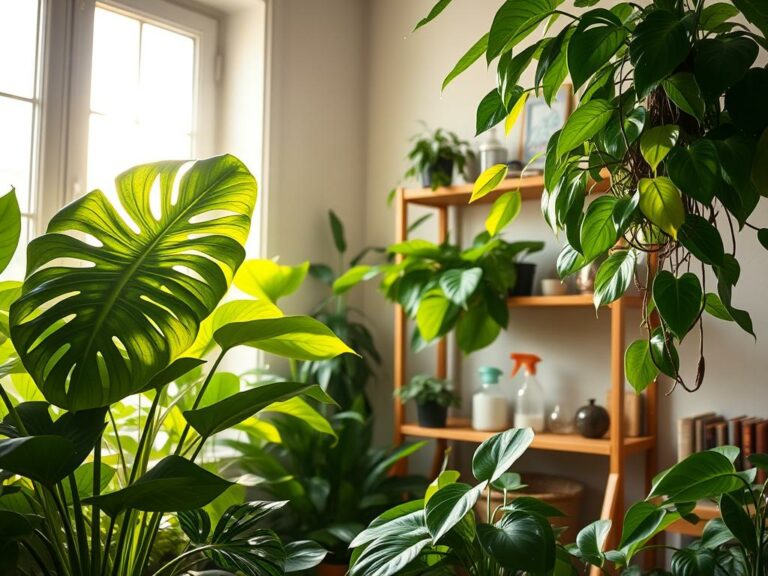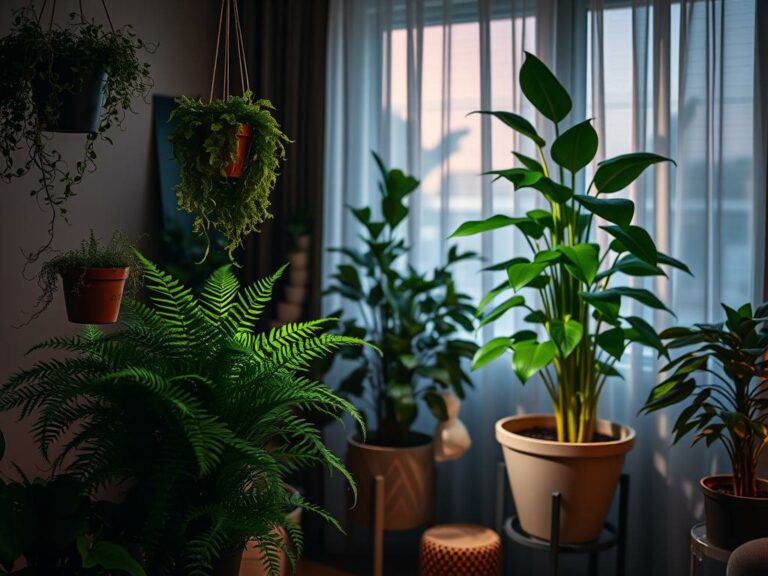

Did you know that your home’s air in winter can be drier than the Sahara? This dry air can cause dry skin, irritated sinuses, and static electricity. It makes your home feel uncomfortable.
But, there’s a simple solution. By bringing in certain plants for humidity, you can make your home feel fresh again. These plants turn a dry room into a cozy, moist space.
These plants have a special trick. They release water vapor through their leaves. This makes them act like living humidifiers in your home.
Choosing the best plants for humidity not only improves your air but also makes your home look beautiful. It’s a smart way to make your home healthier and more welcoming all year.
Understanding Indoor Humidity and Its Importance
Creating a healthy home starts with knowing the water vapor in your air. Many people ignore the moisture in their homes, but it affects their comfort. Using indoor plants for humidity helps balance the air naturally.
What is Indoor Humidity?
Indoor humidity is the water vapor in your home’s air. You should keep it between 30% and 50% for comfort. If it’s too low, the air can be very dry, causing discomfort.
It’s important to check these levels to keep your home comfortable. Regular checks help you adjust before the air gets too dry.
Why Humidity Matters for Your Health
Right humidity levels are key to avoiding respiratory problems and dry skin. Dry air can dry out your mucous membranes, making you more likely to get sick in winter.
Also, low humidity can make allergies worse, causing sneezing and itchy eyes. Using indoor plants for humidity can help. Improving your home’s air quality is a smart way to stay healthy and comfortable.
Benefits of Houseplants for Humidity
Houseplants are more than just decorations. They help make your home a healthier place. By adding plants, you create a better environment for your health and comfort.
Natural Humidifiers
Plants are natural humidifiers. They release moisture through a process called transpiration. This makes the air in your rooms more humid.
This is great during dry seasons when air quality drops. Even if you live in a humid area, these plants help keep your home’s air right. This makes breathing easier.
Psychological Benefits of Plants
Being around plants can lower stress and boost your mood. They create a calming atmosphere. This helps you relax and focus better.
Caring for plants is a mindful activity. It keeps you present. Choosing the right houseplants for humid climates brings mental health benefits and a healthier home.
| Benefit Type | Primary Mechanism | Key Outcome |
|---|---|---|
| Physical | Transpiration | Increased Air Moisture |
| Psychological | Biophilic Connection | Reduced Stress Levels |
| Environmental | Air Filtration | Improved Air Quality |
Top Plants to Increase Humidity Levels
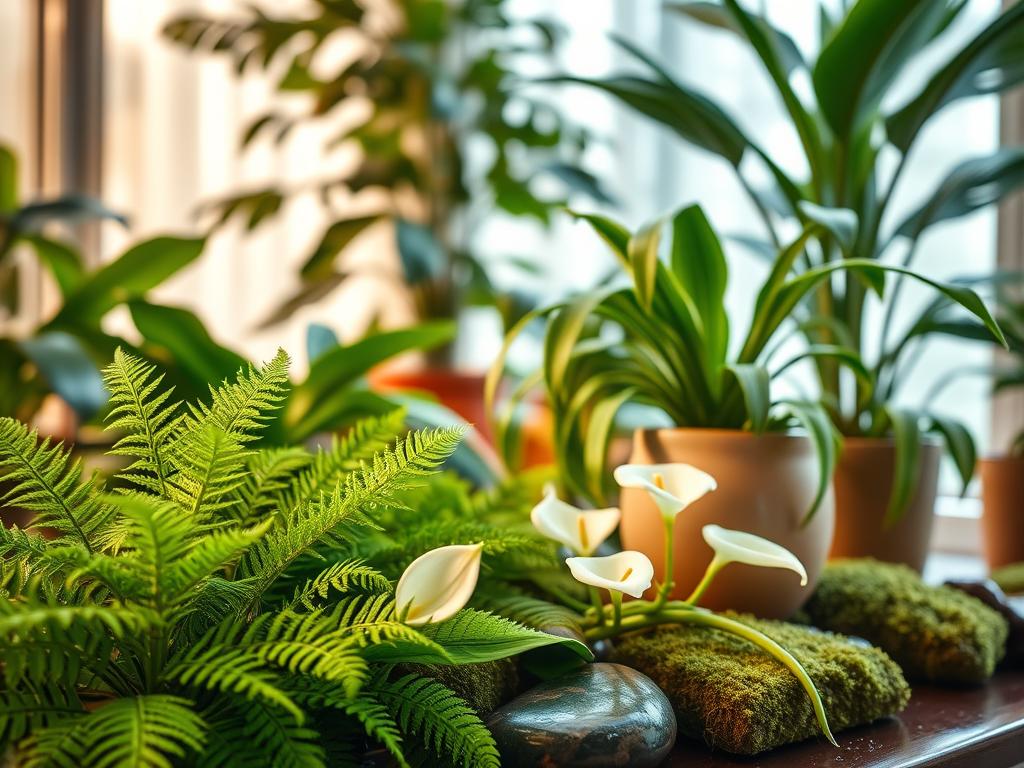
Nature offers a great way to fix dry indoor air with certain plants. Choosing the right plants can make your home feel more comfortable. These plants for humidity help by releasing moisture from their leaves, balancing your indoor air.
Peace Lily
The Peace Lily is loved for its beauty and air-purifying qualities. It releases moisture quickly, making the air more humid. As a top humidity-loving plant, it draws water from the soil and adds it to your space.
Spider Plant
The Spider Plant is perfect for beginners. It’s tough and easy to care for. It also improves your air quality and helps keep your home’s moisture balanced.
Boston Fern
The Boston Fern is great for a lush, humid feel. It absorbs and releases moisture, making your room feel like a damp forest. It thrives in damp conditions, just like its natural habitat.
Areca Palm
The Areca Palm is a top tropical plant for humidity. Its big fronds help it release a lot of moisture. Adding this palm to your home keeps the air fresh and healthy all year.
| Plant Name | Humidity Impact | Care Level | Best Feature |
|---|---|---|---|
| Peace Lily | High | Moderate | Air Purification |
| Spider Plant | Medium | Easy | Resilience |
| Boston Fern | High | Moderate | Lush Foliage |
| Areca Palm | Very High | Moderate | Tropical Aesthetic |
How to Care for Humidity-Boosting Plants
To make your plants natural humidifiers, you need to know their needs. Taking good care of your humidity-loving plants keeps them healthy. This way, they can release moisture into your home effectively.
By following simple routines, your plants will stay strong and useful in your home.
Optimal Light Conditions
Most indoor plants do well with the right light. Some love bright, indirect sunlight, while others prefer dimmer spots.
Here are some tips for managing light:
- Put humidity-loving plants near east-facing windows for gentle morning sun.
- Use sheer curtains to soften harsh afternoon sun that might burn leaves.
- Rotate your pots every few weeks to ensure even growth on all sides.
Watering Requirements
Getting your watering schedule right is crucial. Many low maintenance plants for humidity can get sick if their soil is too wet.
Here’s how to keep the soil just right:
- Always check the top inch of soil with your finger before adding more water.
- Make sure your pots have proper drainage holes to let out extra water.
- Use room-temperature water to avoid shocking your plants’ roots.
Being consistent is key. Watch how your plants react to their surroundings. This way, you can fine-tune your care to keep them lively all year.
Non-Plant Alternatives to Boost Humidity
Creating the perfect indoor climate is more than just plants. Even with your plants releasing water vapor, your home might still feel dry. Using mechanical or manual tools can help keep your moisture-loving plants happy.
Humidifiers
In big rooms or very dry climates, a mechanical humidifier is the best choice. These devices add water vapor to the air, letting you set humidity levels. Ultrasonic humidifiers are great because they’re quiet and use little electricity.
Put your humidifier in the middle of the room for even air distribution. Clean it often to avoid mineral and mold buildup. This steady moisture helps your health and your plants.
Pebble Trays
A pebble tray is a simple DIY way to create a micro-climate. Fill a tray with stones and water up to the stones’ top. Place your pots on the stones to keep roots dry but add moisture to the air.
This method is perfect for moisture-loving plants needing more humidity. It makes a cozy spot for your plants, even when the air is dry. Your plants will stay healthy and vibrant.
| Method | Best For | Maintenance Level | Primary Benefit |
|---|---|---|---|
| Mechanical Humidifier | Large Rooms | High | Precise Control |
| Pebble Tray | Individual Pots | Low | Localized Humidity |
| Moisture-loving plants | Small Clusters | Medium | Natural Balance |
Ideal Placement for Humidity Plants
Placing your plants right is key to a great indoor garden. Where you put them affects how well they can add moisture to your home. Knowing how air and moisture move helps make your home more comfortable.
Best Rooms for Humidity Plants
Bathrooms and kitchens are perfect for houseplants for humid climates. They get steam from showers and cooking. This makes these rooms great for plants to grow well without extra care.
Putting plants in these busy spots means they get the moisture they need. These rooms often have the right conditions for tropical plants to do well. Consistency is the key to a healthy indoor ecosystem.
“To plant a garden is to believe in tomorrow.”
Grouping Plants for Maximum Effect
Grouping your plants together boosts their benefits. When you put high humidity plants together, they create a humid microclimate. This lets them share moisture through transpiration.
Use a decorative tray or plant stand to group them. This not only improves air quality but also makes caring for them easier. Grouping your plants turns a small area into a self-sustaining oasis that benefits all.
Troubleshooting Common Issues
Even the most experienced indoor gardeners sometimes face challenges with their humidity-loving plants. Many varieties are low maintenance plants for humidity, but they still need consistent care. Learning to read the signs your plants provide is key to long-term success in your home garden.
Yellowing Leaves
Yellow leaves often mean your watering routine needs a tweak. Overwatering is a common problem, as it stops roots from getting oxygen. Always check the soil moisture before adding more water to your pots.
Nutrient deficiencies can also cause yellow leaves. If your plant has been in the same soil for a long time, it might need a fertilizer boost. Here are some common reasons for yellow leaves:
| Symptom | Likely Cause | Recommended Action |
|---|---|---|
| Yellowing tips | Overwatering | Improve drainage |
| Pale yellow leaves | Nutrient lack | Apply fertilizer |
| Spotted yellowing | Fungal issue | Reduce humidity |
Wilting or Drooping
Wilting often means your plant is struggling with its environment, not just water. If your home is too dry, even low maintenance plants for humidity will droop. Also, check the light, as too much direct sun can dry out plants fast.
“Nature does not hurry, yet everything is accomplished.”
To fix drooping, try moving your plant to a spot with more consistent, indirect light. If the air is still dry, group your plants together to create a microclimate. Consistent observation helps catch these issues early and keeps your indoor oasis healthy all year.
Seasonal Considerations for Indoor Humidity
Your home’s humidity levels change a lot throughout the year. This means you need to adjust how you care for your plants. Keeping your tropical plants for humidity healthy depends on adapting to the weather outside. By being proactive, your indoor garden will flourish, no matter the weather.
Winter Dryness Challenges
In winter, indoor heaters dry out the air. This makes your plants feel like they’re in a desert. Watch your plants closely, as they can get stressed and develop brown, crispy leaves.
To fight this, group your plants together to create a humid spot. Using a humidifier in the room helps keep the air moist. Also, check the soil moisture more often, as dry air makes water evaporate faster.
Summer Humidity Tips
Summer is warm and humid, which many plants love. But too much moisture can cause bad air and fungal problems. Make sure your plants get enough air to stay healthy and prevent mold.
If your home is too humid, don’t mist your plants every day. Instead, use fans or open windows to improve air flow. This helps your plants breathe and keeps pests away.
| Season | Humidity Level | Primary Action | Risk Factor |
|---|---|---|---|
| Winter | Low | Use Humidifier | Leaf Browning |
| Spring | Moderate | Monitor Growth | Pest Activity |
| Summer | High | Increase Airflow | Fungal Growth |
Creating Your Indoor Plant Humidity Plan
Starting an indoor garden is more than picking out pots. It’s about planning carefully. By checking your home’s conditions, you can pick plants that do well and clean the air. A good plan makes sure your indoor plants for humidity fit well with your home.
Selecting the Right Plants for Your Space
Before buying plants, think about your room. Look at its size and how much light it gets. High humidity plants like bright, indirect light. So, choose plants that match your windows.
Also, think about your home’s moisture level. If it’s dry, pick plants that release a lot of moisture. This way, your plants will look good and help the air.
Combining Plants for Enhanced Humidity
Grouping plants together can make the air more humid. This creates a mini-climate that adds moisture to the air. It’s great for big rooms where one plant might not be enough.
Using different sizes and textures makes your plants look good and work better. Put small plants like ferns under bigger ones like palms. This keeps the air healthy and looks nice.
| Plant Type | Light Requirement | Humidity Impact |
|---|---|---|
| Boston Fern | Indirect/Medium | High |
| Areca Palm | Bright/Indirect | Very High |
| Spider Plant | Low to Bright | Moderate |
| Peace Lily | Low to Medium | Moderate |
Conclusion: Enhancing Your Space with Humidity Plants
Creating a balanced indoor climate is all about bringing nature into your life. By picking the right plants, you can make dry rooms feel fresh and supportive of your health.
Recapping Your Path to Success
Getting the air right in your home needs careful plant picking and placement. You know how to choose plants that love moisture and fit your lighting. Keeping them healthy means they can keep your air clean.
Taking the First Step
Start by adding one or two moisture-loving plants to your bedroom or office. Watch how they change your space over time. Soon, your home will feel fresher, more comfortable, and look better.
By choosing a greener home, you improve the air and calmness. Begin your indoor garden today for a healthier, more balanced living space.