
Did you know that nearly 70% of indoor gardening enthusiasts encounter mysterious white fuzz on their greenery at least once a year? This common nuisance often signals that your botanical collection is struggling with an unbalanced ecosystem.
Maintaining a healthy environment is essential for the longevity of your favorite greenery. When you notice mold in plant soil, it serves as a clear warning that moisture levels or airflow require immediate adjustment. Ignoring these signs can lead to root decay and stunted growth over time.
You possess the power to transform your home into a thriving sanctuary. By mastering a few simple maintenance habits, you ensure your indoor garden remains a vibrant and healthy space. This guide provides the foundational knowledge you need to keep your pots free from unwanted fungal blooms for good.
Understanding Mold in Plant Soil
Knowing why fungi grow is key to a healthy indoor garden. Seeing mold in plant soil means your pot is a perfect spot for tiny organisms.
What Causes Mold to Grow?
Fungi love moist places. If your soil is always wet, it lacks oxygen. This makes it easy for spores to grow.
Bad air flow makes things worse by not letting water evaporate. Also, old leaves or bad compost feed these fungi, letting them take over your plants.
Signs of Mold Presence in Soil
Identifying mold in plant soil is easy if you know what to look for. Look for fuzzy white, yellow, or grey spots on the soil.
A musty smell from the pot is another sign. Sometimes, the soil looks clumpy or crusty, stopping water from soaking in.
Types of Mold Commonly Found
Most indoor plant fungi eat dead stuff. They’re not harmful but look bad. They show you need to change how you water.
| Mold Type | Visual Appearance | Primary Cause |
|---|---|---|
| White Saprophytic | Fluffy white patches | Excessive surface moisture |
| Yellow Slime Mold | Bright yellow clusters | High humidity and decay |
| Grey Fuzzy Mold | Dusty grey filaments | Poor air circulation |
Importance of Soil Health
To master plant soil mold prevention, start by checking your soil’s health. Healthy soil is crucial for your plants, giving them the right structure for growth. Quality soil naturally fights off fungal spores.
How Soil Quality Affects Plant Growth
The mix in your potting soil affects water flow. If it’s too dense or lacks air, water stays too long. This leads to fungal growth, making proper drainage key.
Good mixes have perlite or coarse sand for better air flow. This ensures roots get oxygen, stopping mold. Buying premium soil helps prevent mold.
“The soil is the great connector of lives, the source and destination of all. It is the healer and restorer and resurrector, by which disease into health, age into youth, death into life passes.”
The Role of Microorganisms in Soil
Your soil is full of tiny life forms. Beneficial bacteria and fungi help break down matter and feed your plants. They fight off harmful pathogens, keeping mold away.
Using sterile or low-quality soil removes this defense. Keeping a balance of microbes is vital for plant soil mold prevention. The table below shows how different soil parts help keep your plants healthy.
| Soil Component | Primary Function | Mold Resistance Impact |
|---|---|---|
| Perlite | Improves Aeration | High (Prevents stagnation) |
| Peat Moss | Retains Moisture | Low (Requires careful monitoring) |
| Coco Coir | Sustainable Structure | Medium (Good drainage) |
| Beneficial Mycorrhizae | Root Support | High (Outcompetes pathogens) |
Focus on your soil’s health to create a strong environment. This reduces the need for chemicals and keeps your garden vibrant and healthy all year.
Choosing the Right Potting Mix
Your choice of soil is key to keeping your houseplants healthy and mold-free. Many gardeners face mold contamination in garden soil because of heavy, wet mixes. The right mix fights fungi and helps roots grow strong.
Features of Mold-Resistant Potting Mixes
The top potting mixes focus on aeration and drainage. Look for perlite, pumice, or coarse sand. These add air pockets and prevent waterlogging, stopping fungi growth.
Stay away from mixes with too much peat moss or moisture crystals in humid homes. A well-draining mix lets water flow through, keeping roots oxygenated. This reduces mold contamination in garden soil risk.
Recommended Brands for Indoor Plants
Choose well-known brands for indoor plants. FoxFarm Ocean Forest is a top pick for its structure and drainage. It’s great for tropical plants and avoids dense soil.
Espoma Organic Potting Mix is another good choice, being light and airy. For Miracle-Gro, pick their indoor mix over regular garden soil. These mixes balance moisture, keeping plants healthy and soil clean.
Watering Practices to Prevent Mold
Keeping moisture levels in check is key to plant soil mold control. The right amount of water makes it hard for fungi to grow. But, too much water is the main cause of indoor plant problems, like mold.
How Often Should You Water Your Plants?
Watering frequency varies by plant type. Light, temperature, and potting mix affect soil dryness. Always check soil moisture before watering.
The finger test is a simple way to check. Stick your finger into the soil about two inches deep. If it’s damp, wait a few days. Here are some tips for the right moisture level:
- Observe your plant: Wilting leaves can mean too much water, not just too little.
- Check the season: Plants need less water in winter when they grow slower.
- Know your species: Succulents and cacti need longer dry periods than tropical ferns.
The Importance of Proper Drainage
Drainage holes in pots are non-negotiable to avoid waterlogged soil. Without holes, the pot’s bottom can become a mold and root rot haven. Use a plastic nursery liner if your pot doesn’t have holes.
When watering, let excess water drain into a saucer. Never let your plant sit in water for too long. These habits help keep your plant soil mold control efforts effective and your plants healthy for years.
Lighting Conditions and Mold Growth
If you’re dealing with mold, check your window placement. Sunlight is more than just for photosynthesis. It helps keep your plant’s soil dry by controlling moisture.
How Light Affects Mold Development
Light has a big impact on your plant’s pot. It changes how fast the soil dries out. When soil gets enough light, it dries faster, making it hard for mold to grow.
Without enough light, soil stays wet for too long. This is perfect for mold to grow. By giving your plants enough light, you keep mold away naturally.
“Light is the most important factor in the health of indoor plants, acting as both a source of energy and a natural disinfectant for the soil surface.”
Ideal Lighting Conditions for Indoor Plants
To control mold, place your plants right for light. They need bright, indirect light. This gives them energy without burning their leaves.
If your home is dark, use full-spectrum LED grow lights. They help keep soil healthy all year. This keeps your plant soil mold control efforts strong.
Air Circulation and Humidity Control
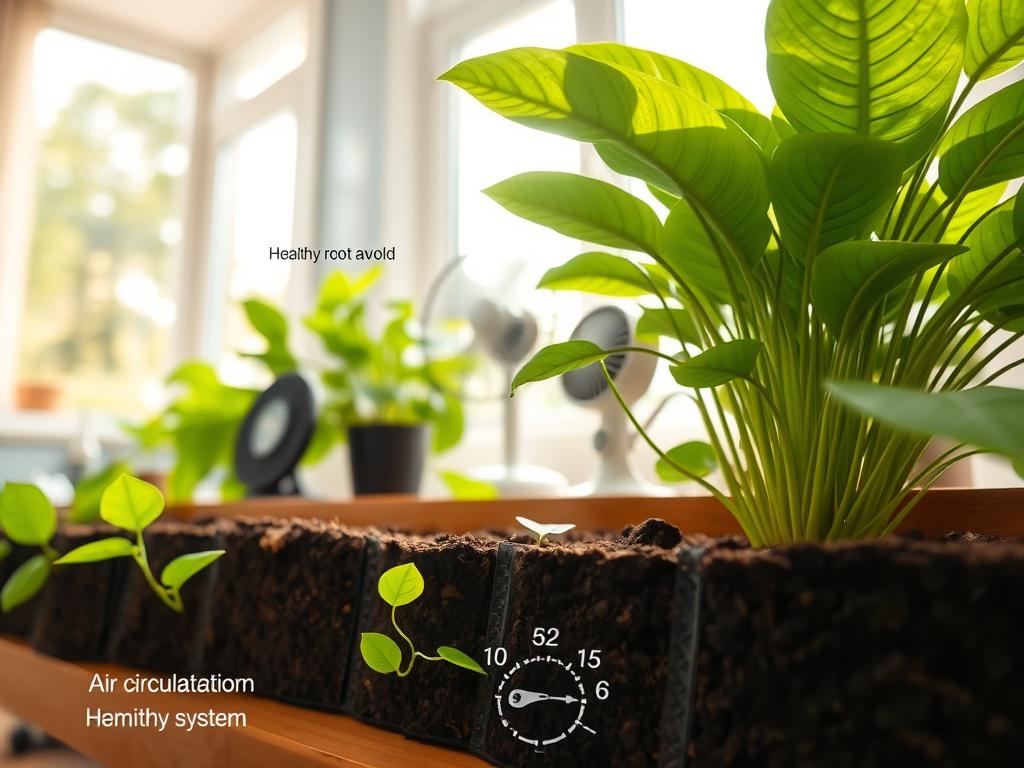
Healthy soil isn’t just about water; air plays a big role too. When air doesn’t move, moisture stays on the soil’s surface. This creates a damp spot that’s ideal for managing mold growth in plant soil.
Why Airflow is Crucial for Healthy Soil
Good airflow helps dry out your plants naturally. It makes sure excess moisture evaporates quickly from the soil’s top layer. This stops the soil from getting too wet, where mold often starts to grow.
“Plants are like people; they need to breathe to stay healthy and vibrant.”
Managing Humidity Levels at Home
High indoor humidity can harm your soil health. If your home feels damp, try using a small fan to circulate the air. This helps keep mold away.
In humid climates, a dehumidifier can be a lifesaver for your plants. Also, don’t overcrowd your plants. This blocks air from flowing freely. By improving ventilation, you keep your plants healthy and free from disease.
Using Natural Mold Inhibitors
You can manage mold contamination in garden soil with simple, natural ingredients from your kitchen. When usual care doesn’t stop mold, these gentle options help. They keep your plants safe without harsh chemicals.
Effective Home Remedies for Mold Prevention
Many household items are strong antifungal agents. They change the soil, making it hard for spores to grow but safe for plants.
- Cinnamon: This spice fights mold. Just sprinkle cinnamon on the soil to stop mold growth.
- Hydrogen Peroxide: Mix one part 3% hydrogen peroxide with four parts water. Spray it on the soil to kill mold spores.
- Baking Soda: Mix baking soda with water to change the soil’s pH. This makes mold struggle to survive.
Benefits of Organic Treatments
Organic treatments are better for your home. They don’t leave toxic residues that harm pets or family.
These remedies also keep good microbes in your soil. By using organic solutions for mold contamination in garden soil, your plants stay healthy. This keeps your air clean and supports your plants’ long-term health.
When to Repot Your Plants
Knowing when to move your plant to a new home is key to preventing mold in garden soil. Over time, potting media breaks down. It loses its aeration and becomes compacted. This creates a dense environment where moisture lingers, making it easier for fungal spores to thrive.
Signs That Your Plant Needs Repotting
The most obvious sign is when roots start circling the bottom or emerge from the drainage holes. This is called being root-bound. It restricts water movement and prevents proper drainage. When water can’t flow freely, it pools in the pot, which is a primary catalyst for mold growth.
You should also look for physical changes in the soil surface. If the soil stays soggy for days after watering or develops a crusty, white layer, it’s likely time for a change. These signs suggest the soil structure has failed and is no longer providing a healthy environment for your plant.
Choosing the Right Time for Repotting
Timing is everything when it comes to minimizing stress on your greenery. The optimal time for repotting is generally during the early spring or early summer. This is when the plant is in its active growth phase and can recover quickly from the disturbance.
Avoid repotting during the dormant winter months unless it’s an absolute emergency. By timing your maintenance correctly, you are effectively preventing mold in garden soil. A fresh start is often the best medicine for a struggling indoor plant.
Monitoring Temperature for Plant Health
Keeping your home’s climate right is key to stopping mold in pots. You might think only about light and water, but temperature matters too. Watching these levels helps you manage mold growth in plant soil before it shows up.
Ideal Temperature Ranges for Indoor Plants
Most houseplants like temperatures between 65°F and 75°F. This range is close to their natural habitats. It helps them grow steadily without stress.
Big changes in temperature can harm your plants. They become more likely to get sick. Keep them away from cold drafts, air conditioning vents, and heaters. Consistency is the key to keeping your plants strong.
How Temperature Influences Mold Growth
Temperature helps mold grow when it’s warm and moist. This is true if your home is humid and air doesn’t move well. Moisture gets trapped in the soil.
Warmer temperatures make fungi grow faster. By managing mold growth in plant soil with the right temperature, you can stop it. Keep your home well-ventilated. This helps control soil temperature and stops mold.
Identifying and Treating Existing Mold
Seeing fuzzy white or gray patches on your potting mix can be scary. But, it’s easy to fix. By learning how to remove mold from plant soil right, you can save your plant. Quick action stops the mold from harming your plant’s roots or health.
How to Safely Remove Mold from Soil
The first thing to do in mold-infested plant soil treatment is to remove the moldy soil. Use a clean spoon or small trowel to take out the top inch of soil. Be gentle to not hurt the roots deeper in the pot.
After removing the moldy layer, throw it away in a sealed bag. This stops mold spores from spreading in your home. If the mold keeps coming back, replace the top layer with fresh, clean potting mix. This simple step can stop mold growth.
Rehabilitating Affected Plants
After fixing the surface, focus on making your plant healthy again. A good mold-infested plant soil treatment means changing how you water. Consistent moisture feeds mold, so let the soil dry out a bit between waterings.
Also, make sure your plant gets more air to prevent mold from coming back. If your plant still looks sick, try moving it to a brighter spot. Learning how to remove mold from plant soil is just the start. Keeping your soil dry and well-ventilated is key to a healthy indoor garden.
Preventive Measures for Long-Term Health
Keeping your indoor garden healthy is a journey. It needs consistent habits and being aware of your environment. By being proactive, your indoor plants can stay beautiful and thriving for years. Plant soil mold prevention is an ongoing commitment to your plants’ health.
Best Practices for Indoor Plant Maintenance
Regularly check your plants’ leaves and soil. Look for early signs of mold or discoloration. Consistency is key for successful indoor gardening.
Cleaning your pots is also crucial. Mineral deposits and debris can build up, attracting fungi. Clean your pots with a mild soap during repotting to keep things sterile.
“The health of your plant is a direct reflection of the care you provide to its environment, starting from the soil up.”
Here’s a schedule to help you stay on top of your tasks:
| Task | Frequency | Goal |
|---|---|---|
| Soil Inspection | Weekly | Early detection |
| Pot Cleaning | Monthly | Hygiene |
| Drainage Check | Quarterly | Root health |
Creating a Mold-Resistant Environment
To prevent mold, manage air and light around your plants. Good airflow is key to prevent moisture buildup. Use fans or space out your plants to improve air circulation.
Make these habits part of your daily routine. This way, plant soil mold prevention becomes easy. Monitor humidity and ensure your plants get enough light. Your efforts will lead to a vibrant, healthy, and mold-free indoor garden.
Conclusion: Keeping Your Indoor Plants Healthy
Your journey to a lush indoor space needs consistent habits and keen observation. Mastering mold prevention in garden soil makes your routine rewarding. It supports long-term plant health.
Essential Strategies for Success
Balance moisture, light, and airflow to keep plants healthy. Use high-quality products like Espoma Organic potting mix for a stable root foundation. Regular soil checks help catch issues early.
Commitment to Ongoing Care
Set aside time each week to check your pots and adjust watering. Small changes in your home climate can prevent mold. Your dedication keeps your indoor garden vibrant and beautiful for years.