
Did you know a single leaf can grow into a new plant? Many people are amazed to learn they can grow plants from cuttings at home. You don’t need a fancy greenhouse or expensive lab gear.
This hobby makes your home a green oasis with simple items. You don’t need to be a pro to grow more plants. Just a bit of patience and water can turn a small piece into a thriving plant.
Learning to propagate plants is a skill that saves money and boosts your gardening confidence. It’s surprisingly easy once you know the basics. By following these steps, you can create your own indoor garden and watch your plants grow.
Introduction to Growing Plants from Cuttings
Propagating plants lets you grow a collection from one favorite houseplant. This simple method multiplies your greenery and teaches you about plant reproduction. You get to control your indoor garden’s growth and density.
Why Choose to Grow from Cuttings?
Choosing to grow plants from cuttings is cost-effective. You use your own healthy stems instead of buying new pots. This way, your new plants are exact genetic clones of the parent, keeping the traits you love.
This method also brings a sense of accomplishment. Watching a tiny stem grow its first roots is rewarding. It’s a reliable way to keep your collection vibrant and full. Many gardeners find it the best way to replace old plants or share with friends.
Benefits of Indoor Plants
Having indoor plants is more than just pretty. Studies show they can lower stress levels and boost your mood. Plus, many houseplants purify the air, making your space fresher.
Here’s why propagation is better for your collection:
| Feature | Buying New Plants | Propagating Cuttings |
|---|---|---|
| Cost | High | Free |
| Genetic Quality | Variable | Identical to Parent |
| Satisfaction | Low | High |
| Environmental Impact | Higher Footprint | Sustainable |
By propagating plants, you make your home healthier. The effort you put into growing plants from cuttings brings beauty and peace of mind.
Understanding the Basics of Plant Cuttings
Expanding your indoor garden is easy once you grasp the basics of plant cloning. Plant propagation is about making new plants from old ones. It uses the plant’s ability to grow back lost parts. Taking a cutting starts a healing process that leads to new roots or shoots.
Types of Cuttings: Stem, Leaf, and Root
Each plant type responds differently to cutting propagation. Knowing which part to use is key for success. Most indoor plants fit into three main types for reproduction:
- Stem Cuttings: The most common method, involving a piece of stem with at least one node.
- Leaf Cuttings: Used for plants like succulents, where a single leaf can sprout a new plant.
- Root Cuttings: A less common technique that involves using a small section of the root system to generate new growth.
The table below shows the differences between these methods. It helps you pick the right one for your plants.
| Method | Best For | Difficulty |
|---|---|---|
| Stem | Pothos, Philodendron | Easy |
| Leaf | Succulents, Snake Plants | Moderate |
| Root | Perennials, some shrubs | Advanced |
Ideal Timing for Taking Cuttings
Timing is crucial for propagating plants. The best time is during the active growing season. In the United States, this is from spring to early summer.
During these months, plants are full of energy and ready to grow. By propagating during this time, your cuttings have the best chance to succeed. Avoid taking cuttings in winter, as plants are dormant and growth is slow.
Essential Tools for Taking Cuttings
Starting your cutting propagation journey is more than just cutting a plant. You don’t need fancy tools to get great results at home. Many items you need are probably in your kitchen or junk drawer already.
Tools You Need at Home
A sharp, clean pair of shears or scissors is key. Dull blades can damage plant stems, making it tough for them to absorb water and nutrients. Always clean your blades with rubbing alcohol before and after use to avoid spreading diseases.
You’ll also need some basic items to keep your new plants healthy. A small glass jar or plastic container is perfect for water-based methods. For soil, have a few small pots ready with holes to prevent root rot.
Preparing Your Workspace
Having a dedicated area for gardening keeps your home clean and tools organized. Choose a flat, easy-to-clean surface like a kitchen counter or potting bench. Cover it with a plastic mat or old newspaper to protect against spills.
Keep your supplies close to avoid rushing or making mistakes. A tidy workspace helps you focus and care for your cuttings better. Here’s a quick guide to make sure you have everything you need for your next project.
| Tool Name | Primary Purpose | Maintenance Tip |
|---|---|---|
| Sharp Shears | Making clean cuts | Sanitize with alcohol |
| Glass Jars | Water propagation | Wash with warm soap |
| Potting Mix | Soil-based growth | Keep in sealed bag |
| Plant Labels | Tracking varieties | Use waterproof ink |
Top Indoor Plants to Grow from Cuttings
Starting your indoor gardening journey is rewarding. Choose species with a high success rate. Some plants are forgiving, making them great for beginners.
These resilient varieties help you grow your collection fast. They are known for quick rooting and thriving in many home settings.
Pothos: A Beginner-Friendly Choice
The Pothos is perfect for beginners. Its vines grow fast, and each node can start new roots in days.
This plant is hardy and adaptable to various lights. Just cut a vine below a node, put it in water, and watch it grow roots.
Spider Plant: Resilient and Beautiful
Spider plants are known for their “babies” or offsets. These offsets are ready-made starts, making growing easy.
When these plantlets have tiny nubs, you can start a new plant. Their natural resilience means they keep growing, even if you forget to water.
ZZ Plant: Low Care, High Reward
The ZZ plant needs little care. It grows slowly but is highly rewarding for low-light areas.
Propagate it with leaf or stem cuttings, but be patient. You’ll get a strong, elegant plant with little effort.
Step-by-Step Guide: How to Take Cuttings
Starting to propagate plants is all about making the right cut. Learning how to grow plants from stems lets you multiply your favorite plants at home. This journey needs patience and attention to detail for your new plants to grow well.
Selecting the Right Stem
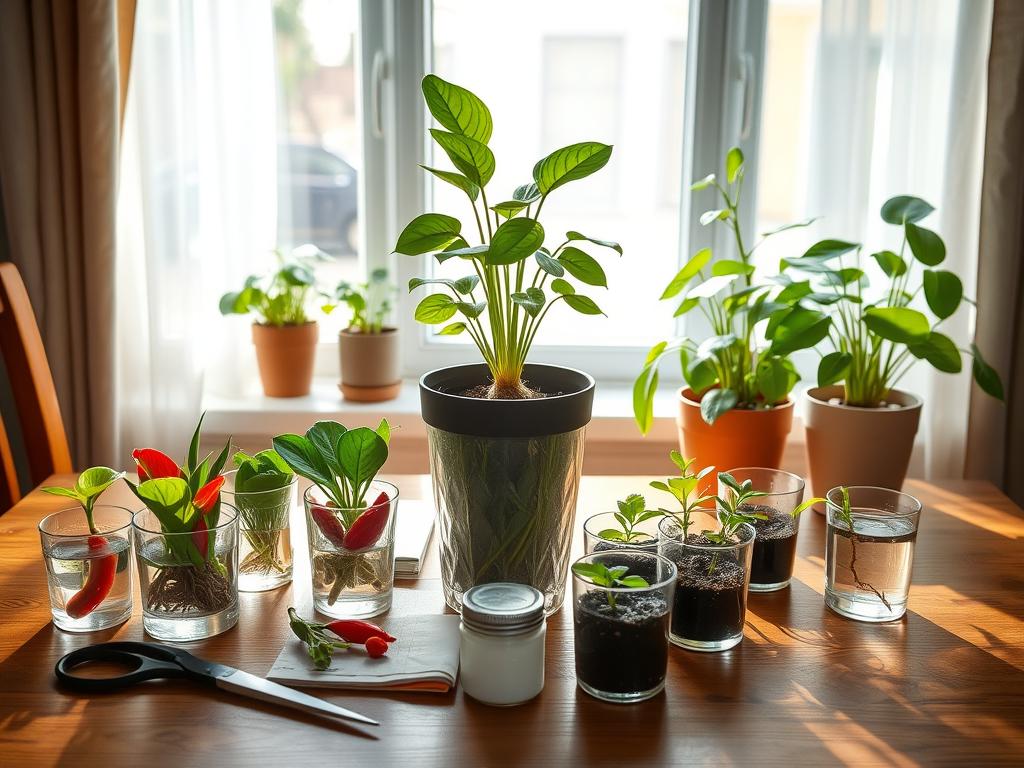
To start propagating plants, find a healthy parent plant. Look for stems that are green, pest-free, and show no signs of disease. A firm, green stem is best for growing roots.
Choose a section with at least one or two nodes. The node is where leaves or branches grow, and it’s where new roots start. Avoid woody or brittle stems, as they often have trouble growing.
Preparing the Cutting for Rooting
After picking your stem, cut it with clean, sterilized shears. A sharp cut helps prevent infection and heals faster. Cut just below the node at a slight angle, about a quarter-inch down.
“When how to propagate plants, remove leaves near the bottom of the cutting. This stops them from rotting if they touch water or soil.”
After cutting, remove lower leaves. Keep a few leaves at the top to help the cutting grow roots.
Choosing the Right Medium for Growth
Choosing where to put your cutting is crucial for growing plants from stems. You have a few options:
- Water: Great for beginners, as it’s easy to see root growth.
- Potting Soil: Best for plants that like a stable start.
- Perlite or Vermiculite: Good for aeration and preventing rot in sensitive cuttings.
Make sure the medium is clean and fresh. By propagating plants right, you help your cuttings grow strong roots quickly.
Water vs. Soil: Best Medium for Rooting
Many gardeners wonder if water or soil is better for starting growing plants from stems. The right choice is key for your new plants’ health. Both options have their own benefits, depending on the plant and your experience.
Pros and Cons of Water Propagation
Water propagation is great for beginners because you can see the roots grow. It’s simple and needs just a clean glass jar. You can keep the water clean and the cutting moist.
But, there are downsides. Cuttings in water might have weak roots. You also need to change the water often to stop bacteria.
“Propagation is the ultimate act of patience and observation, turning a simple stem into a thriving new life.”
When to Use Potting Soil
Starting cuttings in soil is better for plants that don’t like moving. It helps avoid transplant shock. This method helps the plant grow strong roots from the start.
Soil is great for rooting plant cuttings because it’s stable and full of nutrients. It’s best for woody stems or succulents that might rot in water. Keep the soil moist but not too wet for the best results.
| Feature | Water Propagation | Soil Propagation |
|---|---|---|
| Ease of Monitoring | High (Visible) | Low (Hidden) |
| Transplant Shock | High | Low |
| Root Strength | Moderate | High |
| Maintenance | Frequent Water Changes | Consistent Moisture |
Caring for Your Cuttings
Creating the right environment is key to successful plant propagation. After preparing your stems, focus on keeping conditions right for growth. You want to mimic nature while protecting your new plants’ delicate tissues.
Light Requirements for Successful Growth
Most rooting plant cuttings do well in bright, indirect light. Direct sunlight can burn leaves or heat up the water, harming roots. Position your jars or pots near a window with a sheer curtain to soften the sun.
Watering Tips to Keep Cuttings Healthy
Consistency is crucial when propagating cuttings in water or soil. Change water every few days to keep it fresh and full of oxygen. For soil, keep it lightly moist but not soggy to avoid stem rot.
Managing Humidity Levels
High humidity helps prevent cuttings from drying out before they root. Cover your container with a clear plastic bag to trap moisture. This simple trick creates a stable climate for your rooting plant cuttings to thrive.
| Factor | Ideal Condition | Why It Matters |
|---|---|---|
| Light | Bright, Indirect | Prevents leaf burn |
| Moisture | Consistent | Supports root growth |
| Humidity | Moderate to High | Reduces water loss |
| Temperature | 65°F – 75°F | Encourages activity |
By keeping an eye on these factors, you’ll see better results when propagating cuttings. Remember, patience is key during this time. Some plants take longer to show new growth.
Common Mistakes to Avoid with Cuttings
If your new plants are not doing well, you might be making common mistakes. Cutting propagation is simple, but small errors can stop your plants from growing roots. Knowing these mistakes can help your indoor garden grow without problems.
Overwatering: The Silent Killer
Many people think more water means faster growth. But, this is often the main reason they fail. When you’re propagating cuttings, stems need air to grow roots. Too much water stops this, causing root rot, which is usually fatal.
Look for yellow leaves or mushy, dark soil to spot waterlogged conditions. Make sure your soil is moist but not wet. A bad smell from your water jar means it’s too wet and full of bacteria.
Ignoring Temperature Needs
Plants are very sensitive to their environment. Sudden changes in temperature can shock them. A steady, warm place is key for cutting propagation.
Most plants like temperatures between 65°F and 75°F for root growth. If it’s too cold, they grow slower. Keep your cuttings in a warm, stable spot to help them grow strong roots.
| Common Mistake | Primary Symptom | Recommended Solution |
|---|---|---|
| Overwatering | Mushy, brown stems | Improve drainage or reduce water |
| Cold Drafts | Wilting or stunted growth | Move to a warmer, stable area |
| Low Humidity | Crispy leaf edges | Use a humidity dome or tray |
Transitioning Your Cuttings to Pots
When your cuttings have strong roots, it’s time to move them to a pot. Learning how to propagate plants is rewarding. But, moving to a container is where your plant starts its life as a houseplant. This step needs careful attention to help your plant adjust well.
Signs Your Cutting is Ready for Repotting
Before moving your plant, check if the roots are strong enough. If you move them too soon, the roots might have trouble getting nutrients from the soil.
Look for these signs that your plant is ready for the next step:
- Root length: The roots should be at least two to three inches long.
- Root density: You should see a secondary network of smaller, fibrous roots branching off the main ones.
- New growth: The appearance of new leaves or buds on the stem is a strong sign of a healthy, active plant.
Choosing the Right Pot and Soil Mix
When propagating cuttings, picking the right container is key. Make sure the pot has drainage holes to prevent water from pooling. This can cause root rot.
For the best results, follow these guidelines for your potting setup:
- Pot size: Start with a small container, roughly four inches in diameter, to avoid excess moisture in the soil.
- Soil composition: Use a high-quality, well-draining potting mix that contains perlite or vermiculite for better aeration.
- Gentle handling: When planting, be careful not to pack the soil too tightly, as this can crush the delicate new roots.
After potting your cutting, keep the soil lightly moist for the first few weeks. This helps the roots adjust to the new soil environment.
Troubleshooting Growth Issues
Knowing the early signs is crucial for rooting plant cuttings. Propagation can be rewarding, but it comes with challenges. Learning to read your plant’s signals can prevent big problems.
Recognizing Signs of Stress in Cuttings
Start by observing your cutting closely. Yellow leaves or droopy foliage might mean environmental stress. A mushy stem often points to rot, caused by too much water or poor air circulation.
Also, watch for a lack of root growth after weeks. If the stem is firm but not growing, it might be dormant. This could be due to low light or cold. Spotting these signs early helps you adjust care.
Solutions for Common Problems
Identify the problem, then take action for your rooting plant cuttings. If rot is suspected, remove the cutting and trim off the bad parts. Then, place the healthy part in fresh water.
For cuttings that won’t grow, try a brighter spot with indirect sunlight. Keeping a consistent, warm temperature also helps roots grow. Below is a quick guide for common issues.
| Symptom | Likely Cause | Recommended Solution |
|---|---|---|
| Mushy, brown stems | Root rot | Trim rot and change water |
| Yellowing leaves | Too much light or water | Move to shade; check moisture |
| No root growth | Cold or low light | Increase warmth and brightness |
| Wilting foliage | Dehydration | Increase humidity or cover |
Conclusion: Enjoy the Rewards of Plant Propagation
Turning one stem into a new plant is incredibly fulfilling. You can now grow more plants without buying them. By learning plant propagation, you can make your home a green oasis with just a few simple steps.
Building Your Botanical Skills
Every successful cutting is a win in your gardening adventure. You’ve learned to watch for growth and create the perfect conditions for roots. This skill lets you share your favorite plants with others or add more life to your space.
Expanding Your Green Collection
Try your hand at different plants like Philodendron or Monstera. Each one brings new challenges that help you learn more about plants. Don’t be afraid to try and fail as you get better. Your hard work will create a stunning indoor garden that shows off your style and care.