
Did you know over 80 percent of Americans live in cities where big gardens are hard to have? Many think you need a big backyard to grow your own food. But, you can produce a bountiful crop on your balcony or patio.
Learning how to grow potatoes in small spaces changes how you see city gardening. You don’t need lots of land for fresh veggies. New methods let you grow potatoes in containers, making harvesting easy.
This method has big benefits, like better soil and pest control. Using vertical space and smart planting, you can start a garden anywhere. Now, you can turn your small area into a thriving food source.
Why Choose Container Gardening for Potatoes?
Growing potatoes in containers is a flexible way to enjoy fresh harvests, no matter your yard size. It eliminates the need for back-breaking labor like traditional in-ground tilling. This makes it an ideal choice for beginners or those with limited space.
Benefits of Growing Potatoes in Containers
One big advantage is mobility. You can move your pots to follow the sunlight or protect your plants from harsh weather. This flexibility is a big plus.
Also, container gardening lets you control the soil quality perfectly. Using a high-quality potting mix prevents soil-borne diseases and pests. This controlled environment ensures your plants get the nutrients they need for a great harvest.
Ideal Container Types for Potatoes
Choosing the right container is key for success. Fabric grow bags are a top pick because they offer great aeration. This prevents roots from circling and promotes a healthier root system.
Plastic buckets are also good, as long as you drill enough drainage holes at the bottom. Good drainage is key to prevent waterlogging and tuber rot. Make sure your container is deep enough for the potatoes to grow fully.
Selecting the Right Potato Varieties
To grow potatoes in small spaces, you need to pick the right varieties. Some potatoes don’t do well when their roots are cramped in pots. It’s key to choose wisely.
Choosing the right potato ensures your plants grow well and produce a lot. Careful planning helps avoid overcrowding. This way, you get a good harvest even with a small space.
Best Potato Varieties for Small Spaces
When growing potatoes in pots, pick based on when they’re ready to harvest. Early varieties like ‘Yukon Gold’ or ‘Red Pontiac’ are great. They grow fast and need less room.
Mid and late varieties take longer but offer special tastes and textures. Choose based on your climate and how much time you have for growing.
Characteristics of Potatoes to Consider
Look at the plant’s growth habit. Determinate potatoes grow to a certain height and stop. They’re the best potatoes for container gardening.
Indeterminate potatoes keep growing and make tubers along the stem. They need big containers and support. Always check the seed potato label to know the growth habit.
Preparing Your Containers for Planting
A successful harvest begins long before planting your first seed potato. Properly preparing your containers is key for your plants to thrive in a small space. By setting up your environment correctly, you boost your chances of success when growing potatoes in pots.
Draining and Soil Requirements
Drainage is crucial for container health. Without holes, water can cause tuber rot and root suffocation. Make sure to drill large holes in the base of your container for quick moisture escape.
After ensuring drainage, focus on the soil quality. Potatoes need a loose, well-aerated environment to grow their tubers well. So, choosing the best potatoes for container gardening is just as important as the soil quality.
Using Potting Mix vs. Garden Soil
Many beginners use heavy garden soil in their containers. This dense soil compacts under water, harming root growth and tuber size. It’s a common mistake.
Use a high-quality, lightweight potting mix instead. These mixes hold moisture well and offer excellent aeration for roots. Avoiding heavy soil ensures your plants get the right environment for a good harvest.
Planting Potatoes in Containers
When you start potato planting in containers, being precise is key. How you place your seed potatoes affects their growth. By following a few simple steps, you can get the most out of small spaces.
Optimal Planting Depth and Spacing
To get the best results, bury your seed potatoes at the right depth. Aim for 4 to 6 inches deep in the potting mix. This depth keeps them warm while letting sprouts grow up fast.
Spacing is also crucial to avoid competition for nutrients. Overcrowding can lead to small potatoes. Here’s how to space them:
- Keep at least 10 to 12 inches of space between each seed potato.
- Make sure no seed potato touches the container walls.
- Position larger containers for good airflow between them.
“Proper spacing is the foundation of a healthy garden; it allows each plant the room it needs to thrive and produce a bountiful harvest.”
Timing: When to Plant Potatoes
Timing is crucial when growing potatoes in pots. Wait until all frost danger has passed. Planting too early can damage sprouts.
Check your local frost dates before planting. Plant when the soil is at least 50°F. This warmth helps roots grow strong and supports a productive season.
Watering and Fertilizing Techniques
Getting the right amount of water and nutrients is key to a good harvest when growing potatoes in containers. Pots dry out faster than garden beds because they have less soil. So, you need to keep a close eye on your plants to make sure they stay hydrated and fed.
Best Practices for Watering Container Potatoes
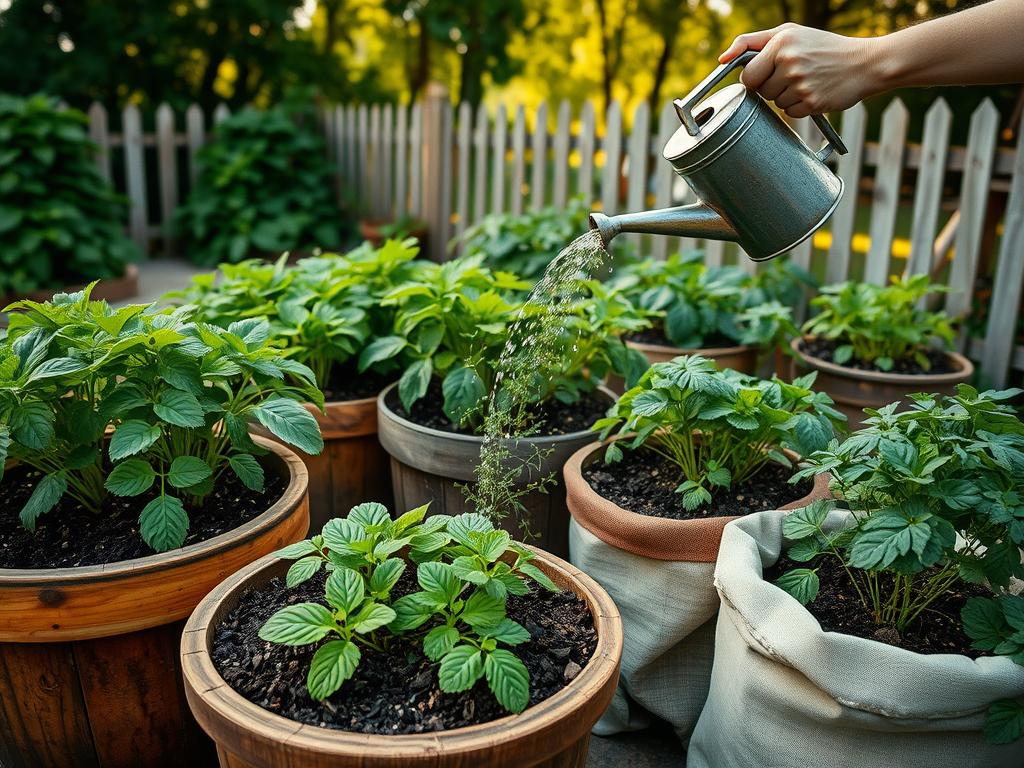
The finger test is the best way to check if the soil is dry. Just stick your finger into the soil about two inches deep. If it feels dry, it’s time to water. Keeping the soil consistently moist is important to avoid knobby or cracked potatoes.
Water until you see water coming out of the bottom of the pot. This makes sure all the roots get water. Don’t let the soil get too dry, as this can stress the plant and lower your potato yield.
Recommended Fertilizers for Growth
Potatoes need a lot of nutrients to grow well. A slow-release granular fertilizer is a good choice for container gardening. Look for one with a balanced NPK ratio, like 10-10-10, to help both the leaves and the potatoes grow.
Follow the instructions on the fertilizer package, usually when the plants are six inches tall. Avoid too much nitrogen, as it can make the plants grow more leaves than potatoes. Giving the right nutrients at the right time helps your plants grow well and gives you a big harvest.
Promoting Healthy Potato Growth
Your success with potato planting in containers depends on managing their environment. The right light and temperature balance is key. It helps your plants grow strong and healthy.
Sunlight and Temperature Needs
Potatoes love the sun and need at least six to eight hours of direct sunlight. If your spot gets less light, move your containers to catch the sun’s rays.
In summer, heat can harm your plants. Carefully monitor your pot’s temperature. Dark containers can get too hot. Move them to a cooler spot with afternoon shade if it gets too hot.
Signs of Common Potato Problems
Knowing your plants is crucial. Watch the leaves closely, as they show the first signs of trouble.
Yellow leaves or sudden wilting mean your plants are stressed. This could be from too much water, poor drainage, or too much heat. Catching these signs early helps fix the problem before it’s too late.
Regularly checking your plants is the best way to ensure a good harvest. By following these potato container gardening tips, you’ll keep your garden healthy and productive all season.
Harvesting Your Container Potatoes
The moment of truth comes when your container plants are ready to be picked. Keeping a close eye on them ensures you get the best taste and texture from your container grown potatoes. It’s a moment of pride for any gardener.
When to Harvest Your Potatoes
Look for certain signs to know if your potatoes are ready. The leaves will turn yellow and then die. This natural process means the potatoes have grown to their full size.
Be patient during this time. After the stems wither, the potato skins will harden. This makes them easier to store. You can check the size of the tubers by gently removing some soil.
Proper Harvesting Techniques
When it’s time to pick your potatoes, do it carefully to avoid damage. The best way is to gently tip the container onto a tarp or clean surface. This way, you won’t accidentally cut the tubers with a shovel or fork.
Use your hands to sift through the soil and find all the potatoes. Since container grown potatoes have thin skins, using your fingers is safer than sharp tools. After you’ve gathered your potatoes, brush off dirt and let them dry in a cool, shaded spot for a few hours.
Dealing with Pests and Diseases
Containers protect your plants but don’t keep pests or diseases away. Even with container grown potatoes, you must watch closely to keep them healthy. Catching problems early is key to avoiding big issues.
Common Pests to Watch For
Many pests target potato plants. Look out for aphids, tiny insects that harm your plants. They suck sap and spread diseases fast.
Also, watch for Colorado potato beetles. They and their larvae can destroy leaves quickly. Fungal diseases like blight can also harm your container grown potatoes if not treated.
Preventive Measures and Treatments
Prevention is the best defense. Make sure your containers drain well to avoid fungal growth. Also, keep plants from touching each other to improve airflow.
If pests show up, use organic treatments like neem oil. These are safe for container grown potatoes and control pests without harsh chemicals. Regular checks help you catch problems early, ensuring a healthy harvest.
Storing Your Harvested Potatoes
Proper storage is key to enjoying your hard work for months. After gathering your container grown potatoes, act fast to keep them fresh and nutritious.
“The secret to a long-lasting harvest lies not just in the growing, but in the patience you show during the curing process.”
Ideal Storage Conditions
To keep your potatoes fresh, create a root cellar-like environment. You need a cool, dark, and well-ventilated space.
Light can turn your potatoes green and bitter. High temperatures can cause sprouting or rot, spoiling your hard-earned crop.
| Factor | Requirement | Why it Matters |
|---|---|---|
| Temperature | 45°F – 50°F | Prevents sprouting |
| Light | Total Darkness | Avoids greening |
| Airflow | High | Reduces moisture |
How to Store Potatoes Long-Term
Before storing your container grown potatoes, cure them first. Curing makes the skins tough, protecting against bacteria and moisture loss.
Store potatoes in a single layer in a dark, airy spot for two weeks. When the skins are firm and dry, move them to breathable containers like mesh bags or wooden crates.
Don’t store your container grown potatoes near onions or apples. These produce gases that make potatoes sprout faster. By following these tips, you can enjoy your potatoes all winter.
Tips for Success in Container Potato Gardening
Mastering container gardening potatoes means avoiding common mistakes. Even seasoned gardeners face challenges in small spaces. Stay alert and proactive to help your plants grow well from start to finish.
Common Mistakes to Avoid
Choosing a container that’s too small is a big error. Potatoes need room to grow, so pick a pot with at least five gallons. Insufficient drainage causes root rot and slows growth.
Make sure your containers have big holes at the bottom. Don’t use heavy garden soil, as it can block air. Instead, use a loose potting mix to keep your plants well-oxygenated.
Best Practices for Container Management
To get the most from your garden, manage your space well. Rotate your containers every few days for even sunlight. This keeps the plant upright and healthy.
Check your soil pH often. Potatoes like slightly acidic soil. By keeping an eye on this, you can adjust as needed. These proven potato container gardening tips will boost your success with each planting.
Expanding Your Container Gardening Skills
Learning to grow potatoes in containers opens up new possibilities. You can now add more plants to your patio or balcony. This skill is a great start for a productive home garden.
Other Vegetables to Grow in Containers
Many plants do well with potatoes. Try growing compact bell peppers from Burpee or cherry tomatoes from Bonnie Plants. Kale and spinach also thrive in shallow pots.
Adding fresh herbs like basil and cilantro is a great idea. They add flavor and don’t take up much space.
Resources for Further Learning on Container Gardening
Explore trusted sources for more knowledge on growing food in the city. The Old Farmer’s Almanac has great guides for planting at the right time. Joining the Master Gardener Program can connect you with local experts.
Books like “The Vegetable Gardener’s Container Bible” by Edward C. Smith offer valuable tips. With practice, you’ll get better at growing potatoes and enjoy fresh food all year.