
Did you know a single packet of seeds can grow over 20 pounds of spinach in just a few weeks? This makes spinach a top choice for gardeners in cities and homes. It’s packed with nutrients.
Learning how to grow spinach is a fun journey that brings fresh greens right to your kitchen. Spinach loves cool weather, making it perfect for beginners. You don’t need a big garden to start.
You can grow spinach in small spaces, like on a balcony or in a raised bed. It’s easy and requires little effort. Yet, the taste is much better than store-bought. This guide will help you grow spinach with ease. Enjoy the fresh taste of homegrown spinach all season.
Understanding Spinach: A Nutrient-Dense Green
If you’re curious about how to grow spinach, start by learning about its health benefits. This leafy green is packed with vitamins and minerals, making it a superfood. Growing it yourself means your family gets the freshest spinach.
Benefits of Growing Spinach
Home gardening offers unmatched freshness at harvest time. Growing spinach yourself means no long-distance shipping. Your greens stay fresh with more flavor and texture.
Also, you control the growing environment. You can avoid harmful chemicals, making your spinach organic. It’s a budget-friendly way to keep your kitchen healthy all year.
Nutritional Value of Spinach
Spinach is a nutritional powerhouse. It’s full of Vitamin A, Vitamin C, and Vitamin K, supporting your immune system and bones. It also has iron and folate, key for a balanced diet.
Eating spinach regularly can boost heart health and digestion. It’s low in calories but high in fiber, fitting into any diet. Knowing these benefits will encourage you to care for your spinach plants well.
| Nutrient | Health Benefit | Daily Value Impact |
|---|---|---|
| Vitamin K | Bone Health | High |
| Vitamin A | Vision Support | High |
| Iron | Energy Levels | Moderate |
| Folate | Cell Function | Moderate |
Choosing the Right Spinach Variety
Mastering spinach cultivation tips starts with picking the right variety for your area. The right plant is key for a good harvest. Different types grow best in different climates and conditions.
By knowing these differences, you can get a longer harvest and better yields.
Types of Spinach to Consider
Spinach comes in three main types based on leaf texture and growth. Savoy spinach has dark green, crinkled leaves. It’s cold-hardy and has a strong flavor.
Semi-savoy spinach has slightly crinkled leaves. It’s good for warmer weather because it resists bolting well. Smooth-leaf spinach has flat leaves that are easy to clean and great for salads.
Best Varieties for Home Gardens
Look for varieties with bolting resistance for a longer harvest. The table below shows top picks for home gardeners based on their traits and leaf types.
| Variety Name | Leaf Type | Best Feature |
|---|---|---|
| Bloomsdale Long Standing | Savoy | High cold tolerance |
| Tyee | Semi-Savoy | Excellent bolt resistance |
| Space | Smooth | Fast growth rate |
| Giant Winter | Savoy | Ideal for fall planting |
Choosing the right variety is a key spinach cultivation tip. Always check the seed packet for advice on your region. This helps keep your garden productive all season.
Ideal Growth Conditions for Spinach
Creating the perfect environment for your greens is key to a bountiful harvest. Understanding your plants’ specific needs ensures they stay healthy and productive all season.
Soil Requirements for Spinach
The best soil for spinach is rich in organic matter and drains well. Aim for a slightly acidic to neutral pH, between 6.5 and 7.0. This helps roots absorb nutrients efficiently.
Adding compost or well-rotted manure before planting improves your garden bed’s texture. This makes the earth loose, allowing roots to spread easily. Consistent moisture retention is crucial, so avoid heavy clay soils that can become waterlogged.
“To plant a garden is to believe in tomorrow.”
Sunlight and Temperature Needs
Spinach loves cool temperatures between 50°F and 70°F. If it gets too hot, plants may bolt, making leaves bitter and ending the harvest early.
Following spinach cultivation tips, provide partial shade in the hottest afternoon. This keeps the soil cool and protects leaves from heat stress. By doing this, you’ll enjoy a longer growing season and healthier leaves.
Remember, the best soil for spinach works best with proper light. Balancing these factors creates a garden that produces top-quality greens for your kitchen.
Preparing Your Garden Space for Spinach
Starting your garden right is key to a great harvest. Good preparation gives your plants the best chance to grow. Follow these spinach cultivation tips to make your garden thrive.
Selecting the Perfect Location
Finding the right spot in your yard is crucial. Spinach loves sunlight, but it can handle some shade in hot places. Make sure the area drains well to keep roots healthy.
Stay away from cold spots where frost can harm young leaves. A flat bed helps manage water better. Good air flow also fights off diseases.
Soil Preparation Techniques
The best soil for spinach is loose and full of life. Test your soil’s pH first to make sure it’s between 6.5 and 7.0. This helps your plants grow strong.
Add compost or manure to enrich your soil. It gives nutrients and keeps moisture right. Make sure to till or rake the soil until it’s soft. This helps your seeds grow well.
Planting Spinach Seeds: A Step-by-Step Guide
Learning how to grow spinach starts with knowing when to plant. This green loves cool weather, perfect for spring or fall. Planting at these times helps your spinach avoid summer heat stress.
When to Plant Spinach
Spinach seeds grow best in soil between 45°F and 65°F. In the U.S., plant in early spring or late summer for a fall harvest. This ensures your spinach grows well without summer heat.
For growing spinach indoors, you control the environment. Start seeds inside before the last frost. Place them in a cool, bright spot to mimic natural conditions.
How to Sow Spinach Seeds
To grow a healthy crop, sow seeds correctly. Plant them half an inch deep in well-draining soil. Space seeds two inches apart for good airflow and root growth.
Thin plants to six inches apart when they’re three inches tall. This prevents overcrowding and helps spinach grow well. Keep the soil moist during germination to see green sprouts.
| Planting Method | Ideal Depth | Spacing | Days to Germinate |
|---|---|---|---|
| Direct Sowing | 0.5 inches | 6 inches | 7-14 days |
| Indoor Trays | 0.25 inches | 2 inches | 5-10 days |
| Container Pots | 0.5 inches | 4 inches | 7-12 days |
Whether indoors or outdoors, growing spinach requires patience. Follow these steps for a bountiful harvest in the cooler months.
Watering Spinach for Optimal Growth
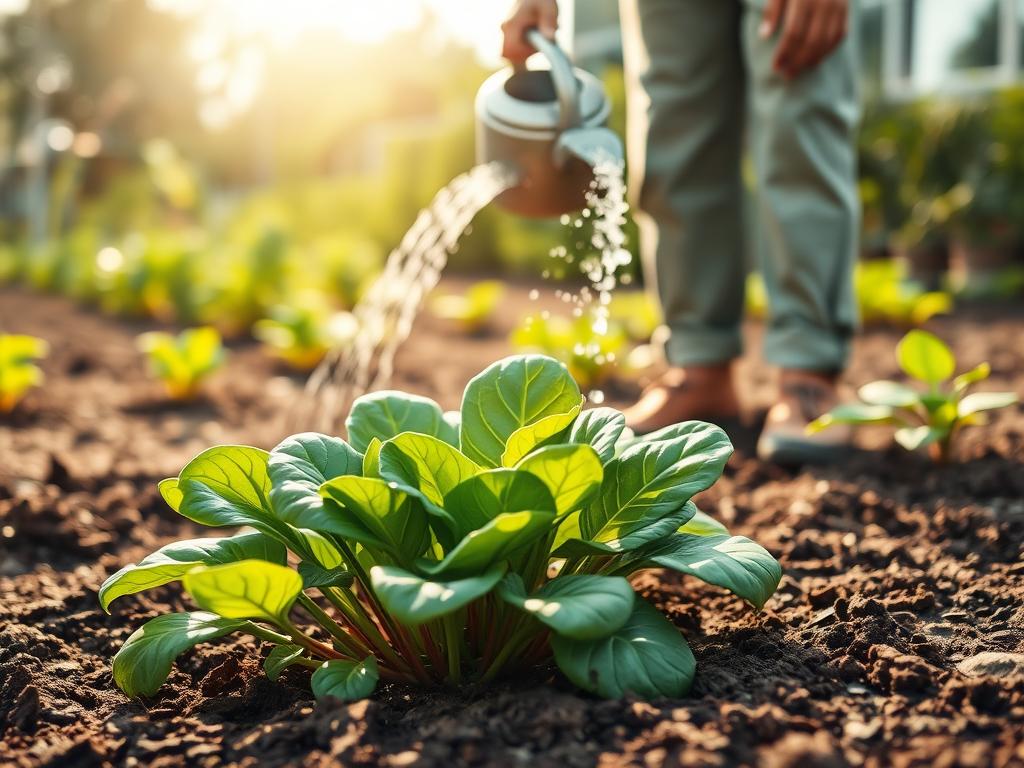
Keeping your garden soil damp is key for spinach plant care. Spinach loves cool weather and needs steady water to grow well.
When the soil dries out too fast, spinach gets stressed. This stress makes it bolt, or start producing flowers and seeds early. This makes the leaves taste bad and tough, ruining your harvest.
Importance of Consistent Moisture
To keep spinach tasting great, keep the soil moist but not too wet. Consistent moisture helps spinach grow leaves instead of flowers.
Water at the base of the plant, not overhead. This keeps the leaves dry and prevents diseases and rot.
Signs of Under- or Over-Watering
Check your garden every day to catch problems early. If leaves wilt in the heat, they need more water.
Yellow leaves or soft stems mean you’re watering too much. Good spinach plant care balances water to keep roots happy without drowning.
| Condition | Visual Sign | Recommended Action |
|---|---|---|
| Under-watered | Wilting, dry soil | Deep, slow watering |
| Ideal Moisture | Firm, dark green leaves | Maintain current schedule |
| Over-watered | Yellowing, soft stems | Improve soil drainage |
Fertilizing Your Spinach Plants
Spinach grows well with the right nutrients. Using spinach farming techniques helps your plants grow fast. The right soil feed lets your greens grow to their best.
Choosing the Right Fertilizer
Spinach loves nitrogen for its green leaves. Look for a balanced fertilizer or organic compost. Avoid too much phosphorus, as you want leaves, not flowers.
Home gardeners should try blood meal or fish emulsion. These natural fertilizers feed your plants slowly. Make sure the fertilizer has enough nitrogen for your spinach.
When and How to Fertilize
Good spinach plant care means fertilizing at the right time. Mix a slow-release fertilizer into the soil before planting. This gives your plants nutrients as they grow.
When your spinach has true leaves, use a liquid fertilizer every two to three weeks. Apply it to the soil, not the leaves, to avoid burning. Don’t overdo it, as too much fertilizer can make leaves bitter or attract pests.
| Fertilizer Type | Application Method | Frequency |
|---|---|---|
| Organic Compost | Mixed into topsoil | At planting time |
| Fish Emulsion | Diluted in water | Every 2-3 weeks |
| Blood Meal | Side-dressing | Once mid-season |
Pest Management for Spinach Plants
Mastering pest control for spinach plants is key to a thriving garden. Early detection is crucial to prevent damage. By choosing organic spinach gardening, your harvest stays safe and chemical-free.
Common Spinach Pests and Solutions
Many pests target spinach during the growing season. Spotting them early helps prevent crop loss.
- Aphids: These tiny insects suck sap from leaves. A strong water spray can wash them away.
- Leaf Miners: White trails on leaves indicate these larvae. Remove and destroy affected leaves to stop the problem.
- Slugs and Snails: They leave holes and slimy trails. Hand-picking them in the morning or evening works well.
Organic Pest Control Methods
Using natural strategies is essential for organic spinach gardening. You don’t need harsh chemicals to protect your plants.
Here are some eco-friendly methods for pest control for spinach plants:
- Neem Oil: This natural extract repels many insects. Apply it when it’s cooler to avoid leaf damage.
- Floating Row Covers: These fabric covers act as a barrier, keeping pests off your spinach.
- Companion Planting: Planting spinach with herbs like dill or cilantro can confuse and repel pests.
Regularly inspecting your garden is crucial. Check your spinach at least twice a week to stay ahead of pests.
Harvesting Spinach: When and How to Do It
Timing is key in spinach farming techniques. Waiting for the right moment means your greens will taste great and stay crisp.
Signs That Spinach is Ready to Harvest
Spinach is usually ready when its leaves are three to four inches long. At this size, they are tender and full of nutrients.
Check for bright, deep green leaves on the outside. If leaves turn yellow or show signs of bolting, pick them right away to avoid bitterness.
“The joy of gardening is found in the harvest, where the labor of your hands becomes the nourishment for your soul.”
Techniques for Harvesting Spinach
Use the cut-and-come-again method for the best results. This means picking outer leaves and letting inner ones grow for later.
When harvesting spinach leaves, cut stems with clean shears or scissors near the base. Avoid damaging the crown, where new growth starts.
Picking only outer leaves can make your harvest last longer. This method keeps your greens fresh without needing to replant often.
Storing and Preserving Fresh Spinach
After you’ve picked your spinach, you need a plan to keep it fresh. Taking good care of it right after picking helps it stay crisp and full of nutrients for longer.
Best Methods to Store Spinach
Start by washing the spinach gently in cool water to get rid of dirt. It’s crucial to dry the leaves well. You can use a salad spinner or pat them dry with a clean towel.
After drying, put the leaves in a container with paper towels. The paper towels soak up any extra moisture. This helps prevent wilting. Then, seal the container or bag loosely and put it in the fridge’s crisper drawer.
Freezing Spinach for Future Use
Freezing is great if you have too much spinach. First, blanch the leaves to stop them from losing flavor and color. Just boil them for two minutes, then cool them down in ice water.
Once cooled, squeeze out as much water as you can. Then, put the leaves in freezer-safe bags. Remove as much air as you can before sealing. This way, you can enjoy nutrient-dense greens in soups, stews, or smoothies all year.
Troubleshooting Common Spinach Issues
Even the most experienced gardeners face unexpected hurdles when cultivating leafy greens. While you strive to provide the perfect environment, nature often introduces variables that can impact your harvest. Understanding how to diagnose these issues early is the key to success in your home garden.
Whether you are managing an outdoor patch or growing spinach indoors, staying observant is essential. Catching a problem in its infancy often means the difference between a thriving crop and a total loss. By learning to spot the early warning signs, you can take swift action to protect your plants.
Identifying Plant Diseases
One of the most frequent challenges you might encounter is downy mildew. This fungal disease typically appears as yellow patches on the upper surface of leaves, often accompanied by a fuzzy gray growth underneath. It thrives in cool, damp conditions, making proper air circulation a top priority.
Another common issue involves leaf spots, which manifest as small, dark lesions on the foliage. These spots can spread rapidly if the leaves remain wet for extended periods. Always ensure you water at the base of the plant rather than overhead to keep the leaves dry and healthy.
Solutions for Common Growth Problems
Bolting is a natural response to stress, such as when temperatures spike unexpectedly. When your spinach begins to produce a tall flower stalk, the leaves often turn bitter and tough. You can mitigate this by providing shade during the hottest parts of the day or choosing heat-tolerant varieties.
If you notice stunted growth or yellowing leaves, your plants may be struggling with nutrient deficiencies or poor drainage. Effective pest control for spinach plants also plays a major role in overall health. Regularly inspect the undersides of leaves for aphids or leaf miners, which can weaken your crop significantly.
| Problem | Primary Cause | Recommended Solution |
|---|---|---|
| Downy Mildew | High humidity | Improve air circulation |
| Bolting | Heat stress | Provide shade or harvest early |
| Yellowing Leaves | Nitrogen deficiency | Apply organic fertilizer |
| Leaf Miners | Pest infestation | Remove affected leaves |
Enjoying Your Homegrown Spinach
From seed to harvest, you’ve earned a sense of pride. Growing organic spinach is rewarding. You get to enjoy fresh, nutritious leaves that taste better than store-bought ones.
You’ve learned to turn your backyard into a fresh produce haven. This skill is priceless.
Creative Culinary Uses
Fresh spinach makes any meal special. Blend it with bananas and almond milk for a healthy smoothie. Or sauté it with garlic and olive oil for a tasty side dish.
Raw spinach adds a fresh crunch to salads. Top it with walnuts and feta cheese for a delicious treat.
Maximizing Nutritional Impact
To keep vitamins in your spinach, steam it lightly. This makes the leaves’ nutrients easier for your body to use. Adding these greens to your diet boosts your health.
Share your spinach with friends. It’s a great way to spread the joy of eating healthy, homegrown food.