
Did you know over 40% of home garden yields are lost to invasive insects each year? This shows why many are moving away from harsh chemicals.
Instead, you can use sustainable gardening to make your garden strong. By choosing natural pest control plants, you help good insects and keep pests away.
Choosing organic pest control keeps your garden safe for pets and wildlife. It helps your garden grow better all year long.
You can make your garden a safe and productive place. Follow these steps to keep your plants healthy and green, without using harmful chemicals.
Understanding Natural Pest Control Plants
Nature has a clever way to fight pests that you can use in your garden. By watching how plants and animals interact, you can make your garden manage pests on its own. This way, you avoid using harsh chemicals.
What Are Natural Pest Control Plants?
These plants have special traits to keep pests away. Natural pest control plants use different ways to protect themselves.
Some plants release smells that hide the scent of your veggies from pests. Others act as barriers or make chemicals that pests don’t like. By adding these botanical allies to your garden, you create a space that naturally keeps pests away.
Benefits of Using Natural Pest Control
Using nature’s help is good for your garden’s health. Pest repellent plants mean you use fewer synthetic pesticides.
This method helps your garden become a balanced place where good insects and crops live together. Your garden will need less care over time. Using these methods keeps your soil healthy and your food free from chemicals.
Common Pest Problems in Your Garden
Learning to manage pests in your garden starts with knowing who’s eating your plants. Catching pests early stops small problems from becoming big ones. This protects your whole harvest.
Identifying Garden Pests
Check your plants every week for signs of pests. Look for curled leaves, sticky spots, or tiny holes. These signs point to aphids, beetles, or mites.
Early detection is key to keeping pests away. If leaves turn yellow or plants grow slowly, check the undersides. That’s where pests often hide.
“The best fertilizer is the gardener’s shadow.”
Seasonal Pest Challenges
In the United States, pests change with the weather. To manage pests well, you need to know when they come out.
Aphids show up in cool, damp spring days. When it gets hot in summer, spider mites and Japanese beetles become more common.
By knowing these patterns, you can act early. This keeps your garden healthy all year.
Best Natural Pest Control Plants
Nature has a way to keep pests away with special plants. These plants can protect your crops from harm. They use their natural chemicals to keep pests out.
Marigolds: The Guardian of the Garden
Marigolds are top protectors in organic gardens. They smell bad to pests like aphids and whiteflies. Planting them near tomatoes or peppers keeps pests away.
“The beauty of the marigold is matched only by its utility; it stands as a silent sentinel, guarding the vegetable patch from those who would do it harm.”
Lavender: A Fragrant Pest Deterrent
Lavender is more than a pretty flower. It keeps moths, fleas, and mosquitoes away. Its strong scent makes it a must-have for gardeners.
Basil: More Than Just a Culinary Herb
Basil is great for cooking and fighting pests. It hides the scent of other vegetables, making them less appealing to pests. It’s a key herb for gardeners.
Other Effective Pest Control Plants
There are many plants that protect your garden. Using different natural pest control plants keeps your garden safe all season. Here are some top picks for your garden.
| Plant Name | Primary Target | Best Placement |
|---|---|---|
| Chives | Aphids and Japanese Beetles | Near Roses and Carrots |
| Mint | Ants and Cabbage Moths | In Pots (to control spread) |
| Rosemary | Carrot Flies and Cabbage Moths | Near Vegetable Rows |
| Petunias | Asparagus Beetles and Leafhoppers | Bordering Garden Beds |
Choosing the right plants can make your garden pest-free. Diversity is key. A well-planned garden will protect your plants for years.
Companion Planting Strategies
You can turn your backyard into a thriving ecosystem with strategic plant pairings. This method, called companion planting, uses natural relationships to boost garden health. By placing certain crops together, you create a balanced environment that keeps pests away and supports growth.
Pairing Species for Maximum Protection
Using pest repellent plants as shields is a great way to protect your vegetables. Aromatic herbs are very useful because their strong scents hide the smell of your vegetables. This makes it hard for pests to find them. You can also use taller plants to shade or block more delicate species.
Here are some common pairings to make your garden stronger:
| Primary Crop | Companion Plant | Primary Benefit |
|---|---|---|
| Tomatoes | Basil | Repels hornworms |
| Carrots | Onions | Deters carrot flies |
| Cabbage | Dill | Attracts beneficial wasps |
How Companion Planting Works
The science behind companion planting is based on biodiversity. Growing different plants together creates a complex habitat that confuses pests. Many pests rely on specific scents or visual cues to find their hosts. A diverse garden disrupts these signals effectively.
This strategy also attracts natural predators to your garden. By including pest repellent plants that also produce nectar, you invite ladybugs and lacewings. These beneficial insects will hunt down aphids and other pests for you.
Using these techniques offers many benefits for your garden:
- Reduced chemical use by relying on natural defenses.
- Improved soil health through diverse root systems.
- Increased yields due to less pest damage and better pollination.
Essential Oils for Natural Pest Control
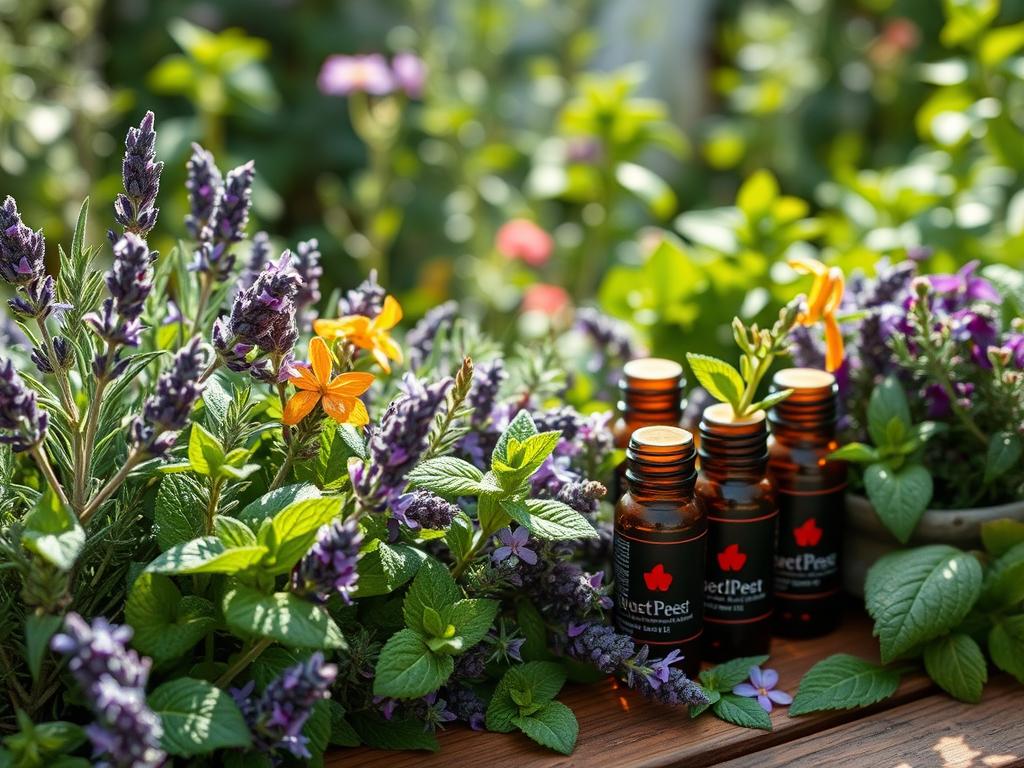
Essential oils are a strong, natural way to fight garden pests without using harsh chemicals. These oils are made from insect-repelling herbs. They pack the plant’s strongest scents into a small bottle. Using these oils can create a strong barrier against common pests.
Using these oils is a non-toxic pest control method that’s safe for your family and pets. A little bit goes a long way in protecting your garden. This adds a smart layer to your garden care.
Popular Essential Oils for Garden Use
Many plant-based oils are great at keeping pests away. Peppermint oil is known for fighting aphids and spiders. Rosemary oil keeps beetles from your crops. Neem oil is also effective against many soft-bodied insects.
Using these insect-repelling herbs in oil form lets you target pests quickly. Make sure to buy high-quality, pure essential oils for the best results. When used right, these natural substances stop pests from eating your plants without harming the environment.
How to Use Essential Oils Safely
When working with these strong plant extracts, safety is key. Always mix the oils with water and a bit of mild soap. Never apply undiluted oils directly to your plants, as it can damage them.
First, test the mixture on one leaf and wait 24 hours. If the plant looks good, you can use it more widely. Light, regular spraying works better than one big spray for keeping pests away all season.
| Essential Oil | Target Pests | Dilution Ratio |
|---|---|---|
| Peppermint | Aphids, Spiders | 1 tsp per quart of water |
| Rosemary | Beetles, Flies | 1 tsp per quart of water |
| Neem Oil | Mites, Whiteflies | 2 tsp per quart of water |
| Lavender | Moths, Fleas | 1 tsp per quart of water |
Attracting Beneficial Insects
Turning your garden into a thriving ecosystem starts with inviting the right guests. By welcoming beneficial insects, you create a natural cleanup crew. They work hard to keep your plants healthy without harsh chemicals.
The Role of Pollinators
Pollinators are key for many garden plants to reproduce. They do more than just help with fruit production. They keep your garden vibrant and diverse, fighting off pests naturally.
Predatory insects like ladybugs and lacewings are your garden’s defense. They eat pests like aphids and mites, keeping them in check. By supporting these predators, you protect your harvest.
Key Plants to Attract Beneficial Insects
To keep these helpful creatures around, offer them nectar and shelter. Use specific flowers in your companion planting to attract them. Dill, fennel, and yarrow are great for welcoming predators.
The table below shows common beneficial insects and the plants that attract them:
| Beneficial Insect | Target Pest | Attracting Plant |
|---|---|---|
| Ladybug | Aphids | Dill |
| Lacewing | Mealybugs | Fennel |
| Hoverfly | Caterpillars | Yarrow |
| Parasitic Wasp | Whiteflies | Sweet Alyssum |
DIY Natural Pest Control Recipes
Turning everyday items into garden protectors is easier than you think. Using organic pest control methods helps your plants grow strong. These homemade solutions are kind to the planet and tough on pests.
Simple Recipes to Make at Home
You can make effective sprays with simple ingredients and insect-repelling herbs. These non-toxic pest control options are safe for your family and pets.
- Garlic and Chili Spray: Blend two bulbs of garlic and two hot peppers with a quart of water. Let it sit overnight, then strain and spray on leaves to keep chewing insects away.
- Mild Soap Solution: Mix one tablespoon of pure liquid castile soap into a quart of water. This spray helps manage soft-bodied pests like aphids by breaking their outer shells.
- Herbal Infusion: Steep fresh insect-repelling herbs like mint or rosemary in boiling water. Once cooled, strain and use it as a gentle spray for your garden beds.
Storage and Usage Tips
To keep your organic pest control effective, store your mixtures in clean, airtight containers. Keep them in a cool, dark place to prevent ingredients from spoiling too soon.
Use your homemade sprays within a few days for the best results. Always test a small area of the plant first to avoid any sensitivity. Apply consistently in the early morning or late evening for the healthiest garden.
Maintaining Healthy Plants for Pest Resistance
A thriving garden starts long before pests show up. When plants are strong and well-fed, they fight off pests better. This makes your garden less dependent on chemicals.
Importance of Soil Health
Soil is the heart of a strong garden. It gives plants the nutrients they need to grow strong. Rich, organic matter keeps plants looking good all season.
Testing your soil is key to knowing what it needs. Adding compost or organic fertilizers helps plants stay healthy. This is like a natural way to fight pests from the ground up.
Regular Maintenance Practices
Keeping your garden in shape is crucial. Water plants at the base to avoid wet leaves. Mulching keeps weeds away and soil warm.
Pruning is also important. It removes dead parts and lets air flow. This makes your garden a balanced place.
A healthy garden attracts good bugs that protect it. Keeping plants strong creates a natural defense system. Consistency is the key to a successful garden.
Monitoring and Evaluating Effectiveness
Watching your plants closely makes gardening more than just a hobby. It turns it into a successful practice. By observing your plants regularly, you can see if your sustainable gardening is working.
Regular checks help you spot problems early. This is key to managing pests well in your garden.
How to Assess Pest Control Methods
Do weekly checks on your plants. Look at the undersides of leaves, where pests often hide.
Keeping a garden journal is very helpful. It helps you see which plants attract pests and which don’t, using non-toxic pest control.
Use this table to track your progress. It helps you see if your methods are working.
| Observation Method | Frequency | What to Look For |
|---|---|---|
| Visual Leaf Inspection | Weekly | Holes, webbing, or sticky residue |
| Soil Surface Check | Bi-weekly | Larvae or unusual insect activity |
| Growth Rate Tracking | Monthly | Stunted growth or yellowing leaves |
Adjusting Your Approach as Needed
If your current plan isn’t working, don’t worry. Every garden is different. You might need to change your non-toxic pest control strategy.
Try rotating your companion plants if they’re not keeping pests away. You might also need to spray more often or add new beneficial insects.
Being flexible is important for sustainable gardening. By being open to change, you can keep your garden healthy and full of life all season.
Conclusion: Embracing Natural Pest Control
Switching to natural pest control makes your backyard a thriving sanctuary. You create a balanced environment where plants grow strong. This is all without the need for harsh synthetic chemicals.
Lasting Advantages of Natural Methods
Choosing these organic strategies lays a strong foundation for long-term success. Your soil quality improves as you avoid toxic sprays. This shift supports a resilient landscape that naturally resists common threats over time.
Building a Sustainable Garden Ecosystem
Your commitment to sustainable gardening practices pays off. You foster a diverse habitat that provides a safe home for beneficial insects. These tiny allies work tirelessly to keep pest populations in check throughout the growing season.
Every small change you make helps the health of your local environment. Keep observing your plants and refining your techniques as your green space evolves. Your dedication ensures a vibrant, chemical-free harvest for many years to come.