
One in three American homeowners loves their yard the most. Yet, many find it hard to pick the right plants.
This guide will help you choose plants that fit your yard perfectly. You’ll learn about plants for color, big impact, and structure. Plus, how to attract pollinators and add fragrance.
Discover plants that are easy to care for and save water. Your goal is a garden that’s beautiful and helps local wildlife.
Jump to sections on perennials, annuals, shrubs, pollinators, and more. Create a garden you’ll love all year round.
Why Choosing the Right Plants Matters for Your Garden
Choosing the right plants is key to a beautiful and functional garden. They set the color scheme, add height, and determine how much care you’ll need. Making smart choices saves time and reduces pests and diseases, offering shade, privacy, or groundcover where needed.
How plant choices affect garden aesthetics and function
Tall plants like ornamental grasses create a stunning backdrop. Low-growing groundcovers, like creeping thyme, reduce weeds and soften paths. Sedges, shrubs, and small trees help control erosion and frame areas.
Form, texture, and bloom timing are crucial for a beautiful garden. Matching plants to your site ensures both beauty and function all year.
Matching plants to your climate and soil in the United States
Begin with the USDA Plant Hardiness Zone Map to find hardy perennials. Know your soil type—sandy, loamy, or clay—and improve it with compost or sand. Your local Cooperative Extension Service offers guides for your area.
In the Southwest, choose heat-tolerant plants like Salvia and Agave. For colder areas, go with peonies and hardy Sedum. Coastal gardens benefit from salt-tolerant plants like beach sunflower and bayberry.
Balancing color, texture, and seasonal interest
Repeat key colors for a cohesive look. Mix different foliage textures, like broad hosta leaves with spiky grasses, for depth. Plan for a sequence of blooms from spring to fall.
Design in layers: start with canopy or small trees, then shrubs, perennials, and groundcovers. Include evergreens and strong winter silhouettes for year-round beauty.
Perennial Favorites for Long-Lasting Beauty
Perennials are key to a garden that looks good all year. Pick the best plants for your area and soil. This way, you get lasting color and structure, and you won’t need to replant as often. Here are some top picks and tips to keep your garden looking great.
Top blooms that return each year
Peonies (Paeonia lactiflora) bloom dramatically in spring and can live for decades. Daylilies (Hemerocallis) are easy to care for and come in many colors. Coneflowers (Echinacea) attract bees and butterflies and bloom from summer to fall.
Lavender (Lavandula) adds a lovely scent and is drought-resistant in warm, dry spots. Coreopsis and sedum (Autumn Joy) keep your garden interesting all summer and into fall. Salvia and catmint offer continuous blooms and complement many perennials.
Care basics: pruning, dividing, and soil needs
Trim off spent blooms to keep plants tidy and encourage more flowers. Most perennials do well with a little fertilizer in spring. Use a balanced slow-release fertilizer or compost.
Divide clumping plants every 3–5 years to keep them healthy and in check. This includes daylilies, hostas, and bearded irises. Split most in spring, but some fall-blooming types do better in early fall.
Improve your soil with compost to boost fertility and drainage. Mulch to keep moisture in and weeds out. Make sure to check the specific needs of each perennial before planting.
Design tips: grouping perennials for continuous color
Plant 3–7 of the same type together for a striking effect. Mix different heights and bloom times for color all season. Create a bloom calendar to avoid gaps.
Put taller plants behind shorter ones for clear views. Mix different textures and colors, like silver-leaved artemisia with bright coneflowers. These tips help build a garden with layers of beauty and color.
| Perennial | Peak Bloom | Hardiness | Care Notes |
|---|---|---|---|
| Peony (Paeonia lactiflora) | Late spring | Zones 3–8 | Plant deep, minimal division, mulch in winter |
| Daylily (Hemerocallis) | Summer | Zones 3–9 | Divide every 3–5 years, full sun to part shade |
| Coneflower (Echinacea) | Summer–fall | Zones 3–9 | Low fertilizer needs, deadhead for tidiness |
| Lavender (Lavandula) | Summer | Zones 5–9 (best in warmer/drier) | Excellent drainage, trim after bloom to shape |
| Coreopsis | Late spring–summer | Zones 4–9 | Low care, light deadheading extends bloom |
| Sedum (Autumn Joy) | Late summer–fall | Zones 3–9 | Tolerant of poor soils, cut back in spring |
| Salvia / Catmint | Late spring–fall | Zones 4–9 | Regular pruning encourages rebloom, drought tolerant |
Annuals That Deliver Big Color All Season
Annuals add instant color to your garden. They can enhance the look of beds and containers. Choose varieties that fit your light conditions and space for the best results.
High-impact options for borders and pots
Zinnias and marigolds are great for sunny spots. They love the heat and bright colors. For hanging baskets, try petunias and calibrachoa for a dramatic look.
Begonias and impatiens do well in shade. They keep your containers lively. Coleus adds rich foliage that contrasts beautifully with bright blooms.
Practical care: feeding, watering, and deadheading
Start with a well-draining mix in pots and good soil in beds. Use slow-release fertilizer at planting and liquid every 2–4 weeks for pots. Water deeply for beds and check pots daily in hot weather.
Deadheading is easy: just pinch or snip spent blooms. This encourages more flowers on many plants. Watch for pests like aphids and slugs. Use hand removal, insecticidal soap, or traps to manage them.
How to combine annuals with perennials for ongoing interest
Annuals fill gaps while perennials grow. Plant early-flowering annuals near slow-growing perennials to avoid bare spots. Trailing annuals soften the edges of perennial beds.
Plan for color repeats and contrasts to tie everything together. Match bloom colors or foliage tones of annuals and perennials. This keeps your garden colorful all season and cohesive.
best plants for garden
Choosing the right plants for your garden is key. Look for species that match your light, soil, and time. Here’s a quick guide to the top garden plants for sunny spots, shady areas, and everything in between. Use this when you visit local nurseries like Monrovia or Proven Winners.
Overview of the most recommended species for beauty and reliability
Perennials like coneflower, daylily, peony, and sedum are great for lasting beauty. Annuals such as zinnia, petunia, and marigold add color all season. Shrubs like hydrangea and boxwood offer structure, while small trees like dogwood and Japanese maple add height.
Groundcovers like creeping thyme and vinca fight weeds and erosion. Ornamental grasses like Miscanthus add movement and texture. These plants are easy to find, disease-resistant, and fit many U.S. climates.
Plant picks for sunny, shady, and mixed conditions
For full sun, pick lavender, salvia, coreopsis, zinnia, or sedum. These sun-loving plants bloom well and need little care.
In part shade, try astilbe, hosta, heuchera, or bleeding heart. These shade plants offer texture and color where sun is scarce.
In deep shade, go for ferns like Athyrium or Dryopteris, epimedium, and sweet box. For spots with changing light, hydrangea, daylilies, and native wildflowers are great.
Low-maintenance versus showy-care plants
Low-maintenance plants save you time. Sedum, daylily, ornamental grasses, and lavender need little water and pruning. They’re perfect if you’re short on time or budget.
Showy-care plants need more work but offer big rewards. Peonies need staking and good soil. Roses require regular pruning and pest control. Choose these for a statement piece if you’re willing to invest time or hire help.
Balance your garden with a mix of easy-care plants and a few showstoppers. This approach ensures your garden looks great all the time.
Attractive Shrubs and Small Trees for Structure
Use garden structure plants to give your yard form through every season. Choosing the right mix of best shrubs for garden and small ornamental trees helps you build layers, guide sightlines, and create living rooms outdoors. Below you will find practical picks and clear care notes to keep those bones healthy and beautiful.
Shrubs that provide year-round form and color
Boxwood offers classic evergreen shape for garden hedges and formal borders. Hydrangea delivers summer blooms; repeat-blooming types extend showiness. Azalea and rhododendron bring spring color to shady beds and under trees.
Butterfly bush (Buddleja) fills summer with nectar for pollinators, but check local invasive species rules before planting. Viburnum gives multi-season interest through flowers, foliage, and berries. For winter structure, consider hollies (Ilex) or yews for steady green form.
Small trees to add height without overwhelming your yard
Japanese maple (Acer palmatum) provides dramatic foliage and stays compact in most gardens. Dogwood (Cornus florida) offers spring blossoms and manageable mature size. Serviceberry (Amelanchier) rewards you with spring flowers, summer fruit, and fall color.
Redbud (Cercis canadensis) gives early season color on a tidy frame. Choose crabapple cultivars for compact flowering specimens that suit tight spaces. Always note mature size and site placement so roots and branches won’t conflict with foundations or utilities.
Maintenance tips for pruning and shaping
Pruning shrubs at the right time protects buds and bloom cycles. Prune spring-flowering shrubs right after bloom. Prune summer-flowering shrubs in late winter or early spring before new growth begins.
Remove crossing branches, thin interiors to allow light, and use selective heading cuts to keep natural form. Use bypass pruners for small stems, loppers for medium branches, and a hand saw for large limbs. Adopt an annual or biennial maintenance schedule and apply rejuvenation pruning when shrubs become overgrown.
| Plant Type | Good For | Seasonal Interest | Care Notes |
|---|---|---|---|
| Boxwood | Formal hedges, year-round structure | Evergreen | Light pruning to shape; tolerates shearing; prefers well-drained soil |
| Hydrangea | Summer color, mixed borders | Summer blooms, some varieties rebloom | Water regularly; prune based on bloom type; add mulch for moisture |
| Azalea / Rhododendron | Shade color, foundation plantings | Spring flowers, evergreen or semi-evergreen foliage | Acidic soil; prune after flowering; protect from hot afternoon sun |
| Butterfly Bush (Buddleja) | Pollinator magnet, informal borders | Summer blooms | Cut back in late winter; watch for invasiveness in some states |
| Viburnum | Multi-season interest, wildlife food | Spring flowers, summer berries, fall color | Prune to shape after flowering; tolerates a range of soils |
| Japanese Maple | Small ornamental trees, focal points | Spring-to-fall foliage drama | Site for filtered sun; protect from strong winds; prune lightly |
| Dogwood | Understory tree, spring interest | Spring flowers, fall color | Plant with good drainage; prune after bloom for shape |
| Serviceberry | Edible berries, multi-season appeal | Spring flowers, summer fruit, fall color | Minimal pruning; thin to maintain form; tolerant of many soils |
| Redbud | Early spring color, compact canopy | Early spring blossoms | Avoid deep summer pruning; best pruned when dormant |
| Crabapple (compact) | Small flowering tree for tight spaces | Spring flowers, small fruit | Choose disease-resistant cultivars; prune to maintain air flow |
Plants That Attract Pollinators and Wildlife
Creating a lively patch for pollinators and birds brings color, movement, and purpose to your yard. Choose a mix of showy blooms, nectar-rich flowers, and native species. This supports insects and hummingbirds across the seasons.
Best blooms for bees, butterflies, and hummingbirds
Pick plants that match each visitor’s feeding style. Echinacea and Rudbeckia offer flat, open faces that work well for bees and butterflies. Milkweed (Asclepias spp.) is the top choice for monarch caterpillars and adult butterflies.
Butterfly bush, Buddleja davidii, draws migrating butterflies with fragrant, clustered blooms.
Hummingbird plants need tubular flowers rich in nectar. Salvia and bee balm (Monarda) have shapes hummingbirds favor. Lavender and thyme provide strong scent and nectar that attract many bee species.
Creating pollinator-friendly planting zones
Group plants in sunny, pesticide-free patches to make foraging easy. Aim for continuous bloom from spring through fall by combining early bulbs, summer perennials, and late asters or goldenrod.
Vary heights to give shelter and landing platforms. Add simple water features like shallow dishes with stones for drinking and perches. Leave some bare soil for ground-nesting bees and avoid systemic insecticides such as neonicotinoids to protect pollinator health.
Native plant options to support local ecosystems
Native pollinator plants outperform many exotics at supporting local insect larvae and native bird populations. Consider New England aster in the Northeast, black-eyed Susan and goldenrod in many regions, and local milkweed species for monarchs.
Native species adapt to local soils and climate, which lowers maintenance after they establish. Check your state extension or Native Plant Society for region-specific lists. Buy from specialist nurseries to ensure true native cultivars.
Below is a quick reference to match pollinators with reliable plants for your wildlife-friendly garden.
| Pollinator | Top Plants | Flower Shape / Benefit |
|---|---|---|
| Bees | Echinacea, Rudbeckia, lavender, thyme | Open or clustered blooms; abundant pollen and nectar |
| Butterflies | Milkweed (Asclepias spp.), Buddleja, asters | Flat-topped clusters for landing; host plants for caterpillars |
| Hummingbirds | Salvia, Monarda (bee balm), tubular salvias | Tubular flowers rich in nectar; bright colors attract hummingbirds |
| General wildlife | Native aster, goldenrod, black-eyed Susan | Seasonal nectar and seed sources; support for insects and birds |
Fragrant and Sensory Plants to Enhance Your Garden Experience
Make your outdoor space a sensory delight with scent, texture, and taste. Choose plants that transform paths and seating into living experiences. Fragrant and tactile plants guide you, soothe your senses, and bring calm.
Fragrant flowers and herbs to plant near pathways and seating
Plant lavender and rosemary along paths and benches for a pleasant scent. Lavender loves full sun and well-drained soil. Rosemary also prefers these conditions and adds greenery.
In warm, humid areas, gardenia thrives in part shade with acidic soil. It releases a rich fragrance in the evening. Scented geraniums, thyme, and lemon balm are great for pathways, releasing aroma as you brush against them.
Plants with interesting texture, scent, and touch
Combine soft lamb’s ear with spiky grasses and compact boxwood for texture. Lamb’s ear feels soft, grasses move in the breeze, and boxwood adds glossy structure.
Place fragrant roses or jasmine near seating for evening scent. Add herbs like basil and mint, and fruits like strawberries and blueberries. This way, your garden rewards your senses with smell and taste.
Sensory design tips for a relaxing outdoor space
Plant fragrant plants upwind of seating to enjoy the scent carried by breezes. Layer plants of different heights to create shelter and reduce noise. This helps make your garden a peaceful retreat.
Stagger plant bloom times for scent throughout the seasons. Use paths with varied textures and include plants at reachable heights. This encourages exploration and mindful touch.
Low-Maintenance and Drought-Tolerant Picks
Choose plants that cut chores and water use without giving up beauty. Your yard can show strong color and texture while staying easy to care for. Use practical design moves to support drought-tolerant plants and low-maintenance garden plants year after year.
Best drought-tolerant plants for U.S. regions
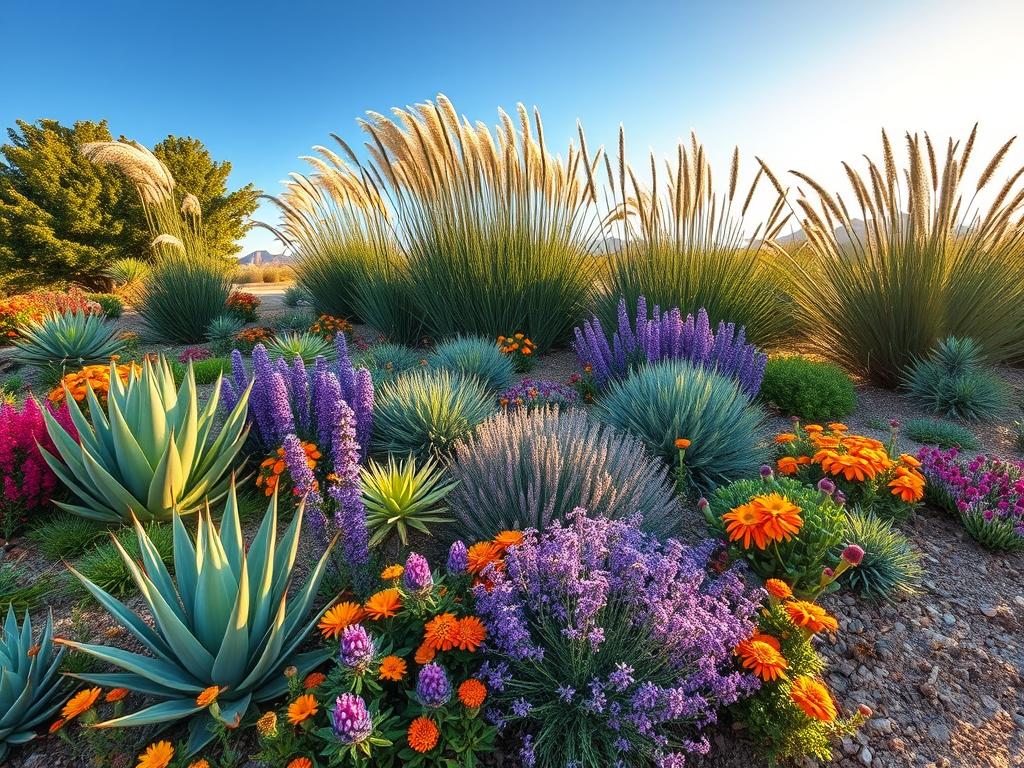
Southwest and arid zones do well with agave and yucca. Penstemon and Salvia greggii give blooms that attract pollinators while needing little water.
Mediterranean and California climates favor lavender, rosemary, and California poppy (Eschscholzia californica). These xeriscape plants thrive in hot, dry summers and poor soils.
Temperate areas can use sedum, Miscanthus and Pennisetum grasses, plus Russian sage (Perovskia atriplicifolia). Native prairie species like little bluestem and coneflower handle dry spells once they are established.
Soil, mulch, and irrigation strategies to reduce upkeep
Improve sandy soil by adding compost to raise organic matter and retain moisture. In clay soils, add coarse sand and compost to improve drainage and root health.
Apply 2–3 inches of coarse mulch to moderate soil temperature and slow evaporation. Follow practical mulching tips: keep mulch away from stems, replenish each season, and use organic materials that break down slowly.
Use drip irrigation or soaker hoses to aim water at root zones. Water deeply and infrequently to encourage deeper roots. Smart controllers and rain sensors cut waste by matching schedules to weather.
Designing a beautiful garden that saves time and water
Group plants by water need with hydrozoning to make irrigation efficient. Choose permeable patios and paths to reduce runoff and help groundwater recharge.
Replace high-maintenance lawn with native plant meadows, gravel beds with succulents, or drought-tolerant groundcovers to suppress weeds and cut mowing time.
Use reflective light-colored mulch or stone in hot climates to reduce heat stress. Combine xeriscape plants with low-maintenance garden plants for layered texture and seasonal interest.
| Region | Top Picks | Soil Tips | Maintenance |
|---|---|---|---|
| Southwest / Arid | Agave, Yucca, Penstemon, Salvia greggii | Fast-draining gravelly mixes; avoid heavy compost | Minimal watering after establishment; prune spent stalks |
| California / Mediterranean | Lavender, Rosemary, California poppy | Sandy loam with good drainage; moderate compost | Light pruning, 2–3″ mulch, deep occasional irrigation |
| Temperate / Prairie | Sedum, Miscanthus, Pennisetum, Russian sage, Coneflower | Amend with compost for drought cycles; avoid waterlogging | Cut back ornamental grasses yearly; divide sedum when crowded |
| General xeriscape | Native grasses, succulents, drought-tolerant shrubs | Improve structure with compost; use mulching tips for moisture | Drip irrigation, smart controllers, low fertilizer needs |
Conclusion
Choosing the right plants for your garden is key. Match them to your climate, soil, and daily routine. Perennials provide steady structure, while annuals add seasonal color.
Shrubs and small trees help shape your garden. Pollinator-friendly and sensory plants bring life and fragrance. Drought-tolerant plants reduce maintenance and water use.
Before buying, check your garden’s sun, soil, and drainage. Use the USDA Plant Hardiness Zone Map to find the best plants. Start with a few reliable species and plan a bloom calendar.
Plant correctly, apply mulch, and set a simple watering routine. Visit local nurseries for quality plants and advice. With care and basic maintenance, your garden will be beautiful and fit your style.