
Did you know over 30 million households in the United States grow their own food? You don’t need a big backyard or farm to do this.
You can grow a garden on your balcony or kitchen windowsill. Learning to grow container vegetables year round lets you get fresh ingredients anytime.
Imagine picking fresh greens or tomatoes while it snows outside. This turns small spaces into great places for your kitchen.
Choosing the right crops means you always have healthy food. You’ll see how easy it is to keep a productive harvest anywhere.
Benefits of Growing Vegetables in Containers
Growing veggies in containers gives you control that in-ground gardening can’t. It’s perfect for city apartments or backyards with bad soil. You can grow fresh food anywhere by controlling the environment.
“The garden is a place where you can find peace, but a container garden is where you find true efficiency and control over your harvest.”
Space Efficiency
Container gardening is great for small spaces. You can use balconies, patios, or windowsills to grow a lot of food. Vertical gardening techniques let you stack plants, doubling or tripling your space without needing more ground.
Improved Soil Quality
Soil quality is a big issue with traditional gardening. But with growing vegetables in containers, you can create the perfect soil mix. You can blend high-quality potting soil with compost and perlite for the best drainage and nutrient retention.
This way, you avoid soil problems like compaction and poor drainage. Your plants will have strong roots, which is key for healthy container vegetables year round. Good soil means your plants grow better and produce more all year.
Pest Management
Ground pests can destroy traditional gardens. But by growing plants in containers, you create a barrier. This makes it hard for slugs, snails, and beetles to get to your veggies. It reduces the need for harsh chemicals.
Also, you can watch your plants closely for any problems. Keeping your container vegetables year round in a controlled space lets you catch issues early. This keeps your garden healthy and productive without the stress of pests.
Choosing the Right Containers for Vegetables
Not all containers are the same when starting indoor vegetable gardening. Picking the right one is key for your plants to thrive. Knowing the best materials helps create a perfect spot for growing vegetables in containers.
Material Options
Plastic pots are light and keep moisture well, great for dry climates. But, they can break down under strong sunlight.
Terracotta pots are classic and let soil breathe. This helps avoid too much water, but you must check the soil often.
Fabric containers are popular for their air-pruning roots. This leads to healthier, more robust root systems and better plant growth.
Size Considerations
Choosing the right size is crucial for your plants to grow well. Small herbs do fine in a one-gallon pot, but tomatoes need more space.
For big crops, aim for at least five gallons of soil. Proper root development needs enough room for the plant to grow without being root-bound.
Drainage Needs
Good drainage stops root rot. Make sure your container has holes at the bottom for water to drain.
If your pot doesn’t drain, your plants will get waterlogged. This can cause stunted growth or even kill your plants. Always choose containers that manage moisture well for success in indoor vegetable gardening.
Best Vegetables for Cool Weather Seasons
Discovering the best vegetables for lower temperatures changes how you garden all year. By picking hardy varieties, you can keep growing even when it gets cold. These crops are great for both patio gardens and indoor vegetable gardening, offering fresh food all winter.
Leafy Greens
Leafy greens are top picks for cool-season gardens. They grow fast and handle light frosts well. Spinach, kale, and arugula taste sweeter after a bit of cold. You can harvest them often to keep your salads fresh.
“The secret to a successful winter harvest lies in choosing varieties that are bred for cold tolerance and rapid growth.”
Root Vegetables
Root vegetables love cooler soil, making them perfect for fall. Carrots, radishes, and beets are great for containers because they need little space. Make sure your containers are deep enough for the roots of your chosen variety.
- Carrots: Choose shorter, “nantes” types for easier container growth.
- Radishes: These grow incredibly fast and can be harvested in as little as 25 days.
- Beets: Enjoy both the nutritious greens and the sweet, earthy roots.
Brassicas
Brassicas, like broccoli and cauliflower, love the cool air of changing seasons. They take a bit more time, but the reward is worth it. By gardening all year, your containers stay busy.
If you’re short on outdoor space, indoor vegetable gardening is a great option. It lets you control the environment for these sensitive plants. With the right light and water, your brassicas will thrive. This way, you can enjoy fresh veggies all year, no matter the weather.
Best Vegetables for Warm Weather Seasons
When it gets hot, your container garden really starts to shine. To be great at year round vegetable gardening, you need to know when to switch to warm-season crops. These plants love the sun and grow well in the heat.
Tomatoes
Tomatoes are the stars of any summer garden. They grow big and need deep pots and strong supports like cages or stakes.
Make sure they get at least eight hours of direct sunlight each day. Keeping the soil moist is key, as tomatoes can dry out fast in hot weather.
Peppers
Peppers do great in the heat and are perfect for pots. You can grow sweet bell peppers or spicy jalapeños. They need soil that drains well to avoid root rot.
Here are some tips to help you grow more peppers:
- Put your pots in the sunniest spot.
- Use a good potting mix with organic compost.
- Feed them a balanced liquid fertilizer every two weeks to help with fruit growth.
Squash
Growing squash in containers is a great way to add to your year round vegetable gardening efforts. Squash plants spread out, but there are bush varieties that stay small and still produce a lot.
Always check your squash for signs of thirst. Their big leaves lose water fast on hot days. With the right care, you’ll have plenty of fresh summer squash from your porch.
Year-Round Planting Strategies
To have a garden that never stops giving, you need a plan. By scheduling your planting, your pots will always be full. This is key to year round vegetable gardening, so you can enjoy fresh food all year.
Succession Planting
Succession planting means planting seeds at different times. When you pick a crop, you plant again right away. This keeps your garden busy and avoids the “feast or famine” problem.
For instance, plant lettuce every two weeks. By the time you harvest the first batch, the next one is ready. This trick is a top container gardening tip for a steady supply of greens.
Companion Planting
Companion planting is about putting plants together for their benefit. Some plants keep pests away, while others taste better or grow faster. This way, you use fewer chemicals.
Pairing the right veggies makes the most of your space. Strategic grouping also helps with sunlight and water. Here are some good pairs to keep your garden healthy:
| Primary Crop | Companion Plant | Primary Benefit |
|---|---|---|
| Tomatoes | Basil | Improves flavor and repels flies |
| Peppers | Onions | Deters aphids and mites |
| Squash | Marigolds | Repels beetles and nematodes |
| Lettuce | Radishes | Provides shade and deters pests |
Using these strategies turns your containers into a thriving garden. With careful planning and the right plant pairs, your garden will stay lively all year.
Seasonal Care and Maintenance Tips
Keeping your container garden healthy all year round is key. Since plants in pots can’t get nutrients from the soil, you must provide them. Follow these container gardening tips to keep your garden thriving, no matter the weather.
Watering Guidelines
Potted plants dry out faster than those in the ground. Check the soil moisture daily by sticking your finger into the mix. If it’s dry, water until you see liquid coming out of the bottom.
In summer, you might need to water twice a day to prevent plants from wilting. In cooler months, water less to avoid root rot. Water at the base of the plant to keep leaves dry and prevent disease.
Fertilization Practices
Container plants lose nutrients fast because of frequent watering. To keep them healthy, feed them regularly. Use a good, water-soluble fertilizer to give nutrients directly to the roots.
When picking the best vegetables for year round container garden success, remember these tips:
- Use a balanced liquid fertilizer every two to four weeks when plants are growing.
- Switch to a phosphorus-rich formula when plants start flowering or fruiting.
- Add slow-release granules at the start of each season for steady nutrients.
- Flush the soil with plain water now and then to avoid salt buildup.
Watch your plants closely for signs of nutrient stress. Yellow leaves or slow growth mean they need more nitrogen or minerals. Stay on top of care to keep your garden lively and productive all year.
Techniques for Extending the Growing Season
Smart protective structures can keep your garden lively all year. They shield plants from frost and harsh winds, boosting your harvest. These techniques are key for growing the best vegetables for year round container garden success.
Using Row Covers
Row covers are like a lightweight blanket for your plants. They trap heat but let sunlight and water through. They’re incredibly effective at protecting delicate greens from sudden cold.
These covers are easy to use over hoops or directly on containers. They prevent frost damage and keep pests out during transition months. It’s a budget-friendly way to keep your plants healthy and productive.
Cold Frames
A cold frame is like a mini greenhouse for your pots. It has a clear lid that keeps the air warmer than outside. This is great for small space vegetable gardening in cooler areas.
These structures are highly versatile and can be made from recycled materials like old windows or clear plastic. They offer strong protection against winds and rain. With a cold frame, you can keep harvesting fresh produce even after the first frost.
Troubleshooting Common Container Gardening Issues
Small space vegetable gardening comes with its own set of challenges. Even seasoned gardeners face problems now and then. But, most issues can be fixed with the right knowledge. Spotting early signs helps protect your harvest and keeps your garden healthy.
Dealing with Pests
Pests can quickly ruin a healthy container garden. Check the undersides of leaves often for aphids and spider mites. Early detection is crucial to stop infestations.
If you see sticky spots or tiny holes, act fast. Small infestations can be treated by washing leaves with mild soap or water. Consistency is key in pest control for small spaces.
Addressing Nutrient Deficiencies
Your indoor plants depend on the soil for nutrients. If leaves turn yellow or growth slows, it might be a nutrient issue. Proper fertilization can fix this.
Check your potting mix’s pH if growth is slow. A simple test kit can show if your plants are struggling. A balanced fertilizer can often solve these problems and get your plants thriving again.
Promoting Pollination in Container Gardens
When you’re growing vegetables indoors or on a balcony, nature might need a little extra help. Many high-yield crops need insects to move pollen between flowers. But these visitors are often missing in small or high spaces.
Attracting Pollinators
To get beneficial insects to visit your containers, plant nectar-rich flowers nearby. Marigolds, alyssum, and basil are great choices. They attract bees and butterflies to your thriving garden space.
Make sure your setup is easy for these visitors to find. Stay away from harsh chemical pesticides. They can scare away the very insects you want to attract.
Hand Pollination Techniques
If you’re managing indoor vegetable plants, you might need to help out. This is crucial for tomatoes, peppers, and squash. They often need a little push to produce fruit.
For tomatoes and peppers, just shake the plant stems gently. Or use a small electric toothbrush to vibrate the flower clusters. This helps release the pollen, allowing it to fall onto the stigma.
With squash, use a soft paintbrush to move pollen from the male flower to the female. Consistency is key. Check your plants every day during the peak flowering season to ensure a successful harvest.
Sustainable Practices for Container Gardening
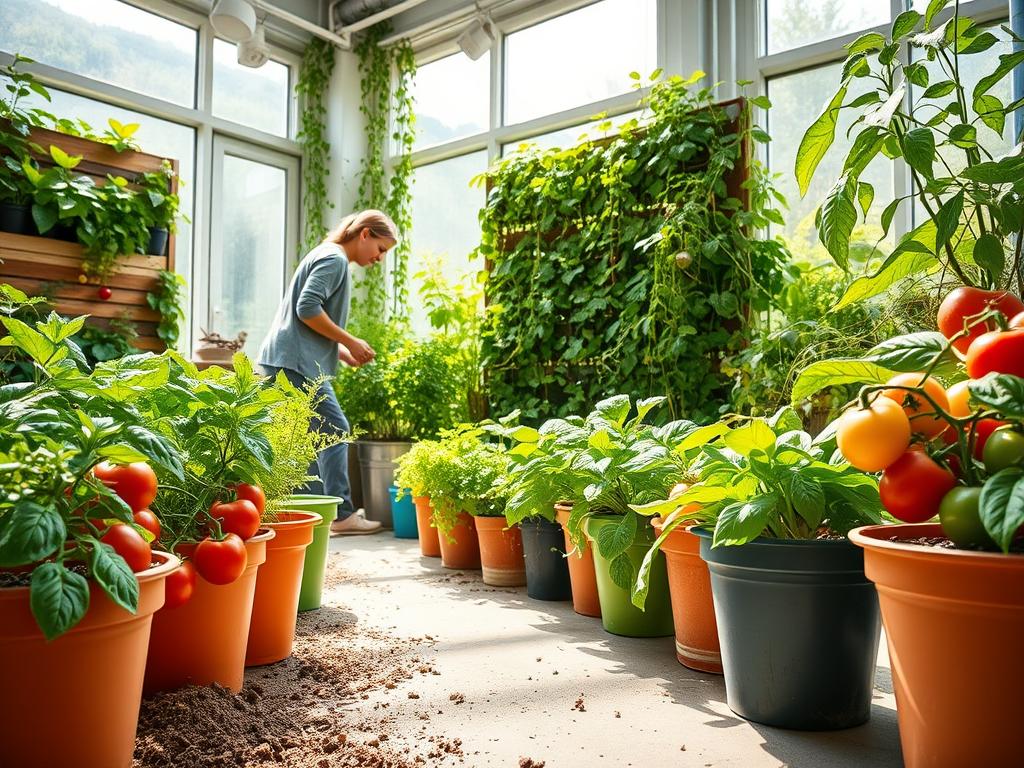
Gardening in containers is great for protecting your local ecosystem. Whether you’re growing vegetables indoors or on a sunny balcony, using natural methods is key. This keeps your produce free from harmful chemicals. By focusing on soil health and natural balance, your plants will thrive.
Organic Fertilizers
Using organic materials to feed your plants is the best choice for long-term soil health. Instead of chemical salts, try compost or worm castings. These improve soil structure and provide essential minerals slowly.
Fish emulsion and seaweed extracts are also great for container plants. They give a quick nitrogen boost and trace elements for strong growth. Regular use of organic fertilizers makes plants healthier and more resilient.
Eco-Friendly Pest Control
Controlling pests without harsh chemicals is doable with proactive steps. Physical barriers, like fine mesh netting, can stop insects before they reach your crops. This is very effective for growing vegetables indoors or in a protected patio area.
If pests show up, try natural solutions like neem oil or insecticidal soaps. These target pests without harming beneficial insects or your household. Healthy, well-fed plants are less likely to get damaged, making pest control easier over time.
Inspiring Container Gardening Examples
Turning a small balcony or a bright windowsill into a food garden is doable. Many people living in apartments are now growing their own veggies indoors. They show that even with little space, you can still grow a lot.
Real-World Urban Success
In cities like New York and Chicago, people use vertical planters to grow more. They stack herbs and greens to make edible walls. You can do the same by setting up a system on a sunny wall at home.
Innovative Container Ideas
Using old items makes your garden unique and saves money. Some gardeners use old wooden crates or buckets to grow their plants. These containers are good for drainage and can be moved around.
Start your journey to growing your own food with just one pot and some soil. Try different plants to see what works best in your light. Enjoy watching your plants grow and the joy of picking fresh food from your home.