
Did you know that nearly 80% of household greenery fails to thrive due to minor oversights? Many enthusiasts get frustrated when their plants start to wilt without a clear reason.
Understanding the subtle signs of distress is key to becoming a successful gardener. By learning to spot common indoor plant care mistakes early, you can prevent lasting damage.
It’s surprising how often simple indoor plant mistakes come from over-enthusiasm, not neglect. Issues like improper watering or poor light placement are avoidable with the right knowledge.
This guide will teach you the basics of keeping your plants healthy. You’ll learn how to create a perfect environment for your plants to thrive for years.
Overwatering Your Indoor Plants
Overwatering is a major problem for houseplants, but it’s easy to avoid. Many people think that more water means more growth. But this is a big indoor plant mistake. Roots need air, not waterlogged soil, to survive.
Signs of Overwatering
Your plant will show signs of trouble, like yellowing leaves. These leaves will be soft, not dry. The stems might also feel mushy near the base.
Look for mold or a damp smell in the soil. These signs mean your plant has root rot or fungus. Spotting these early can save your plant.
How to Properly Water Indoor Plants
Forget the calendar schedule for watering. Check the soil moisture first. This way, you avoid indoor plant care mistakes from too much care.
Try the finger test by sticking your finger into the soil. If it’s damp, wait a bit. If it’s dry, your plant needs water.
By watching your plant’s needs, you avoid common mistakes. Regular checks keep your plants healthy and vibrant, away from too much water.
Not Understanding Light Requirements
Light is key for your plants, but it’s often misunderstood in indoor gardening. Many people think all plants need the same bright, sunny spot. But, putting a shade-loving plant in direct sunlight can harm it.
Common Myths About Plant Light Needs
Many think all plants need direct sunlight. But, desert plants love intense sun, while tropical plants prefer softer light. Not meeting these needs can cause plants to lose their leaves or turn yellow.
Another mistake is thinking “low light” means no light at all. Even plants that like shade need some light to grow. Without enough light, plants can’t make food, no matter how much water or fertilizer you give them.
Adjusting Your Plant’s Location
To fix these indoor plant care errors, watch how light changes in your home. South-facing windows get the most light, while north-facing ones are gentler. You can move your plants to the right spot for their health.
If your plant looks stressed, like it’s too tall or its colors are fading, it needs a new home. Here’s a guide to find the best spot for your plants:
| Light Type | Description | Best Placement |
|---|---|---|
| Direct Light | Unfiltered sun rays hitting leaves | South-facing windows |
| Bright Indirect | Bright room, no sun on leaves | Near east or west windows |
| Low Light | Dim, shaded areas | Interior rooms or north windows |
Ignoring Humidity Levels
One of the most common indoor plant care mistakes is ignoring the dry air in your home. You might focus on watering, but the air’s moisture is just as important for tropical plants. Many homes, and even more so in winter, don’t have enough humidity for lush plants.
Signs Your Home is Too Dry
Plants show stress through leaf changes. If you see brown, crispy tips, your air is too dry. Leaves curling or dropping early are also signs of moisture stress.
Ignoring these common houseplant errors can stunt growth. Dry air makes plants lose water faster than they can absorb it. This forces them to sacrifice their edges to save energy.
Recommended Humidity Levels for Common Plants
Knowing what your plants need is key. Most tropical plants like humidity between 50% and 70%. You can boost your home’s humidity with a humidifier or a pebble tray with water.
Grouping plants together creates a humid spot. They release moisture through transpiration. Check the table below for the best humidity levels for popular plants to avoid indoor plant care mistakes.
| Plant Variety | Ideal Humidity Range | Preferred Environment |
|---|---|---|
| Ferns | 60% – 80% | High moisture, indirect light |
| Philodendron | 50% – 60% | Moderate to high humidity |
| Snake Plant | 30% – 50% | Low to moderate humidity |
| Orchids | 50% – 70% | High humidity with airflow |
Using the Wrong Soil Type
Choosing the wrong soil is a big mistake in indoor plant care. Many people think any dirt will do, but it’s not true. Container gardening needs a special environment for roots to thrive.
Heavy soil blocks oxygen, which plants need to live. This is a big problem.
Understanding Potting Mix vs. Garden Soil
It’s important to know the difference between garden soil and potting mixes. Garden soil is too dense for pots. It’s made for big, airy gardens, not small containers.
When garden soil is in a pot, it gets too compact. This hurts the roots and makes water hard to spread.
Potting mixes, on the other hand, are made just right. They hold moisture but also let air in. They have things like peat moss, perlite, or vermiculite. When you’re shopping, remember these differences.
- Aeration: Potting mixes have materials that keep them from getting too dense.
- Sterility: These mixes are clean, without bad germs or weed seeds.
- Weight: They’re light, perfect for indoor plants.
Importance of Drainage
Even with the right soil, plants need a way for water to drain. A common mistake is using pots without holes. This traps water, harming the roots.
To fix this, make sure your pots have holes at the bottom. If you love a pot without holes, use it as a cachepot. Put a smaller pot inside it. This keeps your plants healthy and happy.
Failing to Fertilize Properly
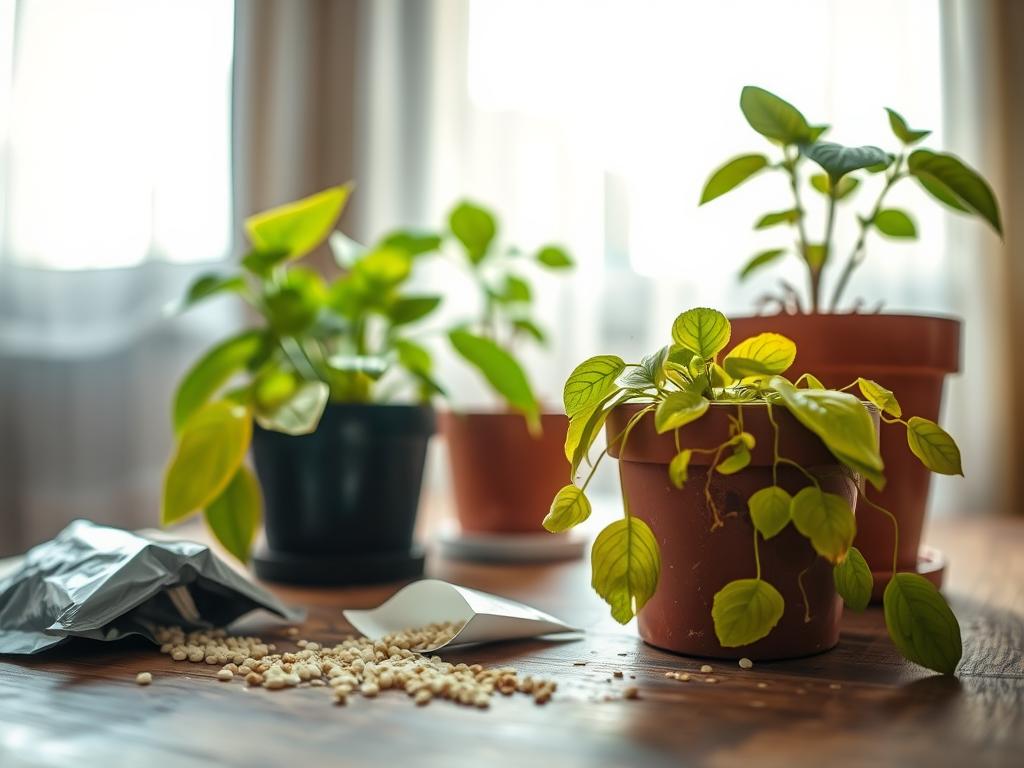
If your indoor plants seem to have stopped growing, it might be because of the soil. Plants in pots need soil that’s full of minerals. Not adding these minerals is a big common houseplant error that can slow growth.
Signs Your Plant Needs Nutrients
Plants show they need nutrients by changing how they look. If the soil is empty, leaves might turn pale or yellow. This means they need more nitrogen or magnesium to make chlorophyll.
Another sign is if your plant stops growing in spring and summer. If it looks small or has tiny leaves, it’s hungry for minerals. Spotting these signs early can prevent damage to your plants.
Types of Fertilizers to Consider
Choosing the right fertilizer depends on your plants and how you care for them. There are many fertilizers, each with its own benefits. Knowing what your plants need helps you give them the right food.
| Fertilizer Type | Application Method | Best For |
|---|---|---|
| Liquid | Mixed with water | Fast absorption and quick results |
| Granular | Mixed into topsoil | Consistent, long-term feeding |
| Slow-Release | Pellets in soil | Low-maintenance care routines |
Liquid fertilizers give a quick boost, while slow-release pellets feed plants for months. Choosing the right fertilizer can fix common indoor plant care mistakes and make your plants look great all year.
Neglecting to Prune and Trim
One of the best ways to avoid indoor plant mishaps is to trim regularly. Many people focus on watering and light, forgetting plants need physical care. Without pruning, plants can become weak, leggy, or crowded, leading to common indoor plant problems.
Benefits of Regular Pruning
Pruning is key to keeping your plants healthy. It helps remove dead or yellow leaves, focusing the plant’s energy on new growth. This also improves air flow, preventing fungal infections and pests.
“Pruning is an act of love for your plants; it removes the old to make room for the vibrant new life waiting to emerge.”
Pruning also makes your plants look lush and full. If your plant is stretching, a trim can encourage branching. This simple habit helps you avoid common indoor plant care mistakes that make plants look sparse.
When and How to Trim Your Plants
Timing is crucial for trimming. Most plants need a light trim in spring and summer. Always use clean, sharp shears to avoid crushing stems and disease.
When trimming, cut just above a leaf node at a forty-five-degree angle. This helps the plant heal faster and grow new leaves. If removing diseased parts, sanitize your tools with rubbing alcohol to prevent disease spread.
| Plant Type | Pruning Frequency | Primary Goal |
|---|---|---|
| Foliage Plants | Every 2-3 months | Maintain shape and density |
| Flowering Plants | After blooming cycle | Encourage future blooms |
| Succulents | As needed | Remove dead lower leaves |
| Vining Plants | Twice a year | Control length and leggy stems |
Not Checking for Pests
One of the most common indoor plant care mistakes is not checking for pests. Even experienced gardeners can avoid indoor plant mishaps by just taking a few minutes each week. This simple act can prevent a small problem from becoming a big issue.
Common Indoor Plant Pests
Many tiny pests can harm indoor plants. Spider mites create fine webs on leaves. Fungus gnats live in damp soil and look like tiny black flies. Mealybugs appear as small, white cottony tufts on stems and leaves.
“The secret to a thriving indoor garden is not just in the watering can, but in the keen eye of the gardener who notices the smallest changes in leaf health.”
How to Prevent Infestations
To keep pests away, start by quarantining new plants for two weeks. This ensures they don’t bring pests to your garden. Also, wiping leaves with a damp cloth helps remove dust and pests.
If you see any unusual spots or sticky residue, isolate the plant right away. Keeping soil moist and ensuring good airflow are also key. By being watchful, you can protect your plants from pest damage.
| Pest Type | Primary Sign | Quick Solution |
|---|---|---|
| Spider Mites | Fine webbing | Increase humidity |
| Fungus Gnats | Tiny flying insects | Dry out soil |
| Mealybugs | White cottony masses | Rubbing alcohol swab |
Choosing Inappropriate Plant Types
Choosing the wrong plant is a common mistake in indoor gardening. Many people fall in love with a plant’s look without checking if it fits their home. This can lead to disappointment and losing plants.
Assessing Your Environment
Before buying plants, check your home’s conditions. Measure the light in different rooms. Some plants need lots of sun, while others prefer shade.
Also, think about the temperature in your home. Drafty spots or vents can harm your plants. Knowing these things helps you pick the right plants.
Matching Plants to Your Skill Level
Be honest about how much time you have for gardening. Some plants are easy to care for, while others need a lot of attention. Picking a hard plant when you’re new is a big mistake.
Start with plants that can handle some neglect. As you get better, you can add more challenging plants. This way, you’ll enjoy your plants more and have success.
Forgetting to Repot
One of the most common indoor gardening blunders is leaving a plant in the same container for years. It might seem like your plant is happy, but it’s likely struggling for space and nutrients. Giving it a fresh environment is key for its long-term health and growth.
When is Repotting Necessary?
Plants usually need a new home every 12 to 18 months, based on their growth. As they grow, they use up the nutrients in the soil, leaving them hungry. Refreshing the potting mix is as important as getting a bigger pot.
“A plant that has outgrown its container is like a person wearing shoes that are two sizes too small; it simply cannot thrive or move forward.”
Signs Your Plant is Root-Bound
Spotting the signs of a cramped plant is crucial to avoid indoor plant care mistakes. Look out for these signs to know it’s time to repot:
- Roots are visibly circling the surface of the soil.
- Roots are growing aggressively out of the bottom drainage holes.
- The plant dries out much faster than it used to, indicating there is more root than soil.
- Growth has slowed down significantly or stopped entirely during the growing season.
When repotting, handle the root ball gently to prevent shock. Loosen the roots and move the plant to a slightly larger container. By being proactive, you avoid common mistakes and keep your plants thriving at home.
Lack of Research on Specific Care Needs
One of the most common mistakes caring for indoor plants is assuming a “one size fits all” approach works for every species in your home. You might be tempted to water all your plants on the same day or place them in the same window, but this often leads to poor health. Taking the time to learn about your specific plants is the best way to ensure they flourish.
Why Each Plant is Unique
Every plant species has evolved in a different environment, ranging from tropical rainforest floors to arid desert landscapes. Because of this, their requirements for light, water, and humidity vary significantly. Treating a succulent like a fern is a recipe for disaster, as one thrives in dry heat while the other demands constant moisture.
When you ignore these biological differences, you encounter common indoor plant problems like root rot, leaf drop, or stunted growth. By researching the native habitat of your plant, you can mimic those conditions at home. This simple step helps you provide the tailored care that every member of your collection deserves.
Resources for Plant Care Information
You do not need to be a botanist to provide excellent care for your greenery. Many reliable resources exist to help you avoid common indoor plant care mistakes. Start by checking reputable gardening websites, university extension programs, or specialized botanical databases that offer detailed profiles for thousands of species.
Using these tools allows you to create a customized schedule for your plants. The following table highlights how different plants require vastly different care strategies to remain healthy.
| Plant Type | Light Preference | Watering Frequency | Humidity Needs |
|---|---|---|---|
| Cactus | Direct Sunlight | Very Low | Low |
| Peace Lily | Low to Medium | High | High |
| Snake Plant | Indirect Light | Low | Moderate |
| Fern | Filtered Shade | Moderate | Very High |
By consulting these resources, you gain the confidence to adjust your routine based on the specific needs of your plants. Knowledge is your greatest tool in preventing long-term damage and keeping your indoor garden vibrant and healthy throughout the year.
Disregarding Seasonal Changes
Your indoor garden reacts to the subtle shifts in light and temperature that occur throughout the year. Even inside a climate-controlled home, plants sense the changing seasons and adjust their growth cycles.
Impact of Seasonal Shifts on Plant Health
Many indoor plant care mistakes come from treating your greenery the same in winter as in summer. In winter’s shorter days, most plants slow down or go dormant. You should water less and stop fertilizing to avoid common mistakes.
Adapting Your Routine for Year-Round Success
Spring brings longer days and active growth. It’s the best time to start regular feeding with Miracle-Gro or Espoma. Watching these natural cycles helps you avoid mistakes like root rot or nutrient burn.
Keep an eye on how your plants react to your home’s changing environment. Adjusting your care to match these natural phases keeps your plants vibrant and healthy. By being proactive, you avoid common mistakes and enjoy a thriving indoor oasis all year.