
Snake plants rank among the top three most purchased houseplants in American homes. These striking green plants feature upright, sword-like leaves. They have become staples in living rooms, offices, and bedrooms nationwide.
The reason is simple: snake plants are tough and beautiful. They also clean the air around you remarkably well.
You might know snake plants by other names. Sansevieria trifasciata, mother-in-law’s tongue, and viper’s bowstring hemp all describe this same plant. No matter the name, this plant deserves respect and attention.
Many people think snake plant care means leaving the plant alone. The truth is different. These plants can survive neglect, but they thrive when you understand their needs.
The right snake plant care transforms a barely-alive plant into stunning decoration. With proper care, your plant will grow year after year.
This complete guide teaches you everything about caring for snake plants. You will learn about watering schedules, lighting needs, and soil choices. You will discover how to repot your plant and handle pests.
You will also learn to create new plants from existing ones. By the end, you will feel confident in your snake plant care abilities.
This guide works for beginners and experienced plant owners alike. You will get practical tips, clear explanations, and real solutions to common problems. Let’s begin your journey to becoming a skilled snake plant caregiver.
Understanding the Snake Plant
Before learning sansevieria care tips, you need to understand what makes this plant special. The snake plant has become one of America’s most popular houseplants. Its unique traits explain why it thrives in homes and offices nationwide.
Getting to know your plant’s background helps you provide better care. You’ll also appreciate its remarkable qualities more deeply.
What is a Snake Plant?
The snake plant belongs to the genus Sansevieria, a group of succulents native to West Africa. Your snake plant gets its common name from its tall, sword-shaped leaves. These leaves stand upright like snakes ready to strike.
The leaves are thick and fleshy with stunning variegated patterns. Colors range from deep green to shimmering silver. This plant evolved to survive harsh, dry conditions in its native habitat.
That adaptation means your snake plant handles neglect better than most houseplants. The succulent nature allows it to store water in its leaves. It can survive for extended periods without watering.
Common Varieties of Snake Plants
You’ll find several popular varieties at most plant nurseries and garden centers. Each type brings its own style to your home.
- Sansevieria trifasciata ‘Laurentii’ – Features striking yellow edges around green leaves, the most recognized variety
- ‘Black Gold’ – Displays dark green coloring with golden accents, creating dramatic visual appeal
- ‘Hahnii’ – A compact bird’s nest variety perfect for small spaces and tabletops
- Sansevieria cylindrica – Offers cylindrical, tube-like leaves that create unique architectural interest
- ‘Moonshine’ – Showcases silvery-green foliage that brightens dim corners of your home
Each variety grows at slightly different rates. Some may need minor adjustments to standard sansevieria care tips. Understanding which variety you own helps you meet its specific needs.
Benefits of Having a Snake Plant
Your snake plant delivers practical benefits beyond its attractive appearance. NASA research confirms that snake plants remove harmful toxins from indoor air. They filter out formaldehyde and benzene, common chemicals found in homes.
Unlike most plants, your snake plant releases oxygen at night. It absorbs carbon dioxide while you sleep. This makes it an excellent choice for bedrooms.
The low-maintenance nature of this plant suits busy households perfectly. Your snake plant tolerates neglect, irregular watering, and various light conditions. The architectural shape complements modern interior design beautifully.
| Benefit Type | Description | Impact on Your Home |
|---|---|---|
| Air Purification | Removes formaldehyde and benzene from air | Healthier indoor environment |
| Nighttime Oxygen Production | Releases oxygen while you sleep | Better air quality in bedrooms |
| Low Maintenance | Tolerates neglect and irregular care | Perfect for busy lifestyles |
| Design Appeal | Architectural presence fits modern spaces | Enhances interior aesthetics |
| Durability | Survives various light and temperature conditions | Long-lasting plant investment |
Understanding these benefits motivates you to apply proper sansevieria care tips. Your snake plant becomes more than decoration. It becomes a living investment in your home’s air quality and daily wellness.
Ideal Growing Conditions
Your snake plant thrives when you create the right environment. Getting the basics down makes the difference between struggling and flourishing. Light, temperature, humidity, and soil matter most.
These hardy houseplants adapt well to most homes. They still need specific conditions to reach their full potential.
Best Lighting for Snake Plants
Understanding snake plant light requirements is essential for healthy growth. These plants tolerate low light conditions. They actually prefer indirect bright to medium light.
Your snake plant grows fastest near east or west-facing windows. Sheer curtains help filter the light. This placement maintains beautiful variegation on the leaves.
Low light tolerance does not mean your plant needs darkness. Insufficient light slows growth and causes loss of striking patterns. Direct harsh sunlight burns leaves and creates brown patches.
Snake plants work wonderfully in office spaces with fluorescent lighting. This makes them perfect desk companions.
- Place near east or west-facing windows with filtered light
- Position several feet back from south-facing windows
- Avoid direct afternoon sun exposure
- Use fluorescent office lighting as an alternative
Optimal Temperature and Humidity
Your home’s typical climate suits snake plants perfectly. These plants prefer temperatures between 60-85°F. This matches most American household conditions.
Temperatures below 50°F damage your plant. Frost kills it entirely.
Snake plants love dry to average humidity levels ranging from 30-50%. This makes them ideal for homes with central heating or air conditioning. Your snake plant actually thrives in drier conditions.
| Environmental Factor | Ideal Range | What to Avoid |
|---|---|---|
| Temperature | 60-85°F (15-29°C) | Below 50°F or frost |
| Humidity | 30-50% | Excessive moisture in air |
Soil Requirements for Snake Plants
Choosing the best soil for snake plants prevents root rot. Root rot is their biggest killer. Your snake plant needs soil that drains quickly.
This mimics its native sandy, rocky habitats. Regular potting soil alone holds too much moisture.
Mix regular potting soil with perlite or coarse sand. Use roughly a 2:1 ratio for excellent results. Commercial cactus or succulent mixes also work well.
Your best soil for snake plants maintains a slightly acidic to neutral pH. The ideal range is between 5.5-7.5. This allows optimal nutrient absorption.
- Combine potting soil with perlite in a 2:1 ratio
- Use coarse sand or pumice for improved drainage
- Consider pre-made cactus or succulent soil mixes
- Maintain soil pH between 5.5-7.5
- Ensure drainage holes exist in all containers
Proper drainage is non-negotiable for snake plant success. Roots rot quickly when water sits in soil. Good drainage prevents this common problem from the start.
Watering Your Snake Plant
Watering keeps your snake plant healthy and alive. Understanding your plant’s needs helps you read the signs it sends. Proper watering requires patience and attention to your home’s conditions.
The key is balance. Give your plant enough water but avoid the most common killer—too much water.
How Often to Water
The golden rule is simple: let the soil dry out completely between waterings. In most homes, this means watering every 2 to 6 weeks. The exact timing depends on season, light, pot size, and temperature.
Stick your finger 2 to 3 inches deep into the soil. If it feels dry, you can water. If it still feels damp, wait a few more days.
A moisture meter from brands like Sonkir or Govee gives you an exact reading.
Pour water until it drains from the bottom holes. Then empty the saucer so your plant doesn’t sit in standing water. In winter, your plant grows slowly, so water less—sometimes just once monthly.
During spring and summer, you might water slightly more often as growth speeds up. Remember this tip: when in doubt, wait it out.
Signs of Overwatering
Overwatering kills more snake plants than any other mistake. Watch for these warning signs that your plant is getting too much water:
- Leaves turning yellow or becoming mushy
- Soft brown spots appearing on leaves or stems
- Soil smelling sour or foul
- Leaves falling over or becoming see-through
- Roots that are black and mushy instead of white and firm
If you spot these problems, stop watering right away. Let the soil dry out completely. Check the roots by gently removing the plant from its pot.
If roots look black and mushy, you need fresh, dry soil. Remove any dead or mushy roots with clean scissors before repotting.
Signs of Underwatering
Underwatering happens less often but can occur in very dry homes. Your snake plant might show these signs if it’s not getting enough water:
- Leaves becoming wrinkled or curled
- Brown crispy tips on leaf edges
- Leaves feeling thinner and softer than normal
- Soil pulling away from the edges of the pot
The good news: snake plants recover from underwatering much faster than overwatering. Start watering your plant gradually rather than giving it a huge amount. Water normally over the next week or two, and your plant should bounce back.
| Watering Issue | Common Signs | Recovery Time | Best Action |
|---|---|---|---|
| Overwatering | Yellow mushy leaves, foul soil smell, root rot | 2-4 weeks | Stop watering, let soil dry, repot if needed |
| Underwatering | Wrinkled leaves, brown crispy tips, soil shrinking | 1-2 weeks | Water gradually, resume normal schedule |
| Correct Watering | Firm green leaves, moist but not wet soil | N/A | Continue every 2-6 weeks based on season |
Mastering watering puts you on the path to growing a thriving plant. Pay attention to your plant’s signals and check your soil before watering. Remember that less water is always better than too much.
Fertilizing Snake Plants
Your snake plant needs proper fertilization, though less than many houseplants. These plants grow in nutrient-poor soil in their native environments. They thrive with minimal nutrition.
Understanding when and how to fertilize keeps your plant healthy. It prevents damage from excess nutrients.
Best Fertilizers for Snake Plants
Choose fertilizers that work well with your snake plant. Balanced, water-soluble houseplant fertilizers with ratios like 10-10-10 or 20-20-20 NPK work best. Dilute them to half strength.
Cactus and succulent fertilizers are excellent choices. They match your plant’s low-nutrient preferences.
Diluting fertilizer is critical for success. Full-strength applications can burn roots and damage leaves. You can also use organic options like diluted fish emulsion or worm castings.
When and How to Fertilize
Timing matters for effective plant nutrition. Feed your plant only during the growing season from spring through early fall. Apply fertilizer about once every 4 to 6 weeks.
Never fertilize during winter. Your plant rests and doesn’t actively grow then.
Follow this method for best results:
- Water your plant first with plain water to prepare the soil
- Apply diluted fertilizer to damp soil to prevent root burn
- Always follow package directions for proper dilution ratios
- Use the “less is more” approach in all your decisions
Underfertilizing is safer than overfertilizing. Your plant bounces back easily from light feeding. It struggles with excess nutrients.
Signs Your Snake Plant Needs Fertilizer
Watch for these indicators that your plant needs adjustment. Very slow growth despite good light and water suggests nutrient deficiency. Pale or fading leaf color means your plant needs feeding.
Loss of variegation patterns signals a problem. Weak new growth that’s noticeably smaller than older leaves indicates nutrient issues.
| Nutrient Deficiency Signs | Overfertilization Signs |
|---|---|
| Very slow or stunted growth | Brown tips and edges on leaves |
| Pale or fading leaf color | White crusty deposits on soil surface |
| Loss of leaf variegation | Stunted growth |
| Weak new growth | Salt buildup around pot rim |
| Lack of vigor during growing season | Yellowing leaves |
If you overfertilize, flush excess salts from the soil. Run water through the pot several times. This simple step removes harmful salt buildup and restores your plant’s health quickly.
Repotting Your Snake Plant
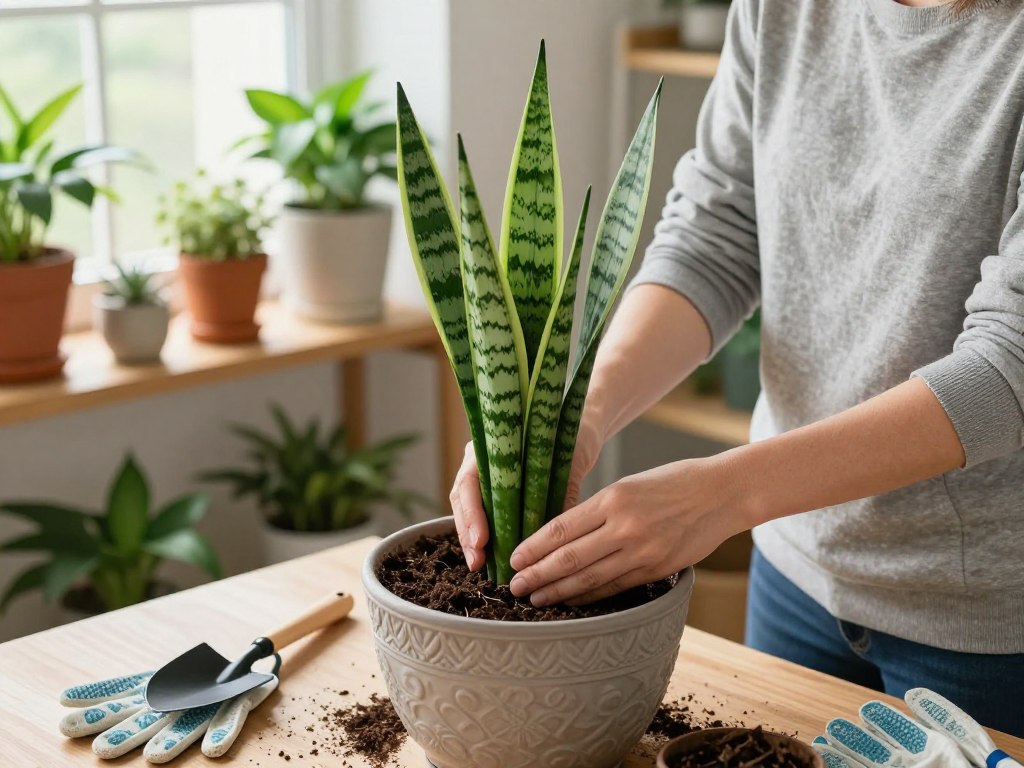
Repotting keeps your snake plant healthy and thriving. Snake plants prefer being slightly rootbound. You won’t need to repot very often.
Understanding when and how to repot helps your plant grow strong. Fresh soil gives your snake plant the space it needs.
When to Repot
Snake plants need repotting only every 3 to 5 years. Watch for warning signs that your plant needs a new home.
- Roots pushing through drainage holes
- Roots circling tightly around the soil surface
- The pot cracking or bulging from root pressure
- Water running straight through without soaking in
- Noticeably slowed growth despite proper care
Spring is the best time to repot your sansevieria. Your plant enters active growth during this season. It recovers quickly from the repotting process.
How to Repot a Snake Plant
Follow these straightforward steps for your sansevieria care routine:
- Water your plant lightly 2 to 3 days before repotting
- Prepare fresh well-draining soil in your new container
- Tip the old pot and gently loosen the root ball
- Inspect roots and trim away any black or mushy sections
- Place the plant at the same depth in the new pot
- Fill around with fresh soil, leaving 1 to 2 inches below the rim
- Water lightly and wait a week before normal watering resumes
This waiting period allows damaged roots to heal properly.
Choosing the Right Pot
Selecting the correct pot is crucial for success. Choose a container only 1 to 2 inches larger in diameter. Oversized pots hold too much moisture and increase root rot risk.
| Pot Material | Best For | Drying Speed |
|---|---|---|
| Terracotta or Unglazed Ceramic | Beginners and frequent waterers | Fast drying |
| Plastic or Glazed Ceramic | Experienced growers | Slower drying |
| Heavy Ceramic or Concrete | Tall plants needing stability | Moderate drying |
Drainage holes are absolutely essential in any pot you choose. Without proper drainage, your snake plant will suffer from waterlogged soil.
Pest and Disease Management
Snake plants are tough and resist most pest and disease problems. Your maintenance guide should include what can go wrong and how to fix it. Issues usually signal that something in your care routine needs adjustment.
Learning to spot problems early helps keep your plant healthy. Quick action prevents small issues from becoming big ones.
Common Pests Affecting Snake Plants
Snake plants rarely get infested, but a few pests can target them. Spider mites are tiny bugs that spin fine webbing on leaves. They create yellow, speckled patterns and show up in dry conditions.
Mealybugs look like white cottony clumps hiding in leaf crevices. They drain plant sap and weaken your snake plant. Fungus gnats are small flying insects whose larvae live in overly wet soil.
You can treat these pests with several methods:
- Wipe affected leaves with a cloth dipped in rubbing alcohol solution
- Spray insecticidal soap directly on pest clusters
- Apply neem oil spray every seven to ten days
- For fungus gnats, let soil dry out completely between waterings and use sticky traps
Pest problems often mean you’re overwatering your plant. They also appear when you keep the air too humid. Fixing these care issues prevents pests from returning.
Identifying Diseases
Root rot is the main disease affecting snake plants. Overwatering and poor drainage cause this fungal problem. Signs include mushy brown or black roots and yellowing leaves.
Bad smells come from the soil, and the plant looks collapsed. You might see fungal leaf spots with brown or reddish centers. Yellow halos surround these spots on your leaves.
Southern blight occasionally appears in warm, humid spaces. White fungal growth shows up at the soil line.
| Disease Type | Main Cause | Key Symptoms | Treatment Action |
|---|---|---|---|
| Root Rot | Overwatering and poor drainage | Mushy roots, yellowing leaves, foul odor | Repot with fresh soil, improve drainage, reduce watering |
| Fungal Leaf Spots | Water on leaves, high humidity | Brown or reddish spots with yellow halos | Remove affected leaves, improve air circulation, avoid wetting foliage |
| Southern Blight | Warm, humid conditions | White fungal growth at soil line | Remove affected soil, increase air flow, lower humidity |
Preventative Measures
Prevention works better than treating problems after they start. A solid maintenance guide emphasizes these protective steps:
- Water correctly using the “soak and dry” method to prevent root rot
- Keep air moving around your plants to reduce fungal issues
- Never splash water on the leaves
- Quarantine new plants for two weeks before placing them near other plants
- Check your plants weekly for early warning signs
- Wipe leaves clean with a damp cloth monthly
- Maintain overall plant health through proper lighting and soil conditions
Good cultural practices prevent most pest and disease problems. Proper watering and drainage keep your snake plant healthy. Healthy growing conditions mean your plant rarely faces serious issues.
Pruning and Maintenance
Keeping your snake plant looking fresh and healthy requires regular attention. Your snake plant maintenance guide should include simple upkeep tasks that prevent problems. Most snake plants need very little pruning, yet occasional trimming keeps them attractive.
Understanding these basic care steps helps you develop a successful routine. This routine keeps your plant thriving for years.
How to Prune Your Snake Plant
Snake plants rarely need heavy pruning. Removing certain leaves improves the plant’s appearance and overall health. You should trim damaged, yellowed, or brown leaves that look unsightly.
Leaves with brown tips can be cut at angles to match the plant’s natural shape. Dead or dying outer leaves should come off. This makes room for fresh new growth.
Always use clean, sharp scissors or pruning shears sterilized with rubbing alcohol. This prevents disease from spreading to your plant. Cut leaves as close to the soil line as possible for complete removal.
Partial leaves look messy. Make angled cuts rather than straight cuts for a more natural appearance. Removing up to one-third of the plant’s leaves won’t cause stress or harm.
Importance of Leaf Care
Dust builds up on snake plant leaves over time. This blocks light absorption and reduces photosynthesis. You should gently wipe leaves with a soft, damp cloth every few weeks.
Support each leaf from underneath while cleaning to prevent damage.
- Use plain water for cleaning—avoid commercial leaf shine products
- Leaf shine products clog the plant’s pores and cause problems
- Clean leaves help you spot pest problems early
Maintaining Plant Health
Consistent care prevents most issues from developing. Rotate your plant quarterly to ensure even light exposure on all sides. Remove fallen leaves and debris from the soil to prevent fungal growth.
Check your plant weekly for any signs of pests or disease. Keep it away from cold drafts from air conditioning units or heating vents. In winter, prevent leaves from touching cold windows.
Spending just a few minutes each week observing your plant helps you catch small problems. Your snake plant maintenance guide emphasizes that consistent care is the best defense.
Propagation Techniques
Growing your snake plant collection is easier than you might think. Propagating snake plants lets you expand your home garden. You can also share plants with friends and family.
Snake plants offer three main propagation methods. Each has its own advantages and timelines. Understanding these techniques helps you choose the best approach.
Leaf Cuttings
Leaf cuttings are the most popular way of propagating snake plants. This method works with all snake plant varieties. Variegated patterns may revert to solid green.
Start by selecting a healthy, mature leaf. Cut it into sections measuring 3 to 4 inches long. Use a sterilized blade to make clean cuts.
Mark the bottom of each cutting. The end closest to the soil must face downward when planted. Allow the cut ends to callus for 1 to 2 days.
You can place cuttings in moist, well-draining soil or water. Soil propagation typically works better than water propagation. New roots appear within 2 to 6 weeks.
Keep your propagations in bright indirect light. New growth may take 2 to 3 months to appear. This slower pace is normal for propagating snake plants.
Division Method
Division is the fastest approach to propagating snake plants. This technique preserves variegation in special varieties like ‘Laurentii.’ It’s ideal if you want to maintain distinctive patterns.
Remove your snake plant from its pot during repotting time. Gently separate the rhizome, which is the underground stem. Each division must have at least 3 to 4 leaves with attached roots.
Use a clean, sharp knife to cut through thick rhizomes if necessary. Plant each division in fresh, well-draining soil. Water lightly after planting.
Divided plants experience minimal shock. They continue growing with little interruption. This makes division an excellent choice for rapid results.
Offsets and Plantlets
Mature snake plants naturally produce small plants called “pups” or offsets. These emerge from the soil near the parent plant. They connect through underground rhizomes.
You can separate these offsets once they reach about one-third the parent’s size. They should develop their own root system first. Carefully dig around the pup to expose the connecting rhizome.
Cut the rhizome with a sterilized blade. Leave roots attached to the offset. Plant the offset in well-draining soil.
This method preserves all genetic characteristics, including variegation patterns. It’s an excellent way of propagating snake plants. You maintain the exact qualities of your original plant.
| Propagation Method | Speed | Best Time | Variegation Preserved |
|---|---|---|---|
| Leaf Cuttings | Slow (2-3 months) | Spring to Summer | No |
| Division | Fast (4-6 weeks) | Spring to Summer | Yes |
| Offsets | Moderate (6-8 weeks) | Spring to Summer | Yes |
General Propagation Tips
- Spring and summer are ideal times for propagating snake plants when growth is active
- New propagations need slightly more frequent watering than established plants
- Always allow soil to dry between waterings
- Use well-draining soil to prevent root rot
- Keep propagations in bright indirect light
- Patience is essential as snake plants grow slowly
- Sterilize cutting tools to prevent disease transmission
Propagating snake plants opens exciting possibilities for expanding your indoor garden. Choose the method that fits your timeline and goals. Success comes with proper care and patience.
Seasonal Care Tips
Your snake plant’s needs change throughout the year as seasons shift. These plants respond to temperature, light, and humidity changes. Adjusting your care routine seasonally keeps your plant healthy and thriving all year long.
Snake plants enter periods of rest and active growth depending on the time of year. Matching your care to these natural cycles makes plant care much easier.
Adjustments for Winter Care
Winter brings a rest period for your snake plant. During short, cold months, growth slows dramatically. Your plant needs far less water and food during this time.
Here’s what to do during winter months:
- Water much less frequently—perhaps once monthly or every 6 to 8 weeks instead of every 2 to 3 weeks
- Always check if soil feels dry before watering
- Stop fertilizing completely from late fall through winter
- Keep plants away from cold drafts near windows and doors
- Prevent leaves from touching cold glass panes
- Move plants slightly closer to windows since winter sunlight is weaker
- Accept slower growth during this rest period
Winter dormancy is when your plant conserves energy. Don’t worry if you see little new growth—this is exactly what should happen.
Spring Growth Boosts
As days lengthen and temperatures warm, your snake plant awakens from dormancy. Spring is when your plant enters its most active growing season.
Support spring growth with these steps:
- Gradually increase watering as temperatures rise and soil dries faster
- Resume fertilizing in early to mid-spring with diluted applications every 4 to 6 weeks
- Repot your plant if it needs a larger container—spring is ideal timing
- Inspect leaves and soil for any pest problems from winter
- Gently wipe leaves with a soft, damp cloth to remove dust buildup
- Move plants back to their preferred bright locations if you shifted them during winter
Spring brings the most visible changes when new leaves emerge from the plant’s center. This is your reward for proper winter care.
Summer Heat Management
Summer presents different challenges as temperatures climb. Your snake plant grows actively during warm months. Yet intense heat can stress it.
Keep your plant comfortable in summer with these tips:
- Water every 2 to 3 weeks, allowing soil to dry between waterings
- Continue your regular fertilizing schedule through early fall
- Protect from intense afternoon sun that can scorch leaves using sheer curtains if needed
- Ensure good air circulation to prevent heat damage, especially without air conditioning
- Watch for spider mites, which thrive in hot, dry conditions
- Expect some growth to slow if temperatures exceed 90°F
- Consider moving outdoor plants to shaded patios, gradually acclimating them to outdoor conditions
- Bring outdoor plants inside before fall temperatures drop below 50°F
Understanding how to care for snake plants across all seasons ensures your plant stays strong. Each season has its own rhythm. Matching your care routine to those natural patterns is the key to success.
Troubleshooting Issues
Your snake plant may develop problems even with excellent care. Learning to spot and fix issues quickly keeps your plant healthy. Most problems are easy to solve once you understand the signs.
Yellowing Leaves
Yellowing leaves are the most common snake plant problem. This issue has several causes. Finding the right cause is key to fixing it.
Overwatering causes most yellowing leaf cases. Wet soil suffocates roots and makes them rot. Leaves turn soft, mushy, and yellow.
The soil may smell bad. Let the soil dry completely between waterings. Check roots by gently removing the plant.
Healthy roots are firm and white, not brown and mushy. Use a pot with drainage holes and well-draining soil.
Natural aging makes the oldest outer leaves turn yellow gradually. This is normal and healthy. Your plant sheds old leaves for new growth.
Underwatering rarely happens but is possible. Leaves yellow from tips down and feel thin and papery. Water your plant well and adjust your schedule.
Temperature stress from cold drafts causes yellowing leaves. Move your plant away from cold areas right away.
Nutrient deficiency creates pale, uniform yellowing across the plant. Feed your plant during the growing season.
Stunted Growth
Your snake plant may stop growing or make tiny leaves. Understanding the cause helps you fix the problem.
Insufficient light is the most common reason for stunted growth. Snake plants survive in low light but don’t thrive there. Move your plant to bright, indirect light.
Being rootbound means your plant has no space or nutrients left. Repot into a slightly larger container with fresh soil during spring.
Dormancy periods happen naturally during winter months. Growth slows or stops naturally. Be patient and maintain proper winter care.
Inadequate nutrients from old soil stunt growth. Start feeding during the growing season.
Improper watering disrupts growth. Adjust your schedule to match proper watering patterns.
Pot size matters more than you think. Too-large pots keep excess soil wet. Use an appropriately-sized container.
Snake plants are naturally slow growers. Expect only 2-4 new leaves per year under optimal conditions. Patience is important for snake plant care.
Other Common Problems
Other issues may come up during your care routine. These problems are usually easy to fix with simple changes.
| Problem | Cause | Solution |
|---|---|---|
| Brown Leaf Tips | Inconsistent watering, low humidity, or fluoride/chlorine in tap water | Trim tips with clean scissors and use filtered or distilled water |
| Leaves Falling Over or Bending | Overwatering, underwatering, or insufficient light | Check soil moisture and root condition, adjust watering and light |
| Loss of Variegation | Insufficient light causing reversion to solid green | Move to brighter location immediately for future growth |
| Wrinkled or Curled Leaves | Underwatering or very low humidity | Increase watering frequency slightly and improve air circulation |
| White Crusty Deposits | Salt or mineral buildup from fertilizer or hard water | Flush soil thoroughly with water and reduce fertilization |
| Brown or Black Spots | Fungal or bacterial infection from excessive moisture | Remove affected leaves, improve air circulation, avoid leaf watering |
Finding problems early makes them easier to fix. Check your plant regularly during your care routine. Look at leaf color, texture, and overall structure.
Quick action stops minor issues from becoming serious problems. Most challenges come from environmental factors rather than disease. Adjusting light, water, humidity, or temperature usually solves the issue.
Conclusion
You now understand how to care for your snake plant using proven sansevieria care tips. The most important lesson is simple: less is more. These plants thrive when you avoid overwatering and overfeeding them.
Let your soil dry completely between waterings. Use pots with drainage holes and choose well-draining soil. Bright indirect light works best, but your Sansevieria will still grow in lower light areas.
Most snake plant problems come from too much care, not too little. Your home is unique, so pay attention to how your plant responds. Temperature, humidity, light, and air flow all vary from house to house.
Rather than following strict schedules, watch your plant and adjust your care based on what you see. If leaves look healthy and green, you are doing things right. Remember that each plant teaches you something new about sansevieria care tips and indoor gardening.
Recap of Snake Plant Care
The key principles for keeping your Sansevieria healthy are straightforward. Allow soil to dry between waterings and adjust how often you water based on the season. Fertilize only during spring and summer with a light hand.
Repot seldom, only when roots truly fill the pot. Check your plant regularly for pests or signs of disease so you can act fast. This approach keeps your snake plant looking beautiful for decades to come.
Encouragement to Enjoy and Expand Your Collection
You should feel excited about the years of low-maintenance beauty ahead. Snake plants live 20 or more years with proper care. They reward you with new leaves that slowly unfurl from the center.
Enjoy watching your plant grow and thrive under your care. Your Sansevieria also cleans your indoor air, making your home healthier and more pleasant.
Now that you understand propagation methods, you can easily grow new plants from your existing Sansevieria. You can share them with friends and family. Different varieties offer different colors, patterns, and sizes that fit various spaces and styles.
You might prefer the classic green Sansevieria trifasciata or a variegated type like Sansevieria trifasciata ‘Laurentii’. Each plant brings its own charm to your home. Snake plants are forgiving teachers that bounce back from mistakes, helping you build confidence.
You have all the knowledge you need to be a successful snake plant caregiver. Your Sansevieria will reward your attention with years of beauty and cleaner air. Start your collection today with these proven sansevieria care tips.