
Did you know that over 40 million Americans grow food at home? Most believe they need a large yard to start gardening. You can grow fresh herbs in a tiny apartment or on a windowsill.
Your kitchen herb garden dreams are closer than you think. Small spaces don’t stop you from growing basil, rosemary, thyme, and mint. With simple kitchen garden ideas and basic supplies, you’ll soon harvest fresh herbs daily.
Growing your own herbs saves money on grocery bills. Fresh herbs from a store cost much more than growing them yourself. Your kitchen herb garden will pay for itself within weeks.
You don’t need special skills or experience to start. This works for everyone in city apartments or houses with limited space. Your kitchen herb garden becomes a rewarding hobby that feeds your family.
The Benefits of Growing a Kitchen Herb Garden
Starting a culinary herb garden brings real advantages to your cooking and daily life. You get to enjoy fresh herbs at home whenever you need them. Your meals taste better, and you save money in the long run.
Building your own herb garden is one of the smartest kitchen decisions you can make.
Freshness at Your Fingertips
Nothing beats the taste of herbs you picked moments before cooking. Growing fresh herbs at home lets you control exactly when to harvest. Store-bought herbs sit in plastic containers for days, losing their flavor and aroma.
Your homegrown basil, parsley, and cilantro stay vibrant and powerful. The difference shows in every dish.
Fresh herbs from your culinary herb garden deliver intense flavor that dried versions cannot match. You get peak freshness every single time you cook.
Health Advantages of Fresh Herbs
Fresh herbs contain nutrients that fade quickly after harvest. Basil packs more vitamin K and antioxidants than dried basil. These compounds support your body’s health and fight damage from free radicals.
- Higher antioxidant levels in fresh herbs
- Preserved essential oils and vitamins
- Natural medicinal properties intact
- Better nutrient absorption when consumed fresh
Cost-Effective Cooking Solution
Grocery store herb containers cost three to five dollars each and last only days. A single plant from your culinary herb garden produces herbs for months. Your investment pays back within weeks.
| Herb Source | Cost Per Use | Shelf Life | Quality Level |
|---|---|---|---|
| Store-Bought Herbs | $0.50-$1.00 per dish | 3-5 days | Good |
| Homegrown Fresh Herbs | $0.05-$0.10 per dish | Months | Excellent |
Your kitchen herb garden transforms your cooking while cutting costs dramatically. You elevate every meal to restaurant quality without breaking your budget.
Choosing the Right Herbs for Your Kitchen Garden
Picking the right herbs sets you up for success in your kitchen garden. Your choice determines how much you’ll enjoy using fresh herbs. It also affects how well your plants will grow.
The best herbs to grow indoors depend on several factors. Consider your cooking style, available space, and care time. Understanding your options helps you create a garden that works for your lifestyle.
Popular Herbs for Your Space
Starting with beginner-friendly options gives you confidence as a new gardener. The best herbs to grow indoors for most people include:
- Basil – Grows quickly and tastes amazing in Italian dishes
- Parsley – Hardy and forgiving with varied light conditions
- Cilantro – Perfect for fresh salsas and Asian recipes
- Chives – Nearly impossible to kill and regrows after cutting
- Mint – Spreads generously and works in drinks and desserts
- Thyme – Tolerates neglect and adds depth to soups
- Oregano – Delivers bold flavor with minimal care
These options adapt well to container growing. They give you maximum flavor for your effort.
Seasonal Considerations
Your indoor garden can produce year-round. Different herbs perform better at different times. Basil thrives when temperatures stay warm, while parsley tolerates cooler months.
Planning your rotations means you always have fresh harvests. Cool-season herbs keep producing during winter months.
Flavor Profiles to Enhance Meals
Match your herbs to your favorite cuisines. Italian cooking loves basil and oregano. Asian dishes come alive with cilantro and Thai basil.
Mediterranean recipes shine with rosemary and thyme. Knowing these flavor combinations helps you choose wisely. Grow the best herbs that match what you actually cook.
Where to Place Your Kitchen Herb Garden
Finding the right spot for your herbs makes all the difference in growing a thriving indoor herb garden. Your kitchen, bathroom, or outdoor space can become a perfect herb-growing zone. The location you choose affects how well your plants grow.
Best Indoor Locations
Your home has several spots perfect for growing herbs indoors. A windowsill herb garden works best near south-facing windows in most of the United States. These windows get the most sunlight throughout the day.
Your kitchen counter next to a bright window is ideal for keeping herbs close while you cook. Breakfast nooks with plenty of natural light work wonderfully too. Bathroom windowsills are great for humidity-loving herbs like mint and basil.
Even a sunny corner of your dining room can support an indoor herb garden if it gets enough light.
Outdoor Options for Small Spaces
Limited outdoor space doesn’t stop you from growing herbs. Your apartment balcony becomes useful with a few small pots arranged along the railing. Small patio corners can hold several containers of different herbs.
Vertical wall-mounted planters save space while letting your herbs climb and spread.
- Balcony railings for hanging planters
- Patio corners with grouped containers
- Wall-mounted vertical planters
- Window boxes on exterior walls
- Fire escape gardens where permitted
Light Requirements for Healthy Growth
Most culinary herbs need 6 to 8 hours of sunlight each day. Check your chosen spot throughout the day to see how much light it gets. Watch for direct light, indirect light, and filtered light.
| Light Type | Best Herbs | Daily Hours Needed |
|---|---|---|
| Direct Sunlight | Basil, Rosemary, Thyme, Oregano | 6-8 hours |
| Indirect Bright Light | Mint, Parsley, Chives | 4-6 hours |
| Filtered Light | Cilantro, Tarragon | 3-5 hours |
Your windowsill herb garden needs light assessment across all seasons. Winter days are shorter, so your chosen location might need adjustment. If your space gets less than 3 hours of sunlight, consider using a grow light.
Essential Tools for Herb Gardening
Starting your potted herbs kitchen doesn’t require expensive equipment. You can build a successful herb garden with affordable, practical tools. The right supplies make caring for your plants easier and help them thrive.
Must-Have Gardening Tools
You don’t need a garage full of equipment to grow fresh herbs. A small collection of basic tools will serve you well. Start with these essential items:
- A small hand trowel for planting seeds and transplanting seedlings
- Sharp pruning shears or kitchen scissors for harvesting leaves
- A watering can with a narrow spout for precise watering
- A spray bottle for misting delicate plants
- A small hand rake or fork for loosening compacted soil
These tools cost between $20 and $50 total. Many successful gardeners start with items they already have at home. You can use spoons for digging and spray bottles for misting.
Containers and Planters
Your choice of herb garden containers affects how well your plants grow. Drainage holes are absolutely essential—they prevent water from sitting at the bottom. Most herbs need containers at least 6 to 8 inches deep.
| Container Material | Best For | Considerations |
|---|---|---|
| Terracotta | Plants that prefer drying out between waterings | Breathes well but dries faster; requires more frequent watering |
| Plastic | Busy gardeners and indoor spaces | Lightweight and retains moisture longer; less attractive appearance |
| Ceramic | Decorative indoor displays | Attractive finish but heavier to move; ensure drainage holes exist |
| Self-Watering Containers | Forgetful gardeners and long work hours | Ideal for busy lifestyles; maintains consistent moisture levels |
Self-watering containers work great for potted herbs kitchen gardens. They reduce daily maintenance and keep moisture consistent. Pick containers that match your kitchen décor while keeping drainage as your top priority.
Soil and Fertilizers to Use
Using the right soil makes a huge difference in your herb garden’s success. Never use regular garden soil in herb garden containers. It compacts too tightly in pots and prevents proper drainage.
Choose a high-quality potting mix specifically formulated for container gardening. Look for potting mixes that include perlite or vermiculite for improved drainage. Organic potting mixes work particularly well for herbs because they support beneficial microorganisms.
Feed your potted herbs kitchen plants lightly during the growing season. Use a balanced, water-soluble fertilizer every 4 to 6 weeks. Over-fertilizing causes excessive leafy growth at the expense of flavor intensity.
Planting Your Kitchen Herb Garden
Starting your kitchen herb garden is an exciting step toward growing herbs indoors. You’ll need to decide how to begin and master the planting process. Your choices now will shape your success for months to come.
Seed Starting vs. Buying Starter Plants
Growing herbs indoors gives you two main paths. Each option offers different benefits based on your timeline and budget.
Starter plants from local nurseries give you an instant advantage. You can harvest fresh herbs within days or weeks. This approach works great for beginners who want quick results.
Basil, parsley, and chives grow well this way.
Starting from seeds costs less money and offers more variety. You’ll wait 4 to 8 weeks before your first harvest. Basil and cilantro sprout easily from seeds.
Rosemary and lavender take longer and are trickier to grow from seed. Many gardeners buy rosemary as an established plant instead.
| Method | Cost | Time to Harvest | Best For |
|---|---|---|---|
| Starter Plants | Higher | Days to Weeks | Quick Results, Beginners |
| Seeds | Lower | 4-8 Weeks | Budget-Conscious, Patient Growers |
Proper Planting Techniques
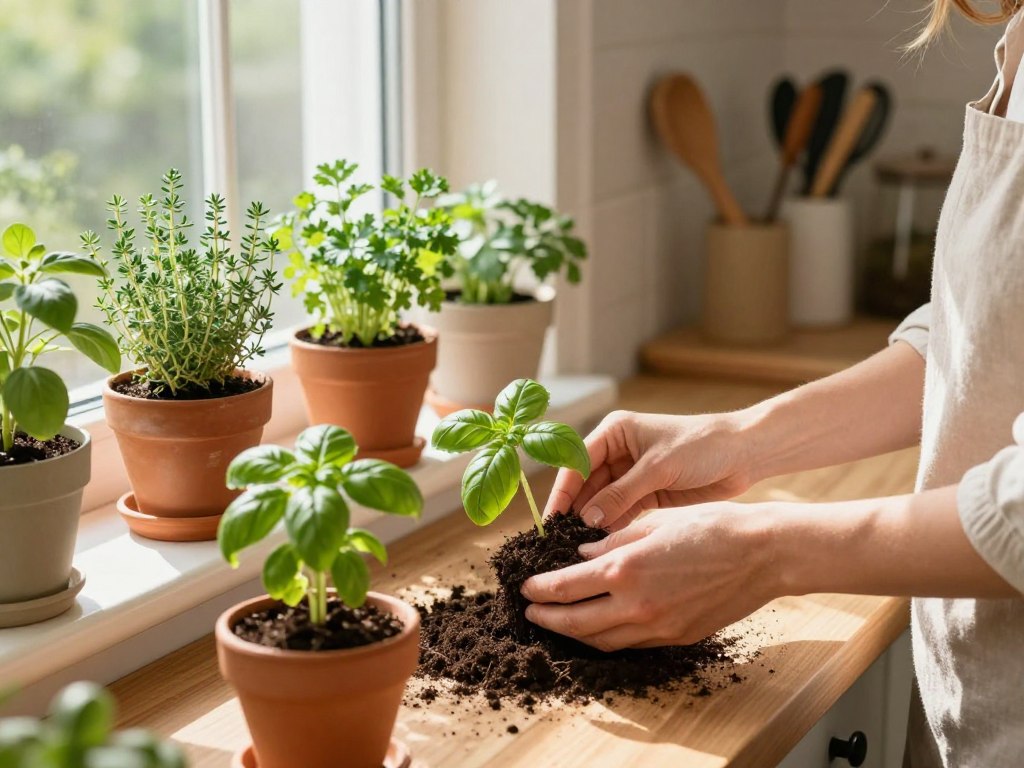
Getting your herbs into soil correctly makes a real difference. Follow these steps for growing herbs indoors:
- Fill your container with moistened potting mix until about one inch from the rim
- Create a hole slightly larger than your plant’s root ball
- Gently loosen the roots if they look tightly wound
- Place the plant at the same depth it was growing in its original pot
- Fill in soil around the plant and press down gently
- Water thoroughly until water drains from the bottom
Never bury the stem too deep. This can cause the stem to rot and kill your plant. The soil line on the stem should stay at the same level.
Spacing Your Herb Plants
Crowding plants together might seem smart for small spaces, but it causes problems. Proper spacing prevents competition for nutrients and water. Good air circulation stops fungal diseases from taking hold.
Most herbs need 4 to 6 inches between plants. Some herbs get along well together in the same container:
- Thyme and oregano (similar water and light needs)
- Parsley and chives (complement each other well)
- Basil and tarragon (both prefer warmth)
Keep mint in its own pot. This herb spreads aggressively and will overtake neighboring plants. Growing mint separately keeps your garden organized and healthy.
Care and Maintenance of Your Herb Garden
Keeping your kitchen herb garden thriving requires attention to daily care routines. Herb gardening doesn’t demand complicated steps. Once you understand watering, pruning, and pest management, your kitchen herb garden will flourish year-round.
Watering Guidelines
Proper watering is the most critical skill for maintaining a healthy kitchen herb garden. Use the finger test to check soil moisture. Stick your finger one inch into the soil, and if it feels dry, it’s time to water.
Most herbs prefer soil that stays evenly moist but never soggy or waterlogged. Basil and parsley love moisture, while rosemary and thyme tolerate drier conditions. Overwatering kills more herbs than underwatering.
Water deeply but less frequently to encourage strong root systems. This helps your kitchen herb garden survive through hot months.
| Herb Type | Water Preference | Watering Frequency |
|---|---|---|
| Basil | Moist soil | Every 2-3 days |
| Parsley | Moist soil | Every 2-3 days |
| Rosemary | Dry soil between waterings | Every 5-7 days |
| Thyme | Dry soil between waterings | Every 5-7 days |
| Mint | Consistently moist | Every 2-3 days |
Pruning Your Herbs for Growth
Harvesting and pruning your kitchen herb garden actually makes plants bushier and more productive. This practice encourages branching rather than tall, leggy growth. Pinch off the top sets of leaves regularly to redirect energy into creating new branches.
For basil and similar herbs, pinch just above a leaf node where new growth emerges. Remove any yellowing leaves immediately to keep your kitchen herb garden looking fresh. Preventing flowers keeps leaves tender and flavorful since flowering can make herbs taste bitter.
Pest Control and Disease Prevention
Common pests affecting your kitchen herb garden include aphids and spider mites. Watch for sticky residue, webbing, or spotted leaves as warning signs. Organic solutions work best for edible plants.
- Spray leaves with insecticidal soap to eliminate soft-bodied insects
- Apply neem oil every seven to ten days for persistent pest problems
- Ensure good air circulation around your kitchen herb garden to prevent fungal issues
- Avoid overhead watering that creates conditions for powdery mildew
- Remove affected leaves promptly to stop disease spread
Regular inspection keeps your kitchen herb garden healthy and productive throughout the growing season.
“A little daily attention prevents big problems down the road in your herb garden.”
The Importance of Sunlight for Herbs
Light is critical for growing herbs indoors. Your herbs need proper sunlight to develop strong flavors and healthy growth. Understanding your herbs’ light needs helps create the perfect environment.
Understanding Sunlight Needs
Different herbs have different light requirements. Mediterranean herbs like rosemary, thyme, and oregano are sun lovers. They need 6 to 8 hours of direct sunlight each day to thrive.
Other herbs are more flexible with their light needs. Parsley, cilantro, and mint grow well with 4 to 6 hours of light daily. These herbs naturally grow in shadier forest areas.
Track how much sunlight enters your windows throughout the day. Winter sunlight is much weaker than summer sunlight in the same spot.
Signs of Insufficient Light
Your herbs will tell you when they need more light. Watch for these warning signs:
- Leggy growth with long spaces between leaves
- Pale or yellowing leaves
- Slow growth rate
- Plants leaning or toppling toward the light source
- Weak stems that cannot support the plant’s weight
These symptoms mean your herbs are reaching for more light. Your windowsill herb garden shows these signs in dimmer areas or during winter months.
How to Supplement Light
Artificial lighting solves light problems for growing herbs indoors. LED grow lights are energy-efficient and work great for small spaces. Position full-spectrum LED lights 6 to 12 inches above your plants.
Keep grow lights on for 12 to 16 hours daily. This setup mimics natural sunlight and supports healthy herb growth.
Clip-on grow lights offer affordable options perfect for your windowsill herb garden. These lights attach easily to shelves or stands. Rotate your pots every few days to ensure even growth.
| Herb Type | Light Requirements | Best Location |
|---|---|---|
| Rosemary, Thyme, Oregano | 6-8 hours direct sunlight | South-facing window |
| Parsley, Cilantro, Mint | 4-6 hours light | East or west window |
| Basil | 6-8 hours direct sunlight | Bright south or west window |
| Chives | 3-4 hours light | Any bright window |
Proper lighting transforms your growing herbs indoors experience. Your herbs respond quickly to better light conditions with stronger stems. Consistent and adequate lighting is the foundation of a successful windowsill herb garden.
Harvesting Your Kitchen Herbs
Knowing when and how to pick your plants helps you get the most from your herb garden. Harvesting at the right time gives you maximum flavor and keeps herbs growing strong. Proper harvesting techniques reward you with better taste and longer productivity.
When and How to Harvest
The best time to harvest is morning after the dew dries but before the sun gets hot. Your herbs contain the strongest essential oils and taste best at this moment. You can begin harvesting once your plants have at least 6 to 8 leaves.
Never take more than one-third of the plant in a single picking. This keeps your culinary herb garden healthy and encourages bushier growth.
For soft herbs like basil and mint, pinch off stems just above a leaf node. For tougher herbs like chives and parsley, cut outer stems at the base with clean scissors.
Proper Storage Methods
How you store fresh herbs at home makes a big difference in how long they stay fresh. Woody herbs like rosemary and thyme can be wrapped in damp paper towels and refrigerated for two weeks. Tender herbs like basil prefer standing upright in a glass of water on your counter.
Wash your herbs right before you use them, not before storing. This prevents early decay and keeps them fresher longer in your culinary herb garden setup.
Tips for Drying and Freezing Herbs
Preservation extends your enjoyment all year during abundant harvests. Air-drying works best for low-moisture herbs:
- Bundle stems together
- Hang upside down in a dark, well-ventilated space
- Wait until completely dry before storing
Freezing preserves tender herbs better than drying. Chop your fresh herbs at home and freeze them in ice cube trays with water or olive oil. This gives you pre-portioned portions ready for cooking whenever you need them.
| Herb Type | Best Storage Method | Shelf Life |
|---|---|---|
| Rosemary, Thyme | Damp paper towels in refrigerator | Up to 2 weeks |
| Basil, Mint | Water glass on counter | 1 to 2 weeks |
| Oregano, Sage | Air-dried in dark space | 6 to 12 months |
| Cilantro, Parsley | Frozen in ice cube trays | 3 to 4 months |
Regular harvesting actually encourages your plants to grow fuller and produce more leaves. By picking often, you signal your culinary herb garden to branch out instead of flowering. This gives you continuous fresh herbs for your kitchen.
Common Mistakes to Avoid
Starting an indoor herb garden feels exciting. Fresh basil and rosemary are within reach. New gardeners often make simple mistakes that kill plants quickly.
Understanding these pitfalls helps protect your investment. You can enjoy thriving herbs year-round.
Overwatering and Its Consequences
The biggest threat to your potted herbs kitchen is overwatering. Many people think more water equals healthier plants. This belief destroys more herbs than anything else.
Too much water creates soggy soil that suffocates roots. Your plant’s roots need oxygen to survive.
Watch for warning signs in your indoor herb garden:
- Yellowing leaves that feel soft
- Mushy or dark stems near the soil line
- White or gray mold on the soil surface
- Sour or rotten smell coming from the pot
These symptoms mean your roots are rotting. Once root rot starts, saving the plant is nearly impossible. Prevention is your best weapon.
Always use containers with drainage holes. Let the top inch of soil dry between waterings. Adjust your watering schedule based on season and humidity.
Neglecting Soil Quality
Your potted herbs kitchen won’t thrive in old or cheap soil. Potting soil breaks down over time. It loses structure and nutrients.
Poor-quality mixes contain mostly wood chips. They have little nutritional value for growth.
Fresh, quality potting mix keeps your indoor herb garden healthy. Repot your herbs annually with new soil. Invest in brands like Miracle-Gro or Fox Farm.
Planting Incompatible Herbs
Not all herbs grow well together in one container. Different herbs need different amounts of water. Mint spreads aggressively and takes over everything nearby.
Keep mint in its own pot always. Mediterranean herbs like rosemary and thyme prefer dry soil. Basil and parsley love moisture.
Fennel releases chemicals that slow down growth in nearby plants. Plant it separately from your other potted herbs kitchen. Choose companions with similar needs for best results.
Expanding Your Kitchen Herb Garden
Once you’ve mastered the basics of growing herbs, you’re ready to expand beyond simple containers. Growing your herb garden doesn’t need to stay limited to basic basil and parsley. You can transform your space into a thriving edible garden that produces crops year-round.
The key is thinking creatively about which plants work well together. Consider how to use your available space more efficiently.
Companion Planting Benefits
Pairing certain plants together in your herb garden containers creates natural advantages for all crops. Basil planted near tomatoes improves tomato flavor while repelling unwanted pests. Chives placed alongside parsley work as natural aphid deterrents, protecting your entire garden bed.
Thyme, oregano, and marjoram make excellent companions because they share similar needs. These herbs thrive in the same conditions, making them ideal for shared herb garden containers. Their strong scents confuse and repel many common garden pests without harmful chemicals.
Integrating Vegetables and Fruits
Your kitchen garden ideas can expand beyond herbs to include compact vegetables and fruits. Cherry tomatoes in large pots complement your herb collection beautifully. They share similar care requirements and create a productive growing space.
- Dwarf pepper varieties add color and spice to your collection
- Lettuce and spinach grow in shallow containers as cut-and-come-again crops
- Strawberries in hanging baskets use vertical space efficiently
Creating a Small Vertical Garden
Vertical gardening unlocks potential in tiny kitchens and balconies. Wall-mounted pocket planters hold multiple herbs in minimal footprint space. Tiered plant stands create multiple growing levels without expanding your floor area.
| Vertical Garden Option | Space Needed | Best Plants |
|---|---|---|
| Wall-mounted pocket planters | Minimal floor space | Basil, oregano, thyme |
| Hanging planters | Overhead space only | Strawberries, trailing herbs |
| Tiered plant stands | Small corner area | Mixed herb garden containers |
| Trellis systems | Wall-mounted | Climbing oregano varieties |
Vertical gardens aren’t just practical—they create stunning living walls that serve as kitchen décor. Your expanded kitchen garden ideas transform ordinary spaces into productive, beautiful growing areas. These gardens feed your family year-round while adding natural beauty to your home.
Enjoying the Fruits of Your Labor
You’ve worked hard to build your culinary herb garden. Now it’s time to enjoy everything you’ve grown. Using fresh herbs makes meals taste better and feel more special.
Your homegrown herbs are about to transform everyday dishes into something wonderful.
Simple Recipes to Use Fresh Herbs
Fresh basil shines in a classic caprese salad with tomatoes and mozzarella. Parsley and cilantro blend together to make chimichurri sauce. This sauce tops grilled meats perfectly.
You can make herb-infused olive oils and vinegars for salads and bread. Create pesto using cilantro with pepitas or parsley mixed with walnuts. Herb butter melts beautifully on warm bread or roasted vegetables.
Fresh mint tea or lemon balm tea brings warmth to your afternoons. Add fresh herbs near the end of cooking. This keeps their delicate flavors and aromas intact.
Sharing Your Herbs with Friends and Family
Your culinary herb garden produces more than you can use alone. Potted herbs in pretty containers make thoughtful gifts. Many herbs root easily in water for sharing cuttings.
Bundle fresh herbs from abundant harvests for neighbors and loved ones. Sharing what you’ve learned creates a community of gardeners. Teaching others multiplies the impact of your work.
Documenting Your Gardening Journey
Track your progress by taking photos at different stages. Keep a gardening journal where you write what works. Note when you planted and harvested each herb.
These details help you remember which varieties did best. Post about your journey on social media to inspire others. Documentation turns your experience into valuable information for future seasons.
Year after year, you’ll become a better gardener. Your records become a personal guide for growing success.