
Did you know a single bulb can yield a huge harvest with little effort? Many think you need farming skills to grow vegetables, but onions are different. Learning how to grow onions is a great start for any beginner gardener in the United States.
These plants do well in many places, from raised beds to patio containers. The process is easy and needs little care. There’s nothing like the taste of fresh produce from your own garden.
Starting with onions gives you a quick win. You’ll enjoy fresh food and learn about plant care. Soon, your outdoor space will be a place of plenty, giving you healthy food all year.
Understanding the Basics of Onion Cultivation
Starting your own onion patch is a rewarding journey. It begins with understanding the basics of plant care. By following onion growing tips, you can ensure a healthy and abundant harvest. Success in the garden often comes down to preparation and patience.
Learning the best practices for onion cultivation helps avoid common pitfalls. When you provide the right conditions, your plants will grow strong. This foundation is key for any gardener looking to improve.
Types of Onions You Can Grow
Home gardeners usually choose between short-day, intermediate-day, and long-day onions. Your choice depends on your location and daylight during the growing season.
Beyond these, you can grow bunching onions. These are harvested for their green tops, not large bulbs. They’re excellent for beginners because they grow quickly and need less space.
Nutritional Benefits of Onions
Fresh onions add significant health benefits to your meals. They are rich in vitamin C, which boosts your immune system and overall wellness.
Onions also contain antioxidants that protect your body from oxidative stress. Adding these flavorful vegetables to your diet is a simple way to boost your nutrition while enjoying delicious home-grown produce.
Tools Needed for Onion Gardening
Before planting, gather a few essential tools. A sturdy hand trowel is needed for digging holes. Durable gardening gloves protect your hands from soil and debris.
Investing in a basic soil test kit is also wise. It helps check your garden’s pH levels. With these items ready, you can focus on the best practices for onion cultivation without interruptions. With the right gear, you’re well on your way to mastering these essential onion growing tips.
Selecting the Right Onion Variety
Understanding how daylight affects your plants is key to mastering onion gardening techniques. Onions are very sensitive to daylight hours. This sensitivity, called photoperiodism, tells the plant when to stop growing leaves and start forming a bulb.
If you pick the wrong variety for your area, your onions might not form bulbs. They could just keep growing green tops all season. Choosing the right variety for your latitude is crucial for a good harvest.
Short-Day vs. Long-Day Onions
Onions are divided into three types based on daylight needs. Short-day onions start bulbing with 10 to 12 hours of daylight. These are best for the southern U.S. where winters are mild.
Intermediate-day onions need 12 to 14 hours of daylight to bulb. They’re great for the central U.S. because they’re versatile. Long-day onions require 14 to 16 hours of daylight. They’re ideal for northern gardeners with long summer days.
Choosing the Best Onions for Your Climate
To pick the right onion, know your growing zone. Southerners should choose short-day onions like ‘Texas Early Grano’ to avoid early bolting. Northerners should opt for long-day onions like ‘Walla Walla’ or ‘Copra’ to ensure bulbs grow fully before frost.
Good onion gardening techniques mean checking the seed packet or plant label for day-length needs. Don’t guess your region’s needs, as this can lead to poor results. By matching your onions to your local climate, you give them the best chance to thrive.
Preparing the Soil for Onion Planting
Healthy soil is key for a great onion patch. Before planting, make sure your soil drains well and is loose. Onions don’t do well in heavy clay or tight dirt, so loosen the soil well.
Optimal Soil pH for Onions
The soil’s chemical balance is crucial for onion growth. Onions grow best in slightly acidic to neutral soil, with a best pH range of 6.0 to 7.0. This pH helps the roots get the nutrients they need.
Use a home testing kit to check your soil’s pH. If it’s too acidic, add garden lime. If it’s too alkaline, peat moss can lower it.
Adding Nutrients to the Soil
Good onion gardening means giving them nutrients all season. Mix well-rotted compost or aged manure into the top six inches of soil. This improves soil structure and keeps it moist without being too wet.
For the best results, water and fertilize onions consistently. Use a balanced, slow-release fertilizer for early leaf growth. See the table below for tips on soil amendments.
| Amendment Type | Primary Benefit | Application Timing |
|---|---|---|
| Aged Compost | Improves soil texture | Before planting |
| Garden Lime | Adjusts pH levels | Weeks before planting |
| Balanced Fertilizer | Boosts bulb development | During active growth |
| Bone Meal | Adds phosphorus | At planting time |
Focus on these soil basics to help your onions grow well. Proper preparation means less work later. Your onions will thank you with a healthy harvest.
How to Plant Onions in Your Garden
You can start your onion journey by choosing between sets, seeds, or transplants for your backyard. Each option has its own benefits, depending on your local climate and how much time you have for gardening.
Using Onion Sets, Seeds, or Transplants
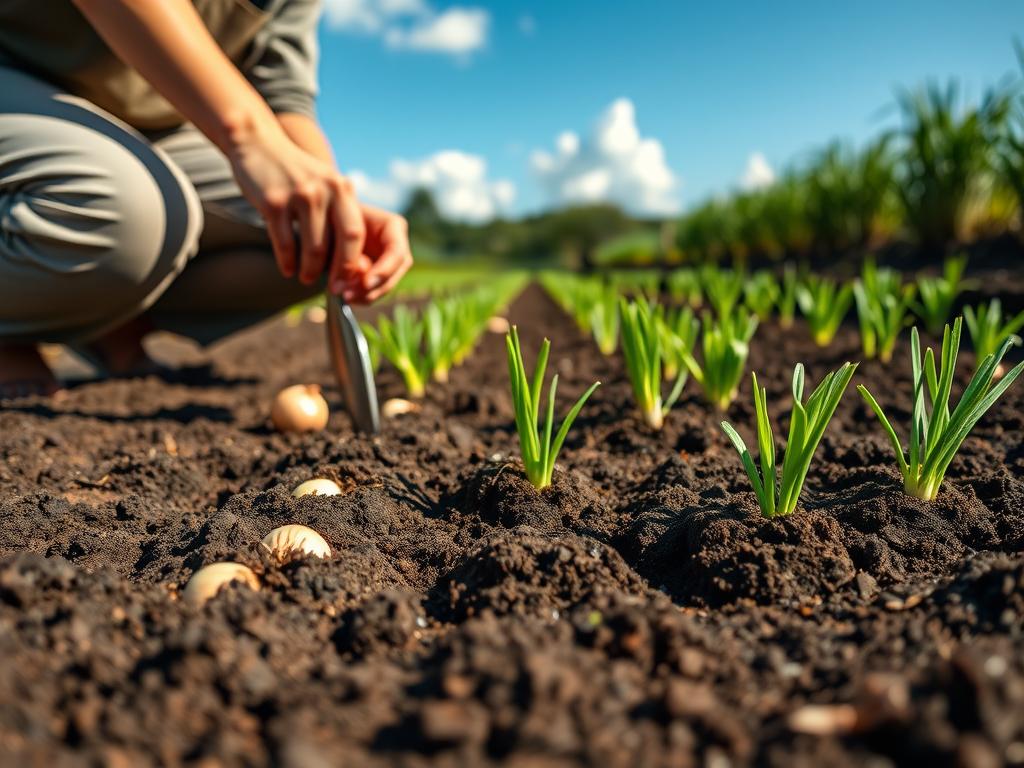
Onion sets are small, immature bulbs that are easy for most gardeners to start with. They grow quickly and are highly resistant to early spring weather changes.
If you want to grow onions from seed, start them indoors eight to ten weeks before the last frost date. This method lets you choose from a wider variety but needs more patience and care.
Transplants are young seedlings started in a greenhouse. They offer a good balance, giving you a head start without the complexity of starting from scratch.
Planting Depth and Spacing Guidelines
To grow big, healthy onions, follow the right steps for growing onions. Plant your sets or transplants about one inch deep in the soil.
Planting them too deep can hinder growth. It’s also important to space them correctly to prevent fungal diseases and ensure good air circulation.
Plant your onions four to six inches apart in rows that are twelve inches apart. This spacing lets the roots get the nutrients they need without competition.
| Method | Ease of Use | Time to Harvest | Best For |
|---|---|---|---|
| Onion Sets | High | Shortest | Beginners |
| Transplants | Medium | Medium | Variety Seekers |
| Seeds | Low | Longest | Advanced Gardeners |
Watering Practices for Onions
Keeping the soil moist is key for growing great onions. During the bulbing phase, onions need consistent water to grow big and taste good. Following the right onion care instructions keeps your onions healthy from start to finish.
Signs of Overwatering and Underwatering
Watch your garden closely to spot moisture problems early. Yellow leaves or slow growth mean you might be watering too much. Too much water can cause root rot, harming your onions.
On the other hand, not enough water is bad too. Dry, cracked soil can make onions grow weak or stop growing. Look for wilting leaves to know your onions need more water.
Best Practices for Watering Techniques
Use deep, less frequent watering for the best results. This helps roots grow deep, making onions stronger in dry times. These best practices for onion cultivation will boost your harvest quality.
Water at the base of the plant to avoid wet leaves. Wet leaves can bring fungal diseases. When watering and fertilizing onions, keep the soil moist but not soggy. This supports steady growth all season.
Managing Onion Weeds and Pests
Onions have shallow roots, making it hard for them to compete with weeds for nutrients. Weeds can quickly take over, causing your onions to grow poorly and have smaller bulbs. Following the right onion care instructions helps your plants get the space they need.
Common Weeds to Watch For
Keep an eye out for weeds like crabgrass, dandelions, and chickweed. They grow fast and can crowd out your onions. Regular onion plant maintenance means weeding gently to keep the soil clear.
When weeding, be gentle with your onions’ roots. Use a hand cultivator or pull weeds by hand. Remove weeds when they’re small to stop them from taking over.
Effective Pest Control Methods
Onions also face threats from pests like onion maggots and thrips. These pests can harm your onions, causing yellow leaves or rotting bulbs. Using integrated pest management is a highly effective strategy to fight these pests.
To keep pests away, use row covers early to stop flies from laying eggs. If you see thrips, try insecticidal soap or neem oil. Keeping your garden healthy is key to a good harvest.
Harvesting Your Onions
The end of your hard work comes when the foliage starts to wither and dry. Knowing the steps for growing onions helps keep your crop healthy and ready for storage. Watch for physical changes in your plants to know when to harvest.
When to Know Your Onions Are Ready
The best sign of maturity is when the onion tops turn yellow and fall over. When the green stalks start to brown and fall at the neck, the bulb is ready for dormancy.
Wait until 50% to 75% of the tops have fallen over before harvesting. This ensures the bulbs are fully grown and sealed for longer storage.
Best Methods for Harvesting Onions
Whether you’re growing onions from seed or using sets, be gentle when extracting them. Use a garden fork to loosen the soil around the bulbs. Avoid pulling them by the tops to prevent damage.
Lift the onions carefully and shake off dirt. Don’t bruise the bulbs, as any damage can cause rot during curing.
| Growth Stage | Visual Indicator | Recommended Action |
|---|---|---|
| Early Maturity | Tops begin to yellow | Reduce watering frequency |
| Peak Maturity | Tops fall over | Begin harvesting process |
| Post-Harvest | Dry, papery skins | Move to curing area |
After lifting the onions, leave them in the garden for a day or two if it’s dry. This sun exposure dries the outer layers, crucial for preservation.
Storing Onions After Harvest
Properly handling onions after harvest is key to enjoying them for a long time. It’s tempting to use them right away, but preparing them for storage extends their life. Patience during this phase is truly rewarding.
Proper Techniques for Curing Onions
Curing onions is crucial. It dries the outer skin, protecting against rot and moisture loss. Place your onions in a warm, dry, and well-ventilated area right after harvest.
Spread them out on a rack or screen for good airflow. Avoid direct sunlight to prevent sunscald. It usually takes two to four weeks for the necks to dry and the skin to feel papery.
Ideal Storage Conditions
After curing, move onions to a cool, dark place. High humidity causes mold and sprouting. Keep the storage area consistently cool to preserve your onions for months.
Good airflow is still important after curing. Don’t store onions in plastic bags, as they trap moisture. Use mesh bags, wooden crates, or baskets for better airflow.
| Storage Factor | Recommended Condition | Why It Matters |
|---|---|---|
| Temperature | 35°F to 50°F | Prevents sprouting and rot |
| Humidity | 65% to 70% | Maintains crispness without mold |
| Light Exposure | Dark/Low Light | Prevents greening and bitterness |
| Airflow | High Circulation | Reduces moisture buildup |
Common Challenges and Solutions in Onion Growing
Even with the best care, you might face hurdles like fungal diseases or stunted growth in your garden beds. Mastering effective onion plant maintenance helps you diagnose and resolve these problems before they impact your entire harvest.
Dealing with Onion Diseases
Fungal issues often appear during periods of high humidity or poor drainage. You can protect your crop by ensuring proper airflow between rows and avoiding overhead watering. If you spot discolored leaves, remove the affected parts immediately to stop the spread. Using organic fungicides from brands like Bonide can provide an extra layer of defense for your plants.
Fixing Growth Issues You Might Encounter
Stunted growth often stems from soil compaction or nutrient deficiencies. You should test your soil regularly to ensure it remains loose and rich in organic matter. Consistent onion growing tips suggest that keeping the soil moisture steady prevents bulbs from splitting or maturing too early. Proper attention to these details ensures a productive season and a bountiful supply of fresh onions for your kitchen.
Your journey toward becoming a skilled gardener relies on observation and quick action. Share your progress with fellow growers or join local gardening groups to exchange advice. Every successful harvest builds your confidence and improves your skills for the next planting cycle.