
Did you know our brains can trick us into seeing big spaces in small areas? Many think small yards limit what they can do outside. But, strategic design can change that. You can turn a small yard into a big retreat with the right landscaping tricks.
To make your garden seem bigger, play with sightlines and focus points. The right plants and structures can change how you see your yard. These small changes can make your outdoor space feel much bigger.
Even with a small patio or narrow side yard, you can use these tips. It’s time to learn how to make your garden look bigger. Turn your small space into a breathtaking sanctuary that feels endless.
Understand Visual Perception in Garden Design
The secret to a larger-looking garden is in how you use your sightlines. By knowing how our eyes see depth and distance, you can make your garden look bigger. These tricks can turn a small area into a wide-open space.
You don’t need a huge garden to feel grand. Instead, use optical illusions for garden expansion to make your brain think there’s more space. Small changes in layout can make a big difference in how we see the area.
The Role of Perspective
Perspective is key in garden design. Using converging lines can make your garden seem deeper. This trick makes the garden look longer than it really is.
Try narrowing paths as they move away from you. This makes the eye think the distance is greater. Learning these tricks to visually enlarge garden space lets you control how people see your garden.
Color Schemes in Garden Design
Colors greatly affect how we see a garden’s size. Lighter shades, like soft pastels or whites, seem to move away. This makes them great for optical illusions for garden expansion. Place these colors at your garden’s edges to make it seem bigger.
On the other hand, dark and bold colors come forward. Use these near your seating to create a cozy feel. Mixing these colors helps balance your garden, making it feel spacious and inviting.
Use of Focal Points to Create Depth
One way to make your garden look bigger is to guide the viewer’s gaze. Place a strong focal point at the far end of your yard. This draws the eye away from the edges.
This simple trick creates an illusion of distance. It makes your outdoor area feel much bigger.
Incorporating Statues or Water Features
Putting a striking object at the end of a sightline is a great way to make your garden look bigger. A stone statue or a bubbling fountain works well. They act as a destination for the eyes, pushing the garden’s boundary further back.
“A garden without a focal point is like a room without a window; it lacks a sense of purpose and direction.”
When choosing these features, think about their benefits:
- Water features add a soothing sound that masks street noise.
- Statues provide a permanent anchor that works in all seasons.
- Strategic placement makes your garden feel like a curated landscape, not a cramped plot.
Using Trees and Tall Plants
Vertical elements are key to breaking up flat horizons. Trees and tall plants are clever small garden design hacks to add layers. They make you look up and around, distracting from the space’s width.
Here are some plants to use for vertical height:
| Plant Type | Primary Benefit | Best Placement |
|---|---|---|
| Columnar Trees | Adds height without width | Back corners |
| Tall Ornamental Grasses | Softens hard edges | Along pathways |
| Bamboo | Provides instant privacy | Against fences |
These vertical accents act as natural pillars. They frame your view. By layering these plants, you create mystery. The eye can’t see the whole garden at once.
This technique is a reliable small garden design hack for a lush, deep, and inviting space.
Optimize Pathways for a Spacious Feel
The way you move through your garden affects its feel. By changing your walkways, you can make your garden look bigger. You don’t need to add more space to do it. Smart design tricks can make your garden feel endless.
Choosing the Right Materials
The materials for your paths are key to how your garden looks. Light-colored gravel, pale stone pavers, or shiny materials brighten dark spots. These small garden design hacks are easy to use but make a big difference.
Here’s why the right path materials matter:
- Light-colored stone reflects sunlight, making dark areas feel less cramped.
- Smooth textures give a clean, modern look that reduces clutter.
- Reflective gravel adds a subtle shine that pulls the eye outward.
Curve vs. Straight Pathways
Straight lines can make a small garden feel tight. But curves can make it feel bigger. A winding path makes you look around slowly, creating a sense of depth.
Curves hide parts of your garden, making you think there’s more beyond. This is a top small garden design hack for those with little space. Softening your edges with curves turns a simple path into a journey that makes your garden seem bigger.
Implement Layered Planting Techniques
One of the best ways to make your garden look bigger is through layered planting. By arranging plants carefully, you can create the illusion of a larger garden. This makes your garden feel mysterious and inviting. It also hides the hard edges of your property, like fences or walls, which can make a space feel small.
Layering Plants for Height and Depth
To add depth, place your tallest plants at the back. Then, move to shorter plants towards the front. This cascading effect makes your eye travel through the space, not stopping at a solid barrier.
These small garden design hacks turn a flat yard into a lush landscape. Layering plants creates a journey through your garden. This makes it feel much deeper than it is. Here are some benefits:
- It hides harsh fence lines with soft, natural textures.
- It creates a sense of discovery as you walk through the space.
- It provides a backdrop that makes smaller plants pop.
Using Ground Cover to Expand Vision
Ground cover plants are key to making your area feel bigger. They fill gaps between larger shrubs, creating a green carpet. This create the illusion of a larger garden by hiding bare soil.
Choose ground cover that spreads well and stays colorful all year. This uniformity keeps your yard looking smooth. It makes your vision extend to your property’s edges.
Select Appropriate Garden Furniture
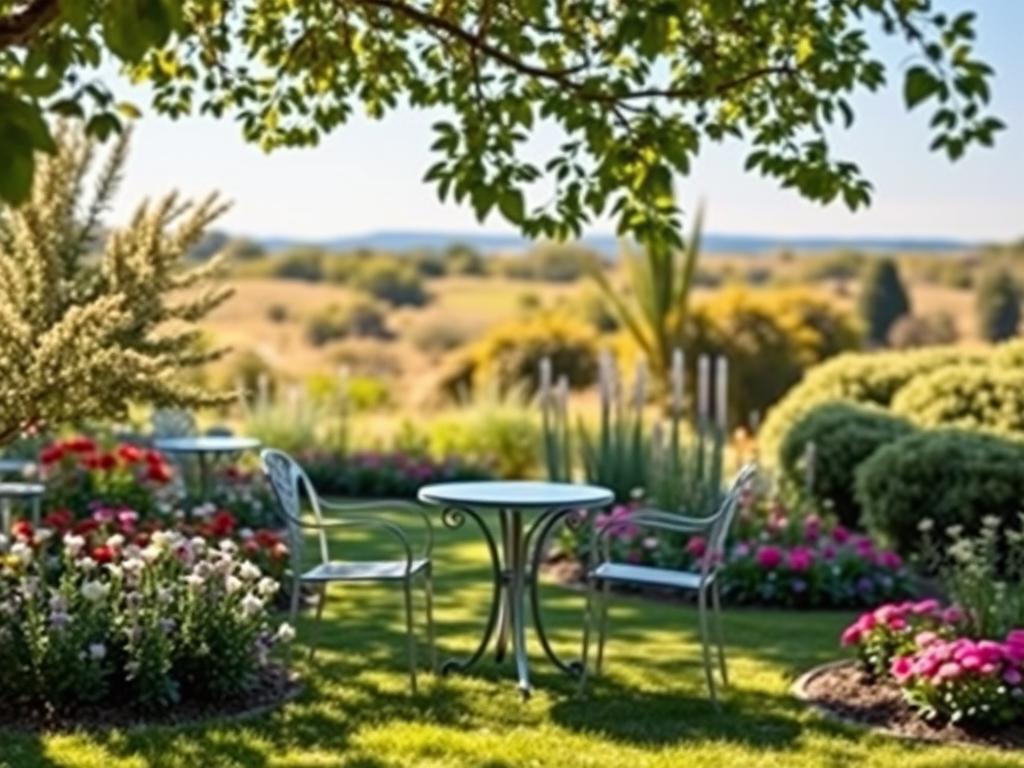
When you want to create the illusion of a larger garden, start with your furniture. Many homeowners make their outdoor areas feel cramped. This happens when they choose big or poorly placed furniture. By picking furniture that’s the right size, your patio will feel open and airy.
To make your outdoor space feel bigger, think differently about it. Instead of filling every corner, find furniture that does more than one thing. This way, your garden will feel welcoming to everyone who visits.
Compact and Multi-Functional Pieces
Choosing the right furniture is key to keeping your space open. Look for items that can be tucked away or do more than one thing. This way, you make the most of every inch of your space.
- Nesting tables that slide under each other when not in use.
- Folding chairs that can be stored flat against a wall or in a shed.
- Storage benches that provide comfortable seating while hiding garden tools or cushions.
- Wall-mounted tables that fold down to save precious floor space.
Avoiding Oversized Furniture
It’s tempting to love big, comfy sofas, but they can overwhelm small yards. Big furniture blocks the view and makes your yard seem smaller. Always measure your space carefully before buying new furniture to make sure it fits.
Choose slim designs that let light through and keep the floor visible. This makes your garden look bigger. It’s a smart way to keep your space feeling open and not cluttered.
Smart Use of Mirrors in Garden Spaces
You can make your backyard look twice as big with reflective surfaces. These items create illusion of a larger garden by reflecting light and greenery. This trick can turn a small patio into a grand estate.
Choosing the Right Location for Mirrors
Where you put your mirrors is key. Place them where they catch the best views, like a flower bed or fern corner.
- Put mirrors opposite a dense hedge to mimic a hidden path.
- Mount them on solid fences to add interest to flat areas.
- Avoid direct sunlight to prevent glare in your seating area.
Reflecting your favorite plants doubles the foliage in your view. This is a top optical illusion for garden expansion for homeowners.
Types of Mirrors for Outdoor Use
Not all mirrors can handle the outdoors. You need ones made for the weather. Glass mirrors are heavy and break easily, so designers often choose acrylic or stainless steel.
These materials are tough and won’t fog or crack in rain or cold. High-quality outdoor mirrors last long, staying clear and bright all year.
Make sure the frame is rust-proof, like powder-coated metal or treated wood. This keeps your decor looking good for years.
Create Illusions with Lighting
Lighting does more than keep us safe; it’s a design tool to make your garden look bigger. At night, you can maximize small garden appearance by changing how we see depth and height. The right lights can turn a small corner into a welcoming, large space.
Up-Lighting to Enhance Vertical Space
Up-lighting is a smart way to make your garden look bigger. Place lights at the base of tall trees or features to make the eye go up. This makes your garden feel taller and wider.
Lighting high points keeps our eyes away from fences or walls. This makes your garden feel more open. It’s like your garden is stretching up to the sky.
Using Soft Lighting for Ambiance
Harsh lights can make a space feel small and dark. Soft, diffused lighting creates a cozy feel. It makes sure every part of your garden is visible, which is key to maximize small garden appearance.
Layering your lights changes the mood and feel of your garden. Using smart gardening to enhance space perception means balancing light levels. Here’s a comparison of lighting techniques to help plan your garden:
| Lighting Technique | Primary Effect | Best Use Case |
|---|---|---|
| Up-Lighting | Increases verticality | Trees and tall statues |
| Path Lighting | Defines boundaries | Walkways and borders |
| Soft Ambient | Reduces harsh shadows | Seating and dining areas |
| String Lights | Adds overhead depth | Patios and pergolas |
Utilize Vertical Gardening Solutions
When your ground space is limited, looking upward is the smartest way to expand your garden. By shifting your focus from the floor to the walls, you can effectively maximize small garden appearance without losing precious square footage.
Planters and Vertical Structures
Installing wall-mounted planters is a fantastic way to introduce greenery into areas that would normally be bare. These structures allow you to cultivate herbs, flowers, or succulents at eye level. This serves as a form of smart gardening to enhance space perception. You can also use sturdy trellises to create a living wall that adds depth and texture to your outdoor environment.
Climbing Plants to Add Height
Climbing plants are essential for drawing the gaze toward the sky. They help create the illusion of a much larger area. By training vines like jasmine or ivy to grow upward, you maximize small garden appearance by utilizing the vertical plane. This technique is a proven method of smart gardening to enhance space perception, as it draws the eye away from the narrow boundaries of your yard and toward the lush, vertical growth above.
Integrate Natural Borders
How you define your garden boundaries is key to its feel. You can maximize small garden appearance by picking the right boundary. Instead of solid fences, choose softer options that make your garden feel bigger.
Using Hedges to Create Enclosures
Hedges act as a living wall for privacy without feeling trapped. Evergreen shrubs keep your garden looking lush all year. They make your yard’s edges feel smooth, blending with the outside world.
Trimming hedges into rounded shapes helps maximize small garden appearance. It makes your garden feel cozy and intimate, not cramped.
Open Borders for a Seamless Look
For a seamless look, try an open border strategy. Remove barriers or use low plants to connect your garden with the outside. This trick makes your garden seem bigger by using the scenery around it.
Use low-growing plants to mark flower bed edges without blocking views. This keeps the horizon line open, making your garden seem larger. When you can see further, your brain thinks the space is bigger.
| Boundary Type | Visual Impact | Best Use Case |
|---|---|---|
| Solid Wood Fence | Creates a hard stop | Maximum privacy |
| Evergreen Hedges | Softens edges | Year-round structure |
| Open/Low Borders | Expands the view | Small, open yards |
Color Choices for Expansion Illusions
Using color wisely is a key landscaping tip for a spacious garden feel. Knowing how our eyes see different colors helps us make our yard look bigger. You can do this without changing your property lines or fences.
Light Colors vs. Dark Colors
The color of your plants affects how big your garden seems. Light colors like white and pale yellow reflect sunlight, making them seem farther away. This creates a feeling of openness and space.
On the other hand, dark colors like deep burgundy make areas feel closer and more intimate. To make your space feel bigger, follow these tips:
- Place light-colored flowers near your garden’s edges to make it seem larger.
- Use dark foliage in the front to add depth.
- Choose light-colored hardscaping materials to keep the space feeling open.
Distant Shades to Enhance Depth
Optical illusions for garden expansion can also be achieved through color temperature. Cool colors like blues and purples seem farther away. Place these colors at the back of your garden to trick the eye into seeing more distance.
Layering cool-toned plants behind warmer colors creates depth. This simple trick helps make garden look bigger. When you mix these color strategies with smart plant placement, you get a truly transformed outdoor space.
Regular Maintenance for an Inviting Space
A cluttered or overgrown yard hides your outdoor area’s true potential. Regular care keeps your design choices visible and effective all year. These landscaping tips help your space look intentional and open.
Pruning and Trimming for Cleanliness
Overgrown branches and dense shrubs make your space feel smaller. Regular pruning lets light in and improves sightlines. Use quality tools like Fiskars for clean edges and healthy plants.
This simple habit keeps your garden from feeling cramped or neglected.
Seasonal Planting for Continuous Growth
Strategic planting cycles keep your landscape lively all year. Remove old blooms and add new ones that match the weather. This keeps your garden looking neat and inviting.
Well-kept gardens encourage spending time outdoors and make the most of space.
Take a moment this weekend to tidy up your yard. Regular upkeep turns a small space into a lush retreat. Share your favorite transformation photos to inspire others.