
Did you know that nearly 80% of household greenery fails to thrive because of bad watering habits? Many people struggle to get the right amount of moisture. This often leads to root rot or dry, brittle leaves. Learning to water your plants right is the most critical step for any gardener.
Learning to water indoor plants correctly turns your home into a lush oasis. Knowing what your plants need helps avoid common problems. This indoor plant watering guide gives you the expert tips you need to succeed.
By using these proven methods, you build a strong base for your plants’ health. Soon, your plants will look more vibrant and strong. Let’s dive into the easy steps to keep your plants healthy and well-watered all year.
Understanding the Watering Needs of Indoor Plants
Every indoor plant is different when it comes to water. To water indoor plants right, you need to look beyond a simple schedule. You must also consider the environment where your plants live.
Factors Affecting Watering Frequency
Many things affect how fast your soil dries out. For example, plants in bright light use more water because they photosynthesize more. Also, dry air and warm temperatures make water evaporate faster from the soil.
The size and material of your pot also matter. Terracotta pots let water out, while plastic or glazed pots keep water in longer.
Signs Your Plant Needs Water
Plants often show they need water in certain ways. A common sign is drooping or wilting leaves. This means the plant’s cells have lost their turgor pressure. You might also notice the soil feels dry or pulls away from the pot.
Another good way to check is to lift the pot. A plant that needs water will feel much lighter than one with moist soil. Learning these signs helps you water indoor plants without harming their roots.
Different Types of Indoor Plants
Not all plants need the same amount of water. Succulents, which live in dry places, store water in their leaves and like to dry out between waterings. On the other hand, tropical ferns need moist soil and will suffer if it’s too dry.
| Plant Category | Watering Preference | Soil Condition |
|---|---|---|
| Succulents | Low | Dry completely |
| Tropical Foliage | Moderate | Slightly moist |
| Ferns | High | Consistently damp |
By grouping your plants by type, you can water them in a way that suits their natural habitat. This approach helps ensure your plants stay healthy and thrive.
Essential Watering Tools for Indoor Plants
Learning how to water houseplants is more than just using a cup of water. The right tools help you give moisture exactly where it’s needed. This protects the leaves and roots from too much stress.
Types of Watering Can
A good watering can is crucial. Look for one with a long, narrow spout. This lets you water deep into dense leaves without getting the leaves wet.
This design stops water from splashing on leaves, which can cause fungal problems or spots. Precision is key when watering plants. A long spout helps you avoid soaking the plant’s crown too much.
Soil Moisture Meters
A soil moisture meter is great if you’re unsure when to water. These tools give a scientific approach to watering by checking moisture levels deep in the soil.
Instead of checking the surface, you can insert the probe into the soil. This tool helps you avoid overwatering. It makes sure your plants get water only when they need it.
Spray Bottles vs. Watering Cans
It’s important to know the difference between spray bottles and watering cans. Watering cans are for deep root saturation, which is key for your plants’ health and growth.
Spray bottles, on the other hand, are for increasing humidity around tropical plants or cleaning leaves. While misting can help, it’s not enough to sustain a plant’s roots.
| Tool Type | Primary Function | Best For |
|---|---|---|
| Long-Spout Can | Deep Irrigation | Root health and soil saturation |
| Moisture Meter | Data Collection | Preventing overwatering |
| Spray Bottle | Humidity Control | Tropical foliage and cleaning |
Best Practices for Watering Indoor Plants
To water indoor plants correctly, don’t just follow a set schedule. Every home is different, and so are your plants. They react to light, humidity, and temperature changes all year. Watch your plants closely to give them the right moisture to grow well.
Watering Techniques You Should Use
The “soak and dry” method is a top indoor plant watering technique. It means soaking the soil until water drains out, then letting the top dry before watering again. This method helps roots grow deep and keeps mineral salts from building up.
Make sure your pots have drainage holes to avoid waterlogged roots. If they don’t, consider repotting or using a nursery liner to prevent root rot. This is a key best practice for watering indoor plants that every enthusiast should know.
When to Water Your Plants
Water your plants in the early morning. This way, they can dry out during the day, reducing the risk of fungal growth and bacterial spots. It also gives them moisture before the afternoon heat.
Try to avoid watering in the evening. Excess moisture can attract pests and mold. Watering in the morning helps your plants absorb nutrients better and stay healthy.
How Much Water is Enough?
The right amount of water depends on your pot size and plant maturity. A small succulent needs less water than a large Fiddle Leaf Fig. Aim to moisten the entire root ball without leaving water in the saucer.
| Plant Size | Watering Frequency | Volume Guideline |
|---|---|---|
| Small (4-inch pot) | Every 7-10 days | 1/4 cup |
| Medium (8-inch pot) | Every 10-14 days | 1-2 cups |
| Large (12+ inch pot) | Every 14-21 days | 3-4 cups |
Check the soil moisture before watering. If it’s damp, wait a few more days. Finding the right balance between watering and observing is key to keeping your plants strong.
Choosing the Right Water for Your Plants
The water you use can make a big difference in your plants’ health. Not all water is created equal. The chemicals and temperature in your water matter a lot. Small changes can help prevent problems that new gardeners often miss.
Tap Water vs. Distilled Water
Tap water often has additives like chlorine or fluoride. These are safe for people but can harm plants. If your plants have brown, crispy leaf tips, it might be because of the water.
Switching to distilled or filtered water can help. Rainwater is also a good choice if you can collect it. This way, you remove harmful chemicals and help your plants grow better.
The Importance of Room Temperature Water
Water temperature is just as important as its purity. Cold water can shock the roots of many plants. These plants prefer warm, humid conditions.
Let your water sit for a few hours before using it. This makes sure it’s not too cold for your plants. Consistency is key for a healthy indoor garden all year.
Adjusting Your Watering Routine by Season
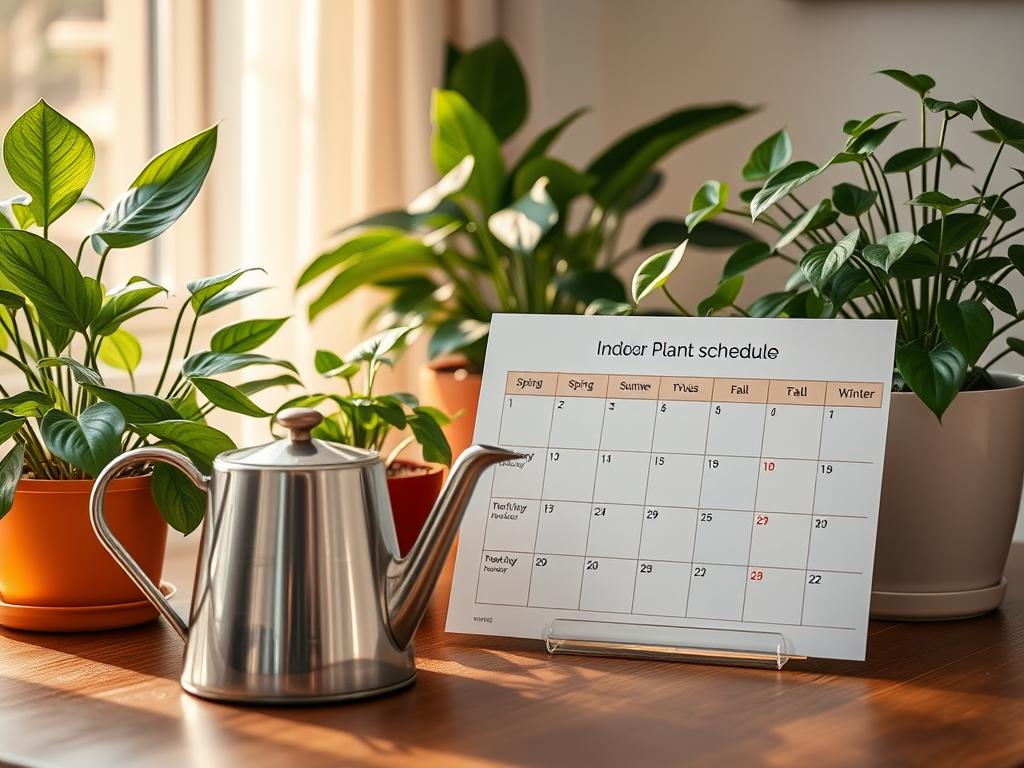
Learning to care for your plants all year is key to a lush indoor garden. Plants change with the seasons, so you must adjust how you care for them. Keeping a steady indoor plant watering schedule means watching how your plants react to changes in light and temperature.
Spring and Summer Watering Needs
In warmer months, plants grow more. They need more light and water to make new leaves and stems. So, you’ll need to water your plants more often during these seasons.
Before watering, check the top inch of soil. If it’s dry, your plant needs water. Keeping them well-watered helps them grow strong during their most active time.
Fall and Winter Adjustment Strategies
When days get shorter and colder, plants slow down. They need less water because they’re not growing as fast. You should water your plants less to avoid root rot.
Be patient in the cold months. Even if the soil looks dry, it might still be moist. Letting the soil dry out more helps protect your plants from too much water while they rest.
How to Prevent Overwatering
Learning to water indoor plants correctly is key. Overwatering is the main reason houseplants die. Knowing the signs early can save your plants from root rot.
Recognizing Signs of Overwatering
Plants show distress through changes in leaves and stems. Soft or yellow leaves and mushy stems near the base are signs. These are early warnings of root problems.
A musty smell from the pot is another sign. It means the soil lacks oxygen. Catching these signs early can prevent lasting damage.
“The secret to a thriving indoor garden is not just the water you provide, but the air you allow to reach the roots.”
Tips for Managing Soil Moisture
To water indoor plants correctly, focus on drainage. Use pots with holes to prevent waterlogging. A good potting mix also helps.
Check soil moisture before watering. If it’s still damp, wait a few days. This avoids too much water.
| Symptom | Healthy Plant | Overwatered Plant |
|---|---|---|
| Leaf Color | Vibrant Green | Yellow or Brown |
| Stem Texture | Firm and Upright | Mushy or Soft |
| Soil Condition | Damp but Aerated | Soggy and Smelly |
By watching your plants, you’ll get better at watering indoor plants correctly. Understand each plant’s needs for a healthy indoor space all year.
Dealing with Underwatering
Drought stress can quietly harm indoor plants. It’s often easy to spot if you know what to look for. While many focus on too much moisture, neglecting plants can also harm them. Following proper indoor plant watering tips will keep your plants vibrant and thriving.
Identifying Symptoms of Underwatering
When a plant lacks water, it shows signs of distress. Leaves might feel crispy or brittle, and edges may be dry. In severe cases, leaves can shrivel or droop a lot.
Another sign is the soil condition. If the soil pulls away from the pot, it’s dehydrated. Use your finger to check soil depth before watering.
Recovery Techniques for Drought-Stressed Plants
If your plant is dehydrated, don’t panic. Slowly rehydrating it is best to avoid shocking the roots. Bottom-watering is a good method.
Place your pot in a basin with a few inches of water. Let it sit for thirty minutes until the soil feels damp. This method ensures roots get water without runoff.
| Feature | Healthy Plant | Underwatered Plant |
|---|---|---|
| Leaf Texture | Firm and supple | Crispy and brittle |
| Soil Condition | Moist and compact | Dry and pulling away |
| Foliage Appearance | Vibrant and upright | Shriveled and drooping |
By watching for these signs and using these indoor plant watering tips, you can revive your plants. Consistency is key to keeping your indoor garden healthy all year.
The Role of Soil in Water Absorption
The foundation of a healthy indoor garden starts deep in the pot. While you might focus on your watering schedule, the potting medium’s composition is key. Soil acts as a reservoir, and its structure affects how well your plants get water.
Choosing the Right Soil Mix for Your Plant
Not all potting soils are the same. To ensure moisture spreads evenly, pick a mix that fits your plant’s needs. Adding perlite or bark can boost aeration and water retention in your containers.
Think about these soil components to tailor your mix:
- Perlite: Lightweight volcanic glass that creates air pockets for better oxygen flow.
- Pine Bark: Helps maintain structure and prevents the soil from becoming too compacted.
- Peat Moss or Coco Coir: Excellent for retaining moisture in plants that prefer consistent dampness.
“Good soil is the silent partner in every successful indoor garden, providing the necessary balance between air and water for roots to flourish.”
Importance of Drainage in Potting
Even the best soil mix won’t work without proper drainage. Excess water must leave the pot to prevent root suffocation and decay. Water that stays at the bottom of a pot without drainage creates an anaerobic environment where harmful bacteria thrive.
Always make sure your pots have drainage holes at the base. If your pots don’t have holes, use a plastic nursery liner inside. This allows you to remove the plant for watering, keeping excess moisture away from the delicate roots.
Enhancing Water Retention in Indoor Plants
If your plants dry out too quickly, these strategies will help keep them hydrated. Keeping the moisture level consistent is key for their health. This approach reduces how often you need to water them.
Using Mulch or Pebbles
Adding a layer of material to the soil surface slows down water loss. Pebbles or mulch protect against surface evaporation. This is great for plants that like moist soil all year.
These materials also make your pots look nice. Just make sure the mulch doesn’t touch the plant’s stem to avoid rot. This tip is a must for those with busy schedules.
Tips for Moisture-Retaining Soil Amendments
Upgrading your soil mix can help it hold water better. Adding coco coir or vermiculite makes it more water-friendly. These materials soak up water and release it slowly as needed.
In dry indoor spaces, these amendments are crucial to avoid drought stress. Mixing them well ensures moisture reaches all parts of the roots. Here’s a comparison to help you choose the best option for your plants.
| Method | Primary Benefit | Best For |
|---|---|---|
| Decorative Pebbles | Reduces Evaporation | Humidity-loving plants |
| Coco Coir | High Water Retention | Tropical foliage |
| Vermiculite | Moisture Regulation | Seedlings and ferns |
These proven techniques will improve your plant’s hydration. Combining surface protection with soil amendments creates a strong environment. Always check on your plants after making changes to ensure they’re doing well.
Frequently Asked Questions About Watering Indoor Plants
Learning to care for plants takes time and a desire to learn from them. Many gardeners want to know the best way to water indoor plants. They aim to do it with care and precision.
What is the ideal frequency for hydration?
There’s no one-size-fits-all watering schedule. It’s better to check the soil moisture yourself. Most plants do well when the top inch of soil is dry before watering.
When is the best time to provide water?
Watering in the morning is best for your plants. This lets the leaves dry during the day. It helps prevent fungal growth and keeps plants hydrated for the afternoon sun.
Is using ice cubes a safe practice?
Ice cubes are safe for Phalaenopsis orchids. They slowly release moisture without drowning the roots. But, tropical plants prefer warm water. Cold water can shock their roots.
Starting your plant parenting journey is exciting. Pay attention to your plants to learn their needs. With practice, you’ll keep your indoor garden thriving for years.